
FAO Reaffirms Partnership with Pakistan to Boost Climate-Resilient Agriculture, Food Security and Livestock Development
FAO reaffirms its partnership with Pakistan to strengthen climate-resilient agriculture, food security, livestock development, food safety and sustainable agrifood systems.
ISLAMABAD: The Food and Agriculture Organization (FAO) of the United Nations has reaffirmed its long-standing partnership with the Government of Pakistan, pledging continued support to strengthen climate-resilient agriculture, livestock development, food safety, and sustainable agrifood systems.
The commitment was reiterated during a high-level meeting between an FAO delegation led by Deputy Regional Representative for Asia and the Pacific and FAO Representative in Pakistan (a.i.), Mr. Robert Simpson, and Federal Minister for National Food Security and Research, Rana Tanveer Hussain.
The meeting highlighted the shared commitment of FAO and the Government of Pakistan to accelerate agricultural transformation through climate-smart policies, improved livestock management, stronger food safety standards, and institutional capacity building. Both sides reviewed ongoing cooperation and explored new opportunities to enhance Pakistan’s agricultural resilience and competitiveness in international markets.
Background About Pakistan and FAO
Pakistan’s agriculture sector contributes approximately one-fifth of the country’s Gross Domestic Product (GDP) and provides employment to nearly 37 percent of the national labour force. The sector remains the backbone of the rural economy, supporting millions of farming households through crop cultivation, livestock production, fisheries, and forestry.
Despite its strategic importance, agriculture faces mounting challenges from climate change, water shortages, declining soil fertility, pest infestations, and increasing production costs. Pakistan has experienced several climate-related disasters in recent years, underscoring the need for resilient farming systems and sustainable natural resource management.
The Food and Agriculture Organization (FAO) has maintained a long-standing partnership with Pakistan, supporting agricultural development through technical cooperation, emergency response programmes, food security initiatives, climate adaptation projects, livestock disease control, and institutional strengthening.
FAO also works closely with federal and provincial governments to improve agricultural productivity, promote sustainable resource management, strengthen food safety systems, enhance animal health services, and support policy reforms aligned with international best practices.
The latest meeting between FAO leadership and Pakistan’s Ministry of National Food Security and Research reflects the continued commitment of both parties to deepen cooperation in building resilient agrifood systems that can withstand climate challenges, improve export competitiveness, enhance rural livelihoods, and ensure sustainable food security for future generations.
Focus on Climate-Resilient Agriculture
Climate change remained one of the central themes of the discussions, with both sides emphasizing the importance of adopting sustainable farming practices to safeguard Pakistan’s food production systems.
Pakistan’s agriculture sector is increasingly vulnerable to climate-induced challenges, including floods, droughts, rising temperatures, erratic rainfall, water scarcity, and land degradation. These pressures have affected crop yields, livestock productivity, and rural livelihoods across the country.
Recognizing these challenges, FAO reaffirmed its commitment to supporting Pakistan through technical expertise, policy guidance, and investment programmes that promote climate-smart agriculture. Such initiatives include improving water-use efficiency, encouraging sustainable land management, introducing climate-resilient crop varieties, and strengthening disaster preparedness within farming communities.
The organization emphasized that building resilience in agriculture is essential for ensuring long-term food security while protecting the livelihoods of millions of farmers.
Strengthening Livestock Development and One Health
Livestock development also featured prominently during the meeting.
As one of the largest contributors to Pakistan’s agricultural economy, the livestock sector plays a vital role in food production, rural employment, and household incomes. Both sides agreed on the importance of improving veterinary services, animal disease surveillance, breeding systems, and livestock productivity.
The meeting also highlighted the importance of advancing the One Health approach, which integrates human, animal, and environmental health to reduce disease risks and improve public health outcomes.
Officials discussed strengthening collaboration in disease prevention, biosecurity, and animal health monitoring to improve livestock resilience and safeguard food production systems.
Improving Food Safety and Animal Traceability
Food safety and animal traceability were identified as key priorities for enhancing consumer confidence and expanding Pakistan’s agricultural exports.
Modern traceability systems allow authorities to monitor livestock and agricultural products throughout the supply chain, helping prevent disease outbreaks, improve quality assurance, and meet international food safety standards.
Both sides agreed that improving regulatory frameworks and adopting internationally recognized food safety practices would strengthen Pakistan’s competitiveness in global agricultural markets.
Enhanced food safety standards are also expected to facilitate greater market access for Pakistani meat, dairy, fruits, vegetables, and other agricultural products.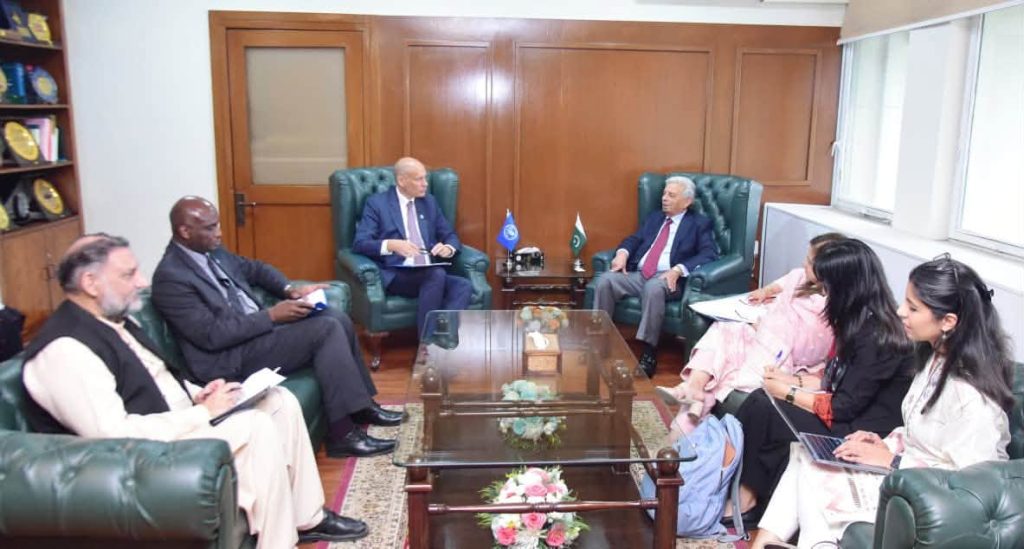
Building Export Competitiveness
Increasing Pakistan’s agricultural exports formed another important area of discussion.
The FAO delegation highlighted the importance of improving production quality, strengthening value chains, adopting international certifications, and enhancing post-harvest management to improve export performance.
Developing internationally competitive agrifood systems can help Pakistan generate additional foreign exchange earnings while creating employment opportunities in rural communities.
The meeting underscored that investments in agricultural innovation, digital technologies, and modern farming practices would further strengthen Pakistan’s ability to compete in regional and global markets.
Capacity Building and Technical Cooperation
Capacity building remains a cornerstone of FAO’s cooperation with Pakistan.
During the meeting, FAO reaffirmed its commitment to providing technical assistance, policy advice, institutional support, and knowledge-sharing initiatives aimed at strengthening Pakistan’s agricultural sector.
The organization will continue supporting government institutions through specialized training, research collaboration, technical advisory services, and investment programmes designed to modernize agriculture and improve productivity.
Both sides agreed that stronger institutional capacity is essential for implementing effective agricultural policies and responding to emerging challenges associated with climate change, food security, and sustainable development.
FAO Reaffirms Continued Support
Mr. Robert Simpson reaffirmed FAO’s commitment to working closely with Pakistan in promoting sustainable and inclusive agrifood systems that benefit farmers, consumers, and rural communities alike.
The discussions reflected a shared vision of transforming Pakistan’s agriculture sector into one that is more resilient, productive, environmentally sustainable, and capable of meeting future food security needs.
Federal Minister Rana Tanveer Hussain welcomed FAO’s continued partnership and appreciated the organization’s technical and policy support in advancing national priorities related to agriculture, livestock, and food security.
Both sides expressed confidence that strengthened collaboration would contribute to achieving sustainable agricultural growth while improving livelihoods across Pakistan.