
JICA, CDA and Islamabad Water Sign MoM to Develop Islamabad’s Water Supply, Sewerage and Drainage Master Plan
First comprehensive water master plan since 1960 aims to modernize services for 2.36 million residents and strengthen climate resilience in the capital.
-
JICA, CDA and Islamabad Water Sign MoM to Develop Islamabad’s Water Supply, Sewerage and Drainage Master Plan
-
First comprehensive water master plan since 1960 aims to modernize services for 2.36 million residents and strengthen climate resilience in the capital.
-
JICA’s Long-Term Role in Pakistan’s Water Security and Climate Resilience
Muhammad Arif
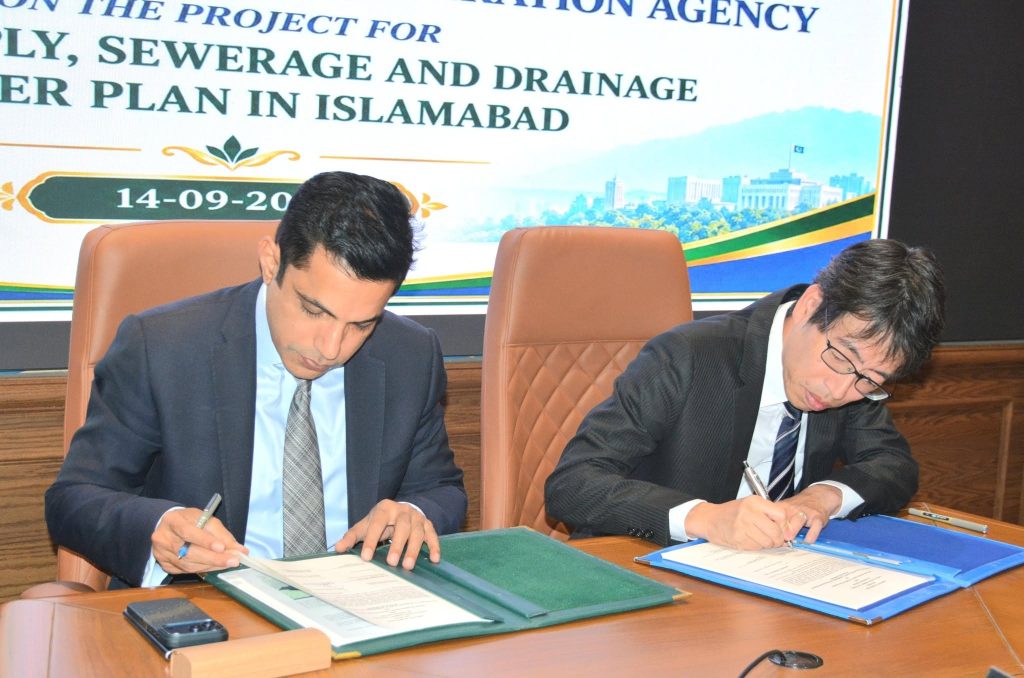
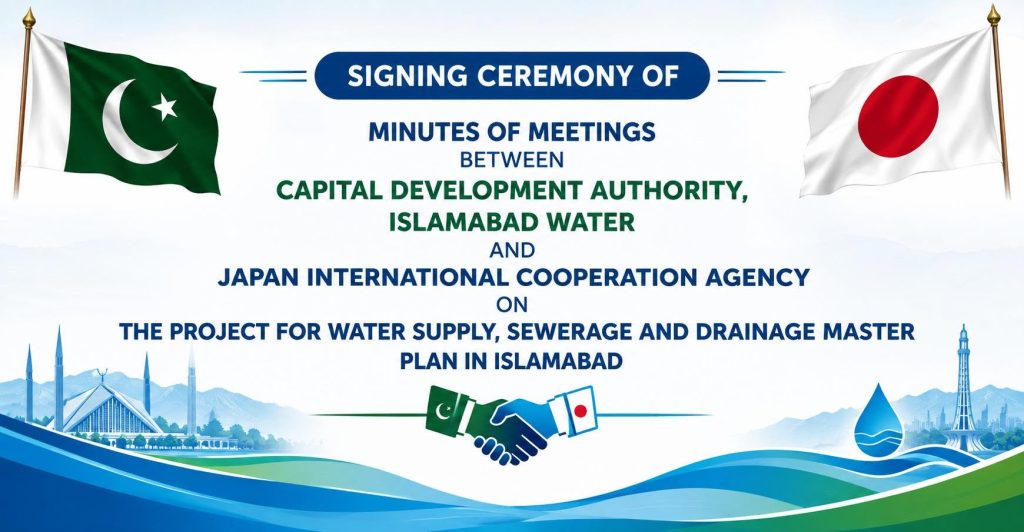
Islamabad — The Japan International Cooperation Agency (JICA), the Capital Development Authority (CDA), and Islamabad Water (IW) signed the Minutes of Meeting (MoM) on September 14, 2026, at CDA Headquarters in Islamabad, formally launching efforts to formulate a “Water Supply, Sewerage and Drainage Master Plan in Islamabad.”
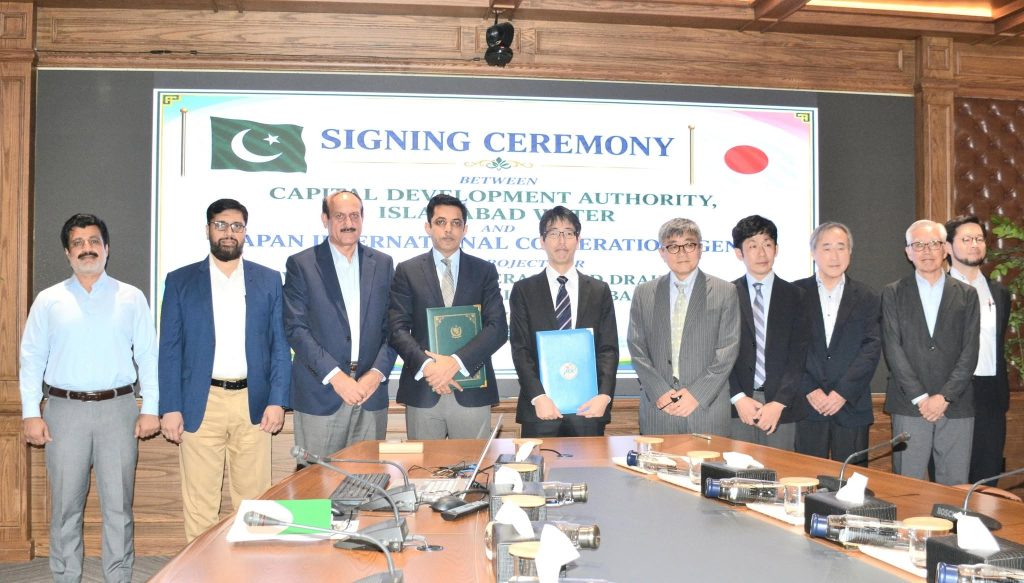
The MoM was signed by Lt. (Retd.) Sohail Ashraf, Chairman of CDA; Sardar Khan Zimri, Director General of Islamabad Water; and MIYAGAWA Masahito, Team Leader of JICA’s Detailed Planning Survey Team from JICA Headquarters. The signing marks the formal start of a technical cooperation process that will shape how Islamabad manages its water, sewerage, and drainage systems for decades to come.
A City That Has Outgrown Its Last Master Plan
The Islamabad Capital Territory, divided into Zones 1 through 5, was home to approximately 2.36 million people according to the 2023 census — a population that has grown dramatically since the city’s original urban master plan was drawn up in 1960. Remarkably, no comprehensive master plan for water supply, sewerage, and drainage has been developed since then, meaning the capital’s core water infrastructure planning has not kept pace with more than six decades of urban expansion, densification, and changing climate patterns.
This gap has left the city reliant on fragmented, incremental infrastructure upgrades rather than an integrated, forward-looking system — a shortfall that has become increasingly apparent as Islamabad faces growing water demand, aging distribution networks, and more frequent extreme rainfall events linked to climate change.
A New Institutional Framework
The push for a modern master plan comes amid significant institutional change in how Islamabad’s water services are governed. Responsibility for water supply, sewerage, and drainage was returned to CDA in 2024, leading to the establishment of Islamabad Water (IW) as a dedicated, integrated utility service provider for the capital.
As a newly formed entity, IW is still building out its institutional, technical, operational, and financial capacity — making JICA’s technical cooperation particularly timely. Rather than simply funding infrastructure, the project is designed to help IW develop the internal expertise and systems needed to plan, operate, and finance water services sustainably over the long term, positioning it to function as a modern, self-sustaining utility rather than a legacy department reliant on ad hoc budget allocations.
“Through this project, Japan and JICA reaffirm their commitment to support Pakistan’s efforts toward sustainable water management and financial sustainability of urban utilities,” JICA officials stated at the signing. “We look forward to working closely with CDA, IW, and all partners for this important project.”
Backgrounder: JICA’s Long-Term Role in Pakistan’s Water Security and Climate Resilience
The Islamabad master planning initiative fits within a much broader pattern of JICA engagement in Pakistan’s water sector, where the agency has for decades positioned itself as a long-term technical partner rather than a short-term financier. JICA’s approach across Pakistan has consistently emphasized integrated planning, institutional capacity-building, and financial sustainability — recognizing that water infrastructure investments fail without the local technical and administrative capacity to operate and maintain them.
In a country where water resources are under mounting pressure from climate change, population growth, and inefficient use — agriculture alone consumes roughly 90 percent of Pakistan’s freshwater — JICA’s water-sector programming has spanned irrigation canal rehabilitation to reduce agricultural water losses, flood forecasting and early warning systems in vulnerable river basins, and utility strengthening programs aimed at improving billing, leak detection, and service reliability in urban centers.
This emphasis on institutional development, rather than infrastructure alone, is precisely the model being applied in Islamabad. By supporting Islamabad Water’s transition from a newly created entity into a technically capable, financially sustainable utility, JICA is addressing a root-cause challenge common across Pakistan’s urban water sector: infrastructure investments that outpace the institutional capacity needed to sustain them.
The timing also reflects a broader national shift toward climate-resilient water management. As erratic monsoon patterns and intensifying rainfall increase flood risk in urban centers, and as glacial melt and drought cycles strain water availability elsewhere in the country, integrated planning that connects water supply, sanitation, and stormwater drainage — as this master plan aims to do — has become central to national resilience strategies. This mirrors efforts elsewhere in Pakistan, including Green Climate Fund-supported disaster management upgrades in districts like Buner, Khyber Pakhtunkhwa, underscoring a pattern of building climate resilience simultaneously at the urban utility level and the district disaster-response level.

What Comes Next
Over the coming months, the JICA Detailed Planning Survey Team will work alongside CDA and Islamabad Water to assess existing infrastructure, evaluate current and future service needs across Islamabad’s five zones, and begin formulating the technical and financial framework for the master plan. The resulting plan is expected to guide infrastructure investment, service delivery reforms, and climate-resilient urban water management in the capital for years to come — filling a planning gap that has persisted since 1960 and setting Islamabad on a path toward more reliable, sustainable, and flood-resilient water services.