
UN-Water at COP31: Chair and Vice-Chair to Push Water for Climate Resilience
At COP31, the UN-Water Chair speaks on water for climate resilience on 10 November and the Vice-Chair discusses water governance on 11 November.
UN-Water at COP31: Chair and Vice-Chair Push Water for Climate Resilience
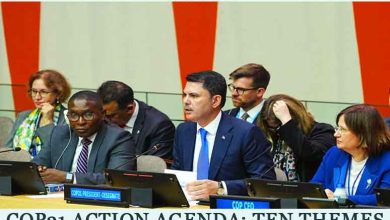
UN-Water is taking part in COP31 in Antalya with events that link water to climate adaptation, cooperation and finance. The UN-Water Chair will address a side event on 10 November titled “Water for Climate Resilience: From the 2026 SCF Forum to COP31 and the 2026 UN Water Conference,” held from 11:30 to 13:00 Türkiye time in the Blue Zone. It will explore partnerships to strengthen climate action through climate-resilient water and sanitation systems and resilient food systems, with a focus on climate finance. unwater
A second event on global water governance
On 11 November, from 13:15 to 14:45 Türkiye time in the Blue Zone, the UN-Water Vice-Chair will take part in “Towards More Coherent Global Water Governance for Climate Adaptation and Resilience.” The session looks at how stronger international cooperation and coordination on water can support climate adaptation, including existing coordination mechanisms and a proposed International Water Organization. The proposal for a dedicated international water body is a notable item, because water is currently coordinated through many UN agencies and mechanisms rather than one organisation. The session description does not say whether UN-Water endorses the proposal, so readers should treat it as a topic under discussion. unwater
The Water for Climate Pavilion
COP31 will also host a Water for Climate Pavilion bringing together governments, international organizations and other stakeholders to advance water-related climate action, with discussions on adaptation, resilience, sanitation, finance and sustainable water management. The Pavilion is a collaborative effort of more than 90 organisations that aims to unify and amplify the international water community’s voice in climate spaces. It has released a position paper with seven recommendations for COP31, setting out how negotiations can strengthen water security through adaptation, mitigation, finance and national planning. unwaterwaterforclimate
The Stockholm International Water Institute (SIWI) hosts the Pavilion’s secretariat and has scheduled sessions there, including “Too Much and Too Little Water at the Front Line of Climate Change” on 10 November at 14:00, an adaptation planning session on 14 November, and “Green Water for Climate Resilience: From Science to Action” on 17 November. siwi
Background: the road to the UN Water Conference
COP31 is one stop on a longer calendar. The 2026 UN Water Conference takes place in Abu Dhabi from 8 to 10 December, co-hosted by the United Arab Emirates and Senegal, with six interactive dialogues, including Water for Planet, co-chaired by Japan and Egypt, on 10 December. UN-Water’s COP31 events are explicitly framed as a bridge between the climate summit and that conference. The 10 November side event title itself names both, and the Chair is expected to link climate finance for water systems to the December agenda. unwater
Why water belongs in the climate talks
Most climate impacts reach people through water: floods, droughts, glacier melt, sea-level rise and the failure of water and sanitation services. Adaptation plans therefore depend heavily on water infrastructure and governance. The COP31 programme already reflects this. Opening-day sessions on food and agriculture touched on water efficiency, and agencies are pressing for adaptation finance, which is one of the hardest items on the negotiating agenda.
At the same time, water often sits at the edge of the formal climate process. The Pavilion’s seven recommendations and UN-Water’s events are efforts to move it to the centre, asking negotiators to reflect water security in adaptation, mitigation, finance and national planning.
What to watch
Four things will show whether the water message lands. First, whether decisions on adaptation finance mention water and sanitation specifically. Second, how the International Water Organization idea is received by governments, since it would need broad support to move forward. Third, how many water-related announcements come out of the Pavilion. Fourth, whether COP31’s outcomes give momentum to the UN Water Conference five weeks later. None of these outcomes is guaranteed, and negotiators open the summit amid early disputes over finance.
Conclusion
UN-Water’s COP31 programme is small but pointed: a Chair’s address on climate-resilient water systems and finance, a Vice-Chair session on global water governance, and a Pavilion that lets the water community speak with one voice. Together they aim to make sure that, in the weeks between Antalya and Abu Dhabi, water is treated as a core climate issue, not a side topic.