
Bangladesh Urges Stronger Water Diplomacy and Youth Role
At a BIISS seminar, State Minister Humaiun Kobir called for stronger water diplomacy, partnerships and youth leadership in transboundary water governance.
DHAKA, 08 October 2026: Bangladesh must deepen its engagement on multilateral platforms and build stronger partnerships with like-minded countries to advance its interests in transboundary water management, State Minister for Foreign Affairs Humaiun Kobir said today.
He was speaking as Guest of Honour at a seminar titled “Rethinking Water Futures: Youth Leadership, Justice, and Cooperation,” organised by the Bangladesh Institute of International and Strategic Studies (BIISS).
In his keynote, the State Minister stressed the importance of water diplomacy in international forums. He said Bangladesh has significant opportunities to expand international partnerships, secure technology transfer and strengthen scientific cooperation. Effective international engagement, he noted, is essential if the country is to protect its interests in the shared river systems on which millions of its citizens depend.
A Multidimensional Challenge
The discussions covered water justice, inclusive governance, scientific and data cooperation, multilateral water diplomacy and public-private partnerships. Panellists argued that water should not be treated only as a question of resource allocation. They described it as a multidimensional concern tied to the environment, the economy, food security, livelihoods, peace and regional cooperation.
Speakers said transboundary water governance works best when it rests on shared, reliable data and scientific collaboration rather than mistrust. They also pointed to the role the private sector can play in financing and delivering innovation, alongside governments and multilateral institutions.
Youth at the Table
The seminar also highlighted the need for meaningful opportunities for young people to take part in decision-making and policy processes on transboundary water governance. Participants said that those who will inherit the consequences of today’s water decisions should have a real say in shaping them, rather than being consulted symbolically. Youth leadership, they argued, can bring new technical skills, fresh ideas and a stronger commitment to cooperation across borders.
Backgrounder: The Global Water Crisis
The seminar’s themes reflect a crisis that is growing worldwide.
Access. According to the WHO/UNICEF Joint Monitoring Programme, roughly 2.1 billion people still lack safely managed drinking water, and about 3.4 billion lack safely managed sanitation. The burden falls hardest on the poor, on rural communities, and on women and girls, who often spend hours collecting water.
Scarcity and climate stress. Population growth, urbanisation, pollution and over-extraction of groundwater are straining supplies. Climate change is making rainfall less predictable and intensifying both floods and droughts. The Global Commission on the Economics of Water has warned that the global water cycle is under unprecedented stress and that a large share of world food production could be at risk in the coming decades if current trends continue.
Shared waters. More than 150 countries share rivers, lakes or aquifers, and roughly 60 per cent of the world’s freshwater flow crosses national borders. Cooperation over these resources has often prevented conflict, but weak institutions, limited data-sharing and competing demands can generate tension.
Bangladesh’s position. As a low-lying delta at the downstream end of the Ganges-Brahmaputra-Meghna basin, Bangladesh shares 57 rivers with India and Myanmar. Its farming, fisheries, drinking water and ecosystems depend heavily on upstream flows, and it faces salinity intrusion, riverbank erosion and increasingly severe floods. Water diplomacy is therefore a matter of national development and security. The 1996 Ganges Water Treaty is due to expire in December 2026, which adds urgency to the country’s diplomatic efforts.
Global momentum. The United Nations 2026 Water Conference, co-hosted by the United Arab Emirates and Senegal, is scheduled for December, following the landmark 2023 conference. It is expected to push for stronger commitments on water, sanitation and cooperation.
Looking Ahead to COP31
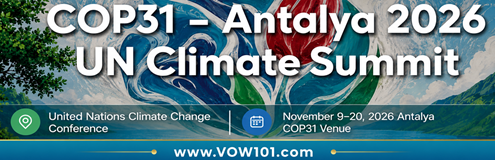
The seminar’s message lands as the world prepares for the 31st UN Climate Change Conference (COP31), scheduled for November 2026 in Antalya, Türkiye, with Australia leading negotiations. Water is where climate change is felt most directly, through floods, droughts, sea-level rise and salinity, yet it remains underrepresented in climate negotiations.
For Bangladesh, a country among the most climate-vulnerable, COP31 offers a chance to press for water to be treated as a central pillar of adaptation. The priorities raised at the seminar map closely onto that agenda: climate finance and technology transfer for water resilience, shared data and early-warning systems across river basins, fair and inclusive governance of shared waters, and a formal place for young people in climate and water decision-making.
As the seminar’s participants made clear, the water futures of Bangladesh and its neighbours will be shaped by cooperation rather than competition. Carrying that message into COP31, and into the UN Water Conference that follows, would help ensure that the voices of downstream and climate-vulnerable nations, and of the youth who will inherit these challenges, are heard where decisions are made.