
Governments Launch ‘Electrify Now’ Ahead of COP31 in Antalya
Governments, IEA and IRENA launched Electrify Now, backing a 35% global electrification target by 2035 to be central at COP31 in Antalya.
Governments Launch ‘Electrify Now’ to Accelerate Global Economic Electrification
New platform backed by the EU, IEA, IRENA and multiple COP presidencies aims to put a 35% global electrification target at the center of COP31 negotiations in Antalya
Governments, the International Energy Agency (IEA), the International Renewable Energy Agency (IRENA), and industry leaders have jointly launched “Electrify Now,” a global platform designed to accelerate the electrification of homes, industries, and transport systems worldwide, powered by clean energy sources.
Electrification as an Emerging Climate and Energy Priority
Electrification — the process of shifting energy use across homes, industry, and transportation away from direct fossil fuel consumption toward electricity-based systems — has increasingly been identified by energy analysts as one of the most practical and immediate levers available for simultaneously advancing climate goals and strengthening energy security. Unlike some decarbonization strategies that depend on emerging or unproven technologies, electrification relies heavily on electric technologies that are already widely available and increasingly cost-competitive, including electric vehicles, heat pumps, and industrial electric equipment.
This shift has taken on additional urgency amid recent global energy market volatility, which has repeatedly demonstrated how dependence on imported fossil fuels can leave countries exposed to geopolitical shocks and unpredictable price swings, affecting both household energy costs and industrial competitiveness. Against this backdrop, a growing coalition of governments and international energy institutions has moved to formalize electrification as a central pillar of the global climate and energy agenda heading into COP31.
Launch of Electrify Now
The initiative was announced on June 23, 2026, in London, with signatories including the European Commission, the COP30 Presidency (Brazil), the COP31 Presidency (Australia and Türkiye), the COP32 Presidency (Ethiopia), Canada, the Philippines, the Republic of Korea, the United Kingdom, the IEA, and IRENA, alongside industry leaders.
In their joint statement, signatories expressed conviction that rapidly increasing electrification of homes, industries, and transport systems — supported by resilient, modern, and flexible grids and storage infrastructure, and powered by clean energy — represents both an immediate strategic and economic priority and a lasting response to the current energy crisis. The statement extended an invitation for additional governments and organizations to join the initiative.
The Data Behind the Momentum
The joint statement pointed to substantial real-world momentum already underway in the shift toward electrification. Global electric car sales are projected to reach 23 million in 2026, representing 28% of total car sales worldwide. Looking ahead through 2035, electricity demand is projected to grow four times faster than overall energy demand under current policy settings, while 83% of all new power capacity installed globally last year was renewable.
Investment trends reflect this momentum as well: spending on electricity supply and infrastructure is expected to reach USD 1.6 trillion in 2026, rising to USD 2 trillion when spending on end-use electrification is included.
The 35% by 2035 Target
A central element of the announcement was the statement’s welcome of the COP31 Presidency’s plan to place a global electrification target — 35% of final energy demand by 2035 — at the center of COP31 discussions. This target aligns with analysis published by both the IEA and IRENA, and represents a significant increase from current global electricity consumption levels, which IEA Executive Director Fatih Birol noted stand at around 23% of final energy consumption today.
Core Areas of Focus
Through Electrify Now, partner organizations and governments have outlined three main areas of collaborative action. First, the initiative aims to unlock ambition across all regions globally by showcasing successful electrification efforts, identifying new opportunities, securing commitments, and strengthening delivery plans among participating countries.
Second, the platform will work to accelerate clean electrification at scale, partnering with existing initiatives to address shared policy, regulatory, and investment barriers affecting electrification, grid development, storage, and renewable energy generation.
Third, Electrify Now will focus specifically on supporting emerging markets and developing economies (EMDEs) in taking advantage of electrification as a strategic opportunity to strengthen domestic energy resilience and economic prosperity, with support from international financial institutions, philanthropic organizations, and the private sector.
Signatories called on additional governments to join the initiative, and specifically invited industry, international financial institutions, and private finance actors — whose capital, expertise, and convening power were described as essential — to collaborate in advancing the platform’s goals.
Reactions from World Leaders
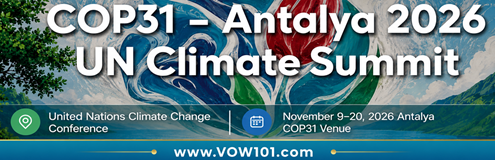
Several signatories offered statements underscoring the initiative’s significance. COP31 President-Designate Murat Kurum described the moment as a unique opportunity to advance electrification as a critical piece of the energy transition, noting that momentum for the “35-by-35” target is already building at COP31, with plans to bring additional actors together in Antalya this November to spark a global conversation on the issue.
Australia’s Minister for Climate Change and Energy, Chris Bowen, who serves as COP31 President of Negotiations, characterized electrification as a practical way to lower energy bills, reduce emissions, and strengthen energy security. European Commission President Ursula von der Leyen framed electrification as a shift from fossil fuel dependence toward greater economic resilience, while Canadian Prime Minister Mark Carney described electrification as the backbone of a stronger, cleaner, and more competitive economy.
COP30 President-Designate Ambassador André Aranha Corrêa do Lago noted that electrification featured prominently in the Belém COP’s Action Agenda and the COP30 Presidency’s Roadmap on Transitioning Away from Fossil Fuels, describing Electrify Now as capturing the necessary momentum for collective global action.
Ethiopia’s Minister of Foreign Affairs and COP32 President-Designate, Gedion Timothewos, emphasized that for many developing countries, the primary barrier to electrification is not renewable energy potential but the high cost of financing, arguing that closing the implementation gap requires closing the cost-of-capital gap through reduced borrowing costs and expanded public investment.
IEA Executive Director Fatih Birol noted that the world has entered what the agency terms the “Age of Electricity,” driven by factors including the rapid expansion of AI, rising demand for air conditioning and electric vehicles, and ongoing industrial development, adding that the IEA is preparing a new Special Report ahead of COP31 to help countries navigate this transition securely and affordably. IRENA Director-General Francesco La Camera noted that the agency’s roadmap on transitioning away from fossil fuels explicitly proposes the global 35% by 2035 electrification target, describing electrification as a “no-regret solution” that simultaneously addresses emissions, energy security, affordability, and industrial competitiveness.