
Africa Water Security: Experts Call for Action at Scale
Experts at the African Water Security Conference in Addis Ababa call for stronger institutions, financing, data and cooperation to advance water security.
-
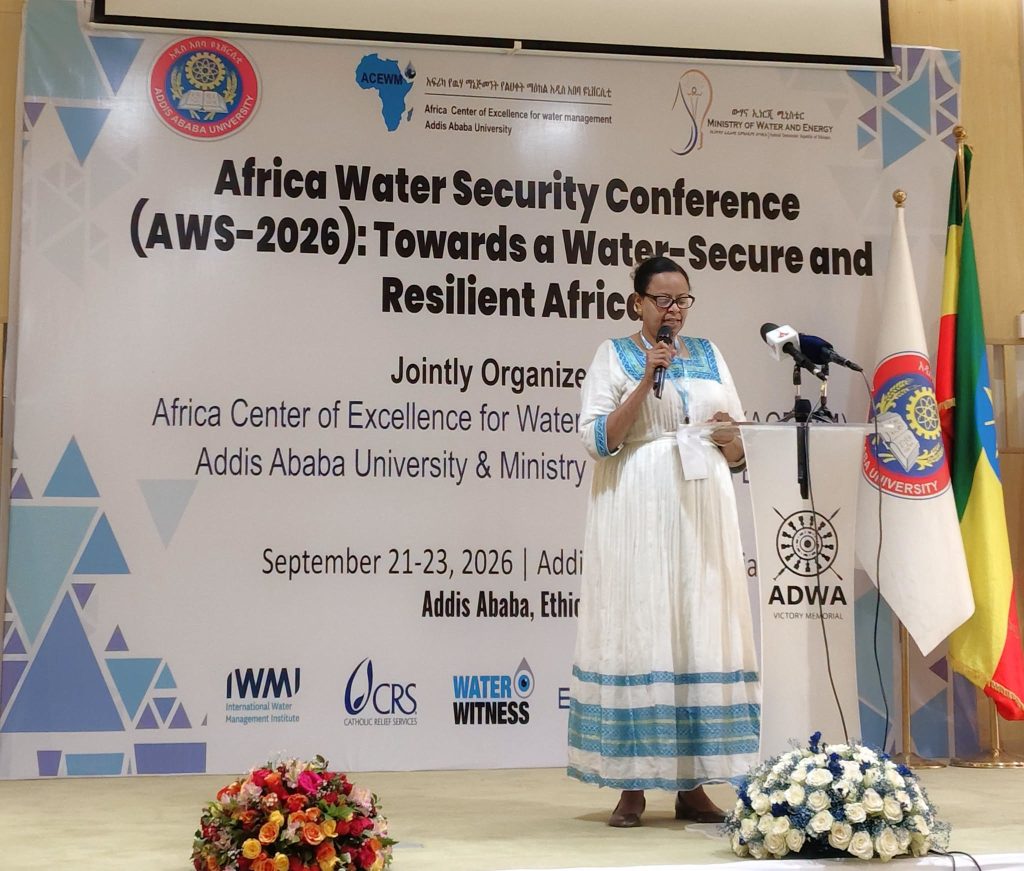
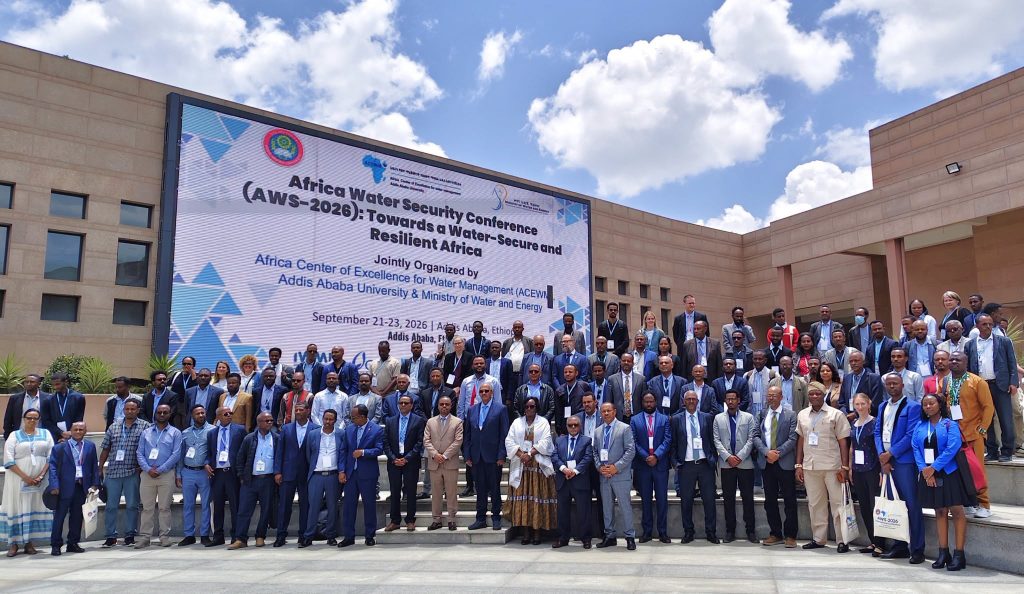
Africa Water Security 2026 Held in Addis Ababa, the capital and largest city of Ethiopia
-
Experts at the African Water Security Conference in Addis Ababa call for stronger institutions, financing, data and cooperation to advance water security.
-
Africa Water Security 2026 was Convened by the Africa Center of Excellence for Water Management, Addis Ababa University and Ministry of Water and Energy – Ethiopia,
ADDIS ABABA — Africa has the knowledge, technologies and resources needed to address many of its major water challenges, but turning those assets into effective decisions and action at scale remains a central challenge for achieving water security, experts said at the inaugural African Water Security Conference in Addis Ababa.
The three-day conference, held from September 21 to 23 in Addis Ababa, Ethiopia, brought together policymakers, researchers and water practitioners to examine pathways toward greater water security and resilience across Africa.
A key message emerging from the conference was that Africa’s water challenges are not simply a question of insufficient scientific knowledge or technical capacity. Experts emphasized the importance of stronger institutions, effective governance, sustainable financing and cooperation to ensure that available knowledge and innovation deliver practical results.
Speaking during a presentation on “Harnessing Africa’s Water Wealth,” Abdulkarim Seid of the International Water Management Institute (IWMI) highlighted the need to move from knowledge to practical decision-making.
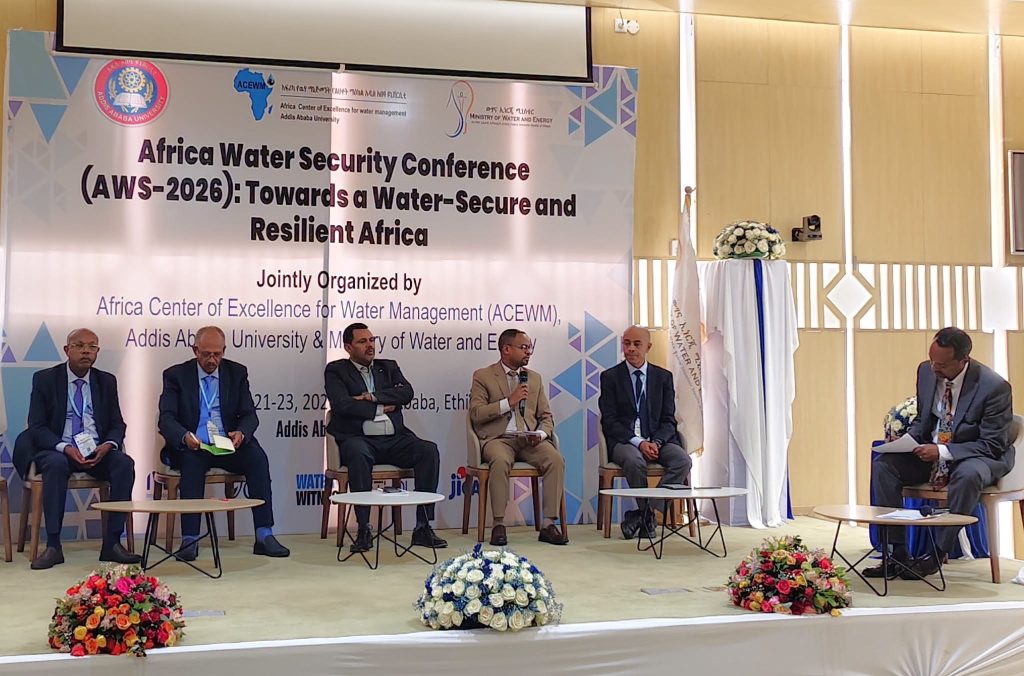
Africa, he said, has sufficient knowledge, tools and resources to address its key water challenges. The greater challenge is ensuring that these capabilities inform decisions and measures capable of delivering water security at scale.
The conference examined a range of interconnected issues, including water availability, climate resilience, infrastructure, agricultural water use, monitoring, institutional capacity and the management of shared water resources.
The event was convened by the Africa Center of Excellence for Water Management, Addis Ababa University and Ethiopia’s Ministry of Water and Energy, with IWMI among the supporting organizations.
Participants explored how scientific knowledge, technological innovation and institutional cooperation can strengthen Africa’s capacity to manage water resources amid increasing climate and development pressures.
Closing the gap between science and impact
A keynote address by Professor Assefa Melesse of Florida International University highlighted several conditions considered essential for strengthening Africa’s water security.
These include stronger data and monitoring systems, effective institutions, sustainable financing and cooperative mechanisms.
Melesse also underscored the need to narrow the gap between scientific research, political commitments and real-world impact.
Reliable information is essential for decisions concerning water allocation, infrastructure, agricultural use, environmental protection and climate adaptation. Better monitoring can help governments and water authorities understand changing water availability, identify risks and improve planning.
However, data and technology can have limited value without institutions capable of interpreting information and incorporating it into policy and resource management.
Smarter use of water
Improving the efficiency of water use was another major theme of the conference.
Experts highlighted the importance of water-use efficiency, diversification of water sources and investment in storage and climate-resilient infrastructure.
Improving water productivity is particularly relevant to agriculture, where reliable supplies are essential for food production and rural livelihoods while climate variability is increasing pressure on water resources.
Investment in storage and resilient infrastructure can also help countries manage fluctuations between water scarcity and excess water, while improving the reliability of supplies for communities and economic sectors.
The discussions placed infrastructure within a wider resilience framework, linking physical investment with better planning, management and resource efficiency.
Data, satellites and artificial intelligence
Technology featured prominently in discussions on the future of water management.
Participants pointed to the potential of Earth observation, artificial intelligence and digital tools to improve monitoring, analysis and decision-making.
Satellite-based Earth observation can provide information across large and difficult-to-monitor areas, while digital systems can integrate data from multiple sources.
Artificial intelligence and advanced analytical tools can also help process increasingly complex datasets and identify emerging water-related risks.
Experts, however, emphasized that technological innovation must be connected to effective institutions, reliable information systems, appropriate policies and skilled professionals.
The objective is not simply to acquire new technologies, but to ensure they support better water management and more informed decisions.
Cooperation and sustainable financing
Experts also stressed the importance of institutional cooperation and sustainable financing.
Water resources frequently cross national and administrative boundaries, particularly in the case of shared rivers, lakes and groundwater systems. Their management therefore requires coordination among countries and institutions.
Participants highlighted the need for stronger cooperative arrangements around shared water resources and greater mobilization of sustainable, Africa-led financing for water security.
Long-term investment is required across multiple areas, including resilient infrastructure, storage, monitoring networks, research, institutional capacity and community-level water management.
Financing strategies consequently need to support sustained water-security programmes rather than being limited to individual or short-term projects.
Turning knowledge into resilience
The inaugural African Water Security Conference highlighted the breadth of scientific expertise and technological capacity already available across Africa.
The discussions pointed instead to the need for stronger governance systems capable of connecting research, technology, financing and policy.
Stronger links between scientists, policymakers and practitioners can help ensure that evidence informs decisions, while improved data systems and regional cooperation can strengthen planning around shared water resources.
For a continent facing pressures from climate change, population growth, urbanization and competing demands for water, strengthening these systems will be essential to building long-term resilience.
The Addis Ababa conference therefore placed the relationship between knowledge, governance and action at the centre of Africa’s water-security debate.
Its central message was clear: Africa has significant water knowledge and expertise at its disposal. The priority is to strengthen the institutions, financing and partnerships needed to convert that capacity into lasting water security and resilience.