
Global Water Bankruptcy Forum in Tokyo, 4 December 2026: Kaveh Madani Keynote
UNU and Japan's Ministry of Foreign Affairs host a Global Water Bankruptcy policy forum in Tokyo on 4 December 2026, with a keynote by Kaveh Madani.
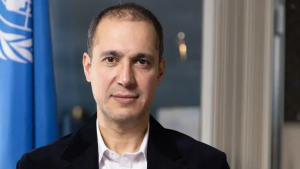
The United Nations University (UNU) will host the International Policy Forum on Global Water Bankruptcy: Science, Leadership, Diplomacy and Action in Asia and Beyond on 4 December 2026 in Tokyo. The event is co-organised with the Ministry of Foreign Affairs of Japan and features a keynote by Professor Kaveh Madani, Director of the UNU Institute for Water, Environment and Health (UNU-INWEH) and this year’s Stockholm Water Prize laureate.
Event details
- Date and time: 4 December 2026, 16:00–18:00 (Asia/Tokyo), with a reception from 18:00 to 19:00
- Venue: Elizabeth Rose Conference Hall, UNU Headquarters, 53-70 Jingumae 5-chome, Shibuya-ku, Tokyo
- Language: English and Japanese, with simultaneous interpretation
- Format: in person and online (Zoom webinar)
What the forum will discuss
The organisers say water security is one of the defining challenges of our time, with climate change, environmental degradation, unsustainable water use and water-related disasters placing growing pressure on societies and ecosystems. The forum coincides with the 30th anniversary of UNU-INWEH and will bring together policymakers, researchers and practitioners to explore pathways from water bankruptcy to resilience, with particular attention to Asia and the Pacific.
After the keynote, a discussion will examine how science, policy, finance and innovation can work together to strengthen water governance. Held just days before the 2026 UN Water Conference in Abu Dhabi, the forum will also examine opportunities for international cooperation and action.
Programme
- Welcome remarks: Tshilidzi Marwala, Rector of UNU and UN Under-Secretary-General
- Greetings: Yoko Kamikawa, Member of the House of Representatives of Japan; H.E. Ian G. McKay, Ambassador of Canada to Japan; H.E. Viktoria Li, Ambassador of Sweden to Japan
- Keynote lecture: Kaveh Madani, Director of UNU-INWEH and 2026 Stockholm Water Prize laureate
- Special address (pre-recorded): Masato Kanda, President of the Asian Development Bank
- Panel discussion: Taikan Oki (University of Tokyo and science adviser to Japan’s Ministry of Foreign Affairs), Mikio Ishiwatari (Meiji University and Japan Water Forum), Yosuke Maeda (CEO, WOTA Corporation) and Kaveh Madani, moderated by Aya Suzuki, UNU Senior Vice-Rector
- Closing remarks: Keiko Namba, Director, Multilateral Cultural Cooperation Division, Ministry of Foreign Affairs of Japan
Background: what “Global Water Bankruptcy” means
Earlier this year, UNU-INWEH launched its flagship report, Global Water Bankruptcy: Living Beyond Our Hydrological Means in the Post-Crisis Era. Madani presented it to reporters in New York on 20 January. The report argues that many societies are consuming and managing water beyond sustainable limits and calls for a fundamental rethink of how water is governed and protected.
Its central claim is that water bankruptcy differs from a crisis, which implies a temporary shock: it describes a state of insolvency where long-term water use exceeds renewable inflows and safe depletion limits, causing irreversible damage to rivers, lakes and aquifers. Headline figures include 75 percent of the world’s population living in water-insecure or critically water-insecure countries, 5 percent of global land area sinking because of groundwater depletion, about $307 billion a year in drought-related damages, and 50 percent of global food production at risk from unstable or declining water storage. The report calls for a reset of the global water agenda at the 2026 and 2028 UN Water Conferences. These are the report’s own figures, and critics may debate the framing, but they set the agenda for Tokyo.
The keynote speaker
Madani leads UNU-INWEH, and his work focuses on complex human-natural systems and the links between water, environment, development, security and society. Before UNU, he worked across academia, government and environmental diplomacy, including as Deputy Head of Iran’s Department of Environment and Vice President of the UN Environment Assembly Bureau, and held positions at Imperial College London and Yale. This year he received the Stockholm Water Prize and was named to The Independent’s Climate 100 and TIME100 Climate lists, for his work on water governance and water bankruptcy.
Why Asia and the Pacific
The region is central to the water bankruptcy debate. It holds most of the world’s irrigated land and population, depends heavily on groundwater, and faces floods, typhoons and glacier melt. The presence of the Asian Development Bank’s president, even by video, suggests the forum will look at finance as well as science. Japan’s involvement as co-organiser also fits its long record as a water-sector donor and technology provider, with WOTA’s participation pointing to a role for small-scale water recycling technology.
Link to the UN Water Conference
The forum takes place four days before the UN Water Conference opens in Abu Dhabi on 8 December. The Water Bankruptcy report was published with that conference in mind, and the forum offers a chance for Asian governments and institutions to discuss positions before they travel. The organisers say it will examine opportunities for international cooperation and action.
How to register
Advance registration is required. To attend in person, register by 3 December at 15:00 at go.unu.edu/97NR7, and be prepared to present identification at check-in. To attend online via Zoom webinar, register at go.unu.edu/Vlj1x. Food and photography are prohibited at UNU Headquarters events unless UNU gives prior permission, and guests are asked to follow UNU’s Code of Conduct to Prevent Harassment and its Data Protection Notice.
What to watch
Three things will show whether the forum has impact. First, whether Japanese officials or the ADB announce commitments or priorities tied to water governance. Second, whether panellists put concrete proposals on finance and technology on the table. Third, whether outcomes are carried into the Abu Dhabi conference. The organisers have not announced a formal outcome document.
Conclusion
The Tokyo forum brings the Global Water Bankruptcy debate to Asia and the Pacific four days before the UN Water Conference. With the report’s author as keynote speaker, a Japanese government co-host and a development bank president on the programme, it is positioned as a policy event, not only an academic one. Anyone planning to attend in person has until 3 December at 15:00 to register.