
National WASH Accounts in Pakistan: WaterAid, MoCC&EC, PBS, WHO and UNICEF Hold Workshop
WaterAid Pakistan, MoCC&EC, PBS, WHO and UNICEF held a workshop on building National WASH Accounts in Pakistan using the TrackFin method.
WaterAid Pakistan, working with the Ministry of Climate Change and Environmental Coordination (MoCC&EC), the Pakistan Bureau of Statistics (PBS), the World Health Organization (WHO) and UNICEF, has convened an inaugural workshop on establishing National WASH Accounts in Pakistan. The aim is to track, for the first time in a systematic way, how money flows through the country’s water, sanitation and hygiene (WASH) sector.
What the workshop did
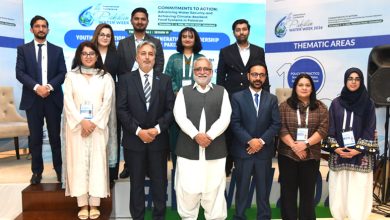
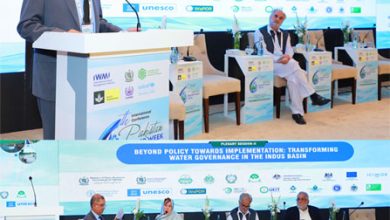
The workshop brought national and provincial stakeholders together to build a shared understanding of the WASH Accounts framework, which rests on the internationally recognised TrackFin methodology. Organisers say it focused on:
- introducing the TrackFin methodology;
- defining the scope and key policy priorities of WASH Accounts;
- learning from experience with National Health Accounts; and
- exploring how financial data can inform evidence-based decisions.
Technical sessions covered the WASH Accounts implementation plan, the WASH Accounts Production Tool (WAPT) and guiding principles for successful implementation. Participants also received hands-on training in data collection, including how to identify data sources across different funding streams.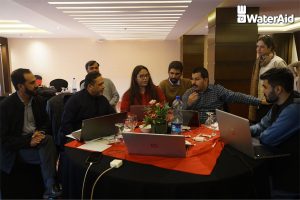
Facilitators and next steps
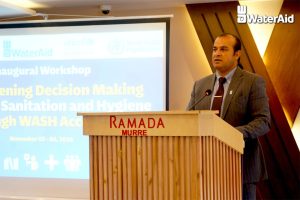
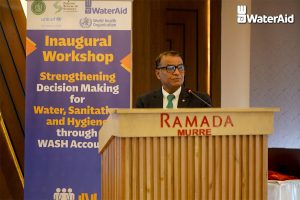
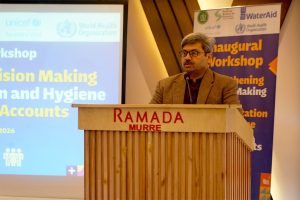
The sessions were led by technical resource persons Sofia Murad, Niaz Ullah Khan, Nighat Immad, Ihsan-ul-Haq and Saima Nazir. The workshop gave stakeholders a platform to discuss data requirements, institutional responsibilities, timelines and next steps towards developing National WASH Accounts.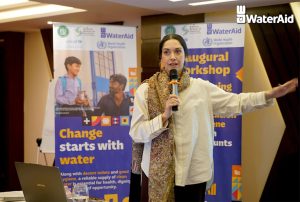
Why the accounts matter
According to the organisers, the initiative will consolidate financial information from government institutions, development partners, service providers, civil society, the private sector and households. That is expected to strengthen transparency and produce evidence for more efficient, equitable and informed resource allocation across the WASH sector.
Background: what TrackFin and WASH Accounts are
WHO launched the TrackFin methodology in 2014 as a standardised global method for collecting and analysing WASH financial data. WASH accounts present a snapshot of WASH financial flows and spending over a given period, and using TrackFin keeps them comparable between years and countries. They show all WASH expenditure in a country for specific years and are built by collecting and mapping financial flows in a comprehensive, comparable way.
TrackFin was created to fill a long-standing gap. Since 2008, the UN-Water Global Analysis and Assessment of Sanitation and Drinking-Water (GLAAS) has found substantial gaps in understanding and tracking WASH financial flows. The end product is a set of WASH-related accounts and indicators, built by identifying and classifying WASH actors, uses and financing types, gathering data at the source and entering it into a dedicated database. One key rule is avoiding double counting. A flow should be recorded as one funding type only, and flows are computed at the level of the funding unit through which they enter the sector.
Why Pakistan needs it
Pakistan’s WASH funding is spread across federal and provincial governments, donors, service providers and households. A 2024 commentary noted that TrackFin has been implemented in more than 20 countries, including Bangladesh and Nepal, and argued that Pakistan needs a National WASH Account built on it. It said PBS could play a key role by using existing frameworks such as the Pakistan Social and Living Standards Measurement (PSLM) Survey to capture WASH expenditure from governments, NGOs, donors and households. The workshop’s partnership with PBS reflects that approach.
Regional experience offers a model. In 2018, Bangladesh launched a TrackFin pilot to produce its first national WASH accounts, estimating spending on infrastructure, operation and maintenance, tariffs and out-of-pocket costs, and aiming to improve planning and budgeting.
What the workshop’s health link means
The workshop drew on the experience of National Health Accounts, which track health spending by source and use. Health accounts are an established tool, so reusing their lessons can help WASH accounts gain institutional acceptance, particularly with statistics offices and finance departments. WHO and UNICEF, which jointly run the global monitoring programme on water, sanitation and hygiene, bring both methodological and sector experience.
Why household spending is a key gap
Households often pay a large share of WASH costs, through water vendors, latrine construction, filters and fuel for boiling water, yet these payments rarely appear in official budgets. Including them in the accounts is what lets planners see the true cost of services and the burden on families. The workshop’s inclusion of households among data sources suggests the accounts aim to capture that cost, though the organisers’ announcement does not give detail on how.
What to watch
Four steps will show how seriously the accounts advance. First, a formal institutional home, with clear roles for MoCC&EC and PBS. Second, an agreed timeline and the first reference year for the accounts. Third, data-sharing arrangements with provinces and development partners, which are often the hardest part. Fourth, publication of results, since transparency is one of the stated goals. The announcement does not give dates for any of these.
Conclusion
The inaugural workshop is a first step towards National WASH Accounts for Pakistan, using the internationally recognised TrackFin methodology and involving the statistics bureau, the climate ministry, WHO, UNICEF and WaterAid. If the accounts are completed and published, they could give policymakers a clearer picture of who pays for water, sanitation and hygiene, and how well the money is spent. The next test is turning the workshop’s discussions on data, responsibilities and timelines into a working plan.