
GWPO’s Alex Simalabwi Outlines Global Water Investment Platform at AWSISA Dialogue in South Africa
GWPO CEO Alex Simalabwi presented the Global Water Investment Platform and De-Risking Facility at South Africa's AWSISA dialogue.
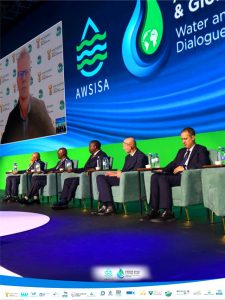
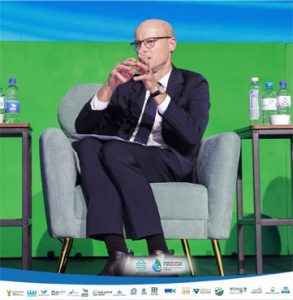
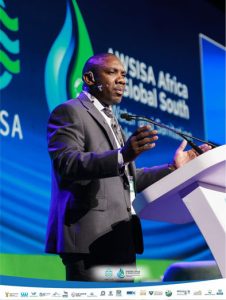
SOUTH AFRICA, 25 November 2026 – Alex Simalabwi, CEO of the Global Water Partnership Organisation (GWPO) and Executive Secretary of the Global Water Partnership (GWP), joined a panel today at the AWSISA Africa and Global South Water and Sanitation Dialogue. He used the session to set out how the Global Water Investment Platform (GIP) and its planned De-Risking Facility aim to close the global water and sanitation investment gap.
A step towards the UN Water Conference
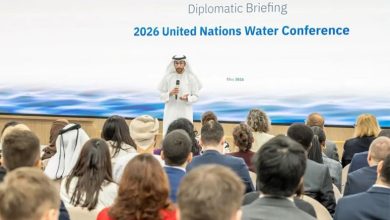
The dialogue advances the objectives of Interactive Dialogue F, “Investment for Water,” hosted by France and South Africa under the 2026 United Nations Water Conference. It is part of the lead-up to the conference in Abu Dhabi, where investment is one of six dialogue themes.
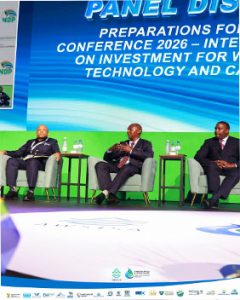
The session was facilitated by Dr. Risimati Mathye. It opened with scene-setting remarks from Hon. Pemmy Majodina, South Africa’s Minister of Water and Sanitation. The panel included:
- Prof. Kaveh Madani of UNU-INWEH
- Prof. Henk Ovink of the Global Commission on the Economics of Water
- Dr. Sean Phillips, Director-General of the Department of Water and Sanitation
- Mr. Sipho Mosai
- Mr. Sandile Mkhize
- Mr. Simalabwi
What Simalabwi said
Simalabwi described the GIP as an initiative that brings political leaders, countries and financing partners together around a shared goal: closing the global water and sanitation investment gap. Building on Africa’s water investment work, the platform aims to help each region advance investment priorities that it shapes itself, rather than agendas set from outside.
He also discussed the GIP Global De-Risking Facility. According to Simalabwi, the facility will turn commitments into financed projects and shorten the time it takes to deliver them. That addresses a familiar problem in water finance: pledges are announced, but projects stall between promise and construction.
Background: how the GIP came about
The GIP was launched in August 2025 during the AU-AIP Africa Water Investment Summit by President Cyril Ramaphosa, as a G20 Presidential Legacy initiative on water investments. It is described as a global mechanism designed to mobilise and de-risk public and private capital, accelerate national and regional water investment pipelines, and strengthen partnerships across governments, development banks and the private sector. At the invitation of South Africa’s G20 Presidency, GWP serves as the Secretariat for the initiative.
The platform builds on African groundwork. The Africa Water Investment Summit adopted the Cape Town Declaration and identified US$10–12 billion per year in water investment opportunities.
The De-Risking Facility draws on the same lineage. It is being developed on the basis of the AIP Blended Finance Facility, launched by the African Union at Africa Water Week in Cairo in 2023, and transformed into a global mechanism able to catalyse blended and private finance. GWP has said the facility is being designed in partnership with the UN Capital Development Fund and other global partners, with guarantees intended to unlock private capital, enable public-private partnerships and support blended finance across Africa and the Global South.
The road to Abu Dhabi
The dialogue is one stop on a crowded calendar. The 2026 UN Water Conference takes place from 8 to 10 December in Abu Dhabi, co-hosted by Senegal and the UAE. On 9 December, GWPO and partners will convene a Presidential Summit to build support for scaling up the GIP. An Investment Summit will follow, focused on launching the Facility and mobilising partner support to put it into operation.
Earlier this year, GWPO also planned to showcase the facility at World Water Week in Stockholm. It scheduled a political launch of the GIP Upstream Blended Finance Derisking Facility there, described as a catalytic mechanism to prepare and de-risk water projects.
Why it matters
Water is chronically underfunded compared with its role in health, food, energy and climate resilience. Many viable projects never reach construction because investors see them as too risky, too small or poorly prepared. A de-risking facility tries to change that by offering guarantees and blended finance, so that public money absorbs part of the risk and private capital can follow.
The regional emphasis also matters. By stressing that regions should advance investment priorities shaped by their own priorities, the GIP responds to long-standing criticism that global financing often ignores local needs and capacity.
The panel’s mix of voices reflects how many actors the effort must hold together: national government, scientific institutions, economists and development partners. Ovink’s commission has argued that water must be treated as a core economic issue, while UNU-INWEH has warned about worsening water stress, so the discussion linked finance to evidence.
Conclusion
Simalabwi’s message in South Africa was straightforward: political will, regional ownership and risk-sharing tools must work together if water investment is to scale. With two weeks until the Presidential Summit and the Investment Summit in Abu Dhabi, the GIP and its De-Risking Facility are moving from design to delivery. The test will be whether commitments announced in December become financed projects that reach communities, and how quickly.