
WaterAid Pakistan and Sindh Healthcare Commission Sign MoU on WASH and IPC in Healthcare
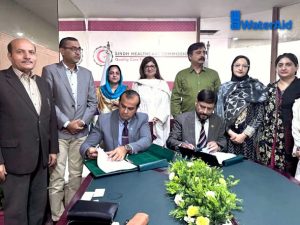
WaterAid Pakistan and the Sindh Healthcare Commission signed an MoU to integrate climate-resilient, gender-responsive WASH and IPC into healthcare standards in Sindh.
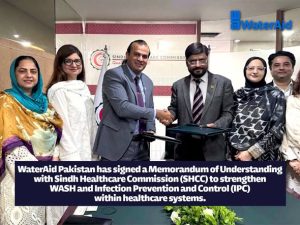
WaterAid Pakistan has signed a Memorandum of Understanding (MoU) with the Sindh Healthcare Commission (SHCC) to strengthen water, sanitation and hygiene (WASH) and Infection Prevention and Control (IPC) within healthcare systems in Sindh. The announcement does not give the date or location of the signing.
What the partnership will do
According to the announcement, the two organisations will work to:
- integrate climate-resilient, gender-responsive and inclusive WASH and IPC into healthcare quality standards;
- strengthen the capacities of healthcare providers; and
- promote evidence generation, innovation and knowledge exchange to improve the quality of healthcare services.
Who signed
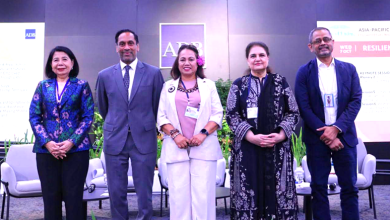
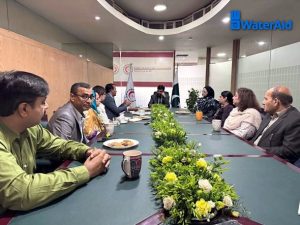
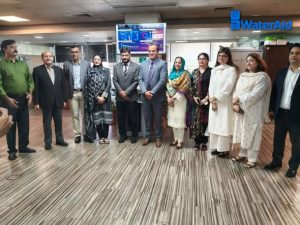
The MoU was signed by Mian Muhammad Junaid, Country Director of WaterAid Pakistan, and Dr Ahson Qavi Siddiqi, CEO of the Sindh Healthcare Commission, in the presence of senior officials from both organisations.
Background: why WASH matters in health facilities
WASH in a clinic or hospital is not an extra. A WHO and UNICEF framework describes a “basic” service as one where key conditions are met in five areas: water, sanitation, hygiene, waste management and environmental cleaning. UNICEF says that WASH in health care is a prerequisite for infection prevention and control, and that inadequate infection control and unsanitary conditions contribute to the spread of antimicrobial resistance. Global targets set in 2024 aim for every country to have basic WASH services in health care facilities by 2030.
Pakistan’s gap
Evidence from Pakistan shows how much remains to be done. A recent review found that IPC practices across Pakistan’s healthcare settings remain suboptimal, with most public hospitals failing to meet even basic WHO standards. The 2026 WHO and UNICEF global report on WASH in health care facilities states that in Pakistan, 55 percent of facilities had no waste management service.
Sindh has its own data. A cross-sectional study of drinking water in public healthcare facilities in Sindh found that total dissolved solids exceeded WHO limits in 30 percent of samples, with turbidity above permissible values in 20.7 percent. It concluded that a substantial share of drinking water in the province’s facilities does not meet WHO standards and called for stronger monitoring, disinfection and water safety plans. Those results come from one study of public facilities and should not be read as a statement about every clinic.
Why the regulator matters
The Sindh Healthcare Commission is the province’s healthcare regulator, so its standards shape what facilities must provide. An MoU that puts WASH and IPC into those standards is different from a one-off project: a standard applies to all licensed facilities and gives inspectors something to measure. That could make improvements more lasting than donor-funded fixes in a handful of hospitals. The announcement does not say which standards will be revised, or on what timeline.
What “climate-resilient, gender-responsive and inclusive” means in practice
The three descriptors in the announcement point to specific design choices:
- Climate-resilient: water supplies and sanitation that keep working during floods, heat and drought, for example protected water sources, backup storage and flood-proofed toilets. Sindh was among the provinces hit hardest by the 2022 floods.
- Gender-responsive: safe, private toilets for women, menstrual hygiene facilities, and maternity wards with reliable water, since childbirth carries a high infection risk.
- Inclusive: accessible facilities for people with disabilities and for older patients.
These are common interpretations of the terms, not definitions taken from the MoU, which was not published with the announcement.
Training the workforce
The commitment to strengthen the capacities of healthcare providers matters as much as infrastructure. Hand hygiene, safe waste handling and cleaning are daily practices, and they depend on staff knowing what to do and having supplies. Studies from Pakistan highlight the importance of locally adapted interventions, staff training and integrated infection prevention strategies. A well-built facility can still fail if routines slip.
How it connects to WaterAid’s wider work
The MoU follows another WaterAid Pakistan initiative reported this month: a workshop on National WASH Accounts, which aims to track WASH financing across the country. Together, the two efforts show a focus on both money and quality: knowing what is spent on WASH, and making sure healthcare standards include it.
What to watch
Three developments would show whether the MoU delivers. First, whether SHCC’s licensing and inspection standards are formally updated to include WASH and IPC indicators. Second, whether a baseline assessment of facilities in Sindh is published. Third, whether pilot facilities show measurable results, such as better hand hygiene or fewer infections. None of these has been announced.
Conclusion
The MoU between WaterAid Pakistan and the Sindh Healthcare Commission links a WASH-focused NGO with the body that regulates healthcare quality in Sindh. If WASH and IPC are written into healthcare standards and backed by training and evidence, the partnership could help close a gap that data from Pakistan show is wide. The key question is how quickly the commitments become standards that facilities can be held to.