
Romina Alam Invited to Represent Asia in CVF-V20 Global Parliamentary Group
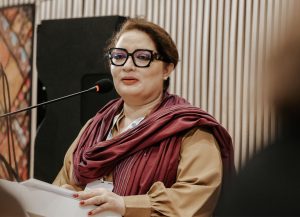
Pakistan's Romina Khurshid Alam has been invited to represent Asia in the CVF-V20 Global Parliamentary Group of climate-vulnerable nations.
Islamabad, 17 November 2026: Prime Minister’s Coordinator on Climate Change Romina Khurshid Alam has been invited to represent Asia in the Global Parliamentary Group (GPG) of the Climate Vulnerable Forum (CVF)-V20. The Associated Press of Pakistan (APP) reports that the move could give Pakistan a regional platform to raise the concerns of countries most exposed to climate risks.
What the invitation says
The invitation was conveyed in a letter from Sarah Jane Ahmed, managing director and finance adviser at the CVF-V20 Secretariat. It asks Romina to work with parliamentary representatives from other regions to strengthen the voice of climate-vulnerable countries in international decision-making.
Under the proposed role, she would engage with parliamentarians and legislative institutions across Asia, facilitate regional cooperation and identify common priorities to inform the group’s global agenda. Regional representatives are expected to work together to find opportunities for cooperation and to make sure the concerns of vulnerable countries are reflected in regional and international discussions.
The Secretariat acknowledged Pakistan’s engagement with the CVF-V20 and cited Romina’s work on climate change and environmental coordination as relevant to advancing the group’s regional agenda.
What the Global Parliamentary Group does
The GPG brings together legislators from climate-vulnerable countries to push for stronger parliamentary action on climate change. That includes legislation, public financing, oversight of government policies and international diplomacy.
Background: the CVF-V20 and the GPG
The Climate Vulnerable Forum and V20 Group of Finance Ministers (CVF-V20) is a coalition of 74 countries most vulnerable to climate change. The GPG was launched on 26 October 2021 to unlock the potential of parliaments and parliamentarians in the world’s most climate-threatened nations to cooperate South-South and advance climate action. It was designed to let parliamentarians share experiences and good practices on legislation supporting ambitious and urgent climate action, working largely as an online community supported by the CVF secretariat.
At the first GPG Annual Dialogue in Kigali on 11 October 2022, Ghana’s Emmanuel Marfo was designated chairperson. Namibia and Pakistan attended as observer countries and said they were keen to join the CVF and the GPG. That makes this week’s invitation a development of an interest Pakistan expressed four years ago.
The group has pursued concrete work. At COP28 it launched an Accountability Summit for parliamentarians to promote accountability for the 1.5°C goal, implementation of the Sendai Framework and scaled-up climate finance. African lawmakers working with the GPG have committed to accelerate climate legislation using the Model Climate Change Law for Africa, and to use oversight tools such as a Climate Finance Monitoring and Accountability Tool.
Why it matters for Pakistan
Pakistan contributes a small share of global emissions but has suffered repeated floods and heatwaves, which is the core of its argument for climate finance. A role in a group of legislators gives it another channel for that argument, one aimed at parliaments, which control budgets and laws, instead of only at negotiators. The timing is notable: the invitation arrives while COP31 is in its second week in Antalya, where finance is the central dispute.
For Asia, a regional representative can help match priorities across countries as different as small island states, mountain nations and large river-basin economies. The APP report describes the task as identifying common priorities, which suggests a coordinating role instead of a negotiating one.
What to watch
Three things will show how much this matters. First, whether Romina accepts and what formal title and mandate the role carries. Second, how many Asian legislatures take part, since the role depends on engagement across the region. Third, whether the GPG’s agenda for 2027 reflects Asian priorities such as adaptation finance and disaster risk. The APP report does not say how she was selected or whether she is a member of parliament.
Conclusion
The invitation recognises Pakistan’s climate engagement and offers a regional platform on a body that links legislators in the countries most exposed to climate risk. Its value will depend on acceptance, on how actively Asian parliaments join, and on whether the group’s push for legislation and finance translates into results. With COP31 negotiations ending on 20 November, the coming months will show how the role takes shape.