

UNCCD COP17 Opens in Mongolia to Tackle Land Degradation
196 countries pledge action on land restoration, drought resilience, and rangeland protection through 28 August 2026.
-
UNCCD COP17 Opens in Mongolia to Accelerate Global Action on Land Restoration and Drought Resilience
-
At UNCCD COP17, some 196 countries pledge action on land restoration, drought resilience, and rangeland protection through 28 August 2026.
Ulaanbaatar, Mongolia, August 17, 2026 — Delegates from 196 countries and the European Union gathered in Ulaanbaatar today for the opening of the seventeenth session of the Conference of the Parties (COP17) to the United Nations Convention to Combat Desertification (UNCCD). Over the next two weeks, governments, financial institutions, businesses, scientists, and civil society representatives will work to advance practical solutions, forge new partnerships, and mobilize investment for land restoration and drought resilience.
Land degradation, drought, and water scarcity are increasingly threatening food security, livelihoods, and social stability worldwide. According to UNCCD estimates, land degradation and drought cost the global economy nearly USD 900 billion every year and already affect up to 40 percent of the world’s land and 3.2 billion people. Droughts have increased by almost one-third since 2000, generating at least USD 300 billion in annual losses.
As the first of three Rio Convention COPs scheduled in 2026 — ahead of the biodiversity and climate conferences — COP17 offers an opportunity to strengthen cooperation across the Rio Conventions and accelerate practical action on interconnected challenges including land degradation, biodiversity loss, climate change, and water and food security. For host country Mongolia, these issues are part of daily life: nearly 77 percent of the country’s land is degraded, and pastoralism supports the livelihoods of one in three Mongolians. Severe summer droughts followed by devastating winter dzud conditions in 2023 and 2024 resulted in the loss of more than seven million livestock, underscoring the urgent need for stronger resilience measures.
Key Priorities at COP17
Mobilizing public and private investment to accelerate land restoration and drought resilience will be one of the defining priorities of COP17. An estimated USD 355 billion is needed annually to combat land degradation and drought, yet current investment stands at only around USD 77 billion — leaving an annual financing gap of USD 278 billion. The private sector currently contributes just six percent of global land restoration and drought resilience finance, highlighting the need for stronger collaboration between governments, development banks, businesses, and investors.
Governments will also advance decisions on drought resilience, rangelands, sustainable agriculture and soils, and private-sector engagement. Building on progress made at COP16 in Riyadh, Parties will continue discussions on a global policy framework for drought, alongside practical tools, partnerships, and financing mechanisms to help countries turn drought plans into action. More than 70 countries have now developed national drought plans, up from just three in 2013.
Rangelands will also take centre stage, given that COP17 coincides with the International Year of Rangelands and Pastoralists. Rangelands cover 54 percent of the Earth’s land surface, support roughly two billion people including around 500 million pastoralists, and provide about 70 percent of livestock feed. Yet up to half of the world’s rangelands are already degraded or at risk. Governments are expected to consider a new policy framework on rangelands and pastoralists and launch the Rangelands Flagship Initiative to boost long-term investment in sustainable rangeland management.
Statements from Leaders
Mongolian Prime Minister H.E. N. Uchral called for a shift “from talk to action, from targets to implementation, and from commitments to measurable results,” urging delegates to treat land, climate, and biodiversity as interconnected challenges and to increase investment in restoration.
UNCCD Executive Secretary Yasmine Fouad said land degradation and drought are “no longer distant environmental concerns,” stressing that healthy land underpins food systems, economies, and social stability, and calling COP17 “a COP of implementation.”
Mongolia’s Minister for Foreign Affairs and COP17 President, H.E. Battsetseg Batmunkh, emphasized that land is inseparable from Mongolia’s people and livelihoods, while Minister of Environment and Climate Change Sandag-Ochir Tsend confirmed the country’s readiness to host and facilitate inclusive, consensus-based dialogue among all Parties.
Programme Highlights
The conference will run from 17–28 August and feature four thematic days during its second week:
- Finance Day (24 August): Mobilizing public and private investment for land restoration and drought resilience
- Water Day (25 August): Strengthening drought resilience and cooperation on the land-water nexus
- Land and People Day (26 August): Highlighting the role of pastoralists, Indigenous Peoples, local communities, women, and youth
- Food Systems and Soil Health Day (27 August): Advancing healthy soils and sustainable food systems
Several major scientific and policy publications will also be launched during the conference, including The Economics of Rangelands Restoration, The Drying Planet: Drought in Numbers 2026, and regional Global Land Outlook reports for Small Island Developing States and Central Asia.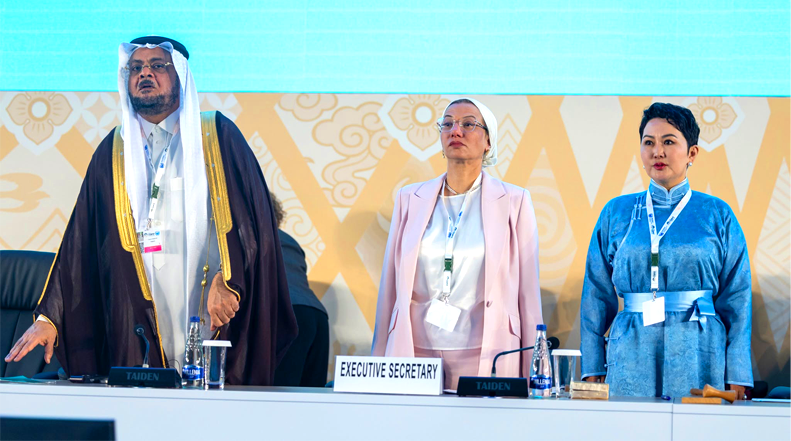
Conclusion
As governments, businesses, and civil society converge in Ulaanbaatar, COP17 represents a critical opportunity to translate years of negotiation into measurable action on land restoration and drought resilience. With a financing gap of hundreds of billions of dollars still unaddressed and hundreds of millions of livelihoods at stake, the outcomes of this conference — expected to be adopted by Parties on 28 August — will shape the global response to land degradation, drought, and food and water insecurity for years to come.