
IWMI Report at COP31: Community Focus and Early Financing Key to Early Warning for All
IWMI's new report, launched at COP31, says community-led design and pre-arranged financing are essential to turn early warnings into action.
IWMI Report at COP31: Community Focus and Early Financing Are Key to Early Warning for All
The International Water Management Institute (IWMI) has released a new global report, The State of Early Warning Around the World, arguing that community-led design and early financing are essential to turn early warnings into action. IWMI announced the report on 16 November. It was launched at the COP31 Food & Agriculture Pavilion in Antalya by CGIAR and partners, as El Niño and disruptions to fertilizer markets threaten food systems.
What the launch said
The report was introduced by Giriraj Amarnath, Principal Researcher at IWMI, and the discussion was opened by CGIAR Executive Managing Director Ismahane Elouafi. The report takes stock of progress in early warning systems and the gaps that limit their effectiveness.
A central concern is that threats now arrive together. A drought, for example, may coincide with rising food prices or disrupted agricultural supplies, leaving communities exposed to pressures that existing warning systems are not always designed to address together. The report also stresses what happens after the warning. It draws attention to the distance between identifying a threat and enabling people to respond, including having financing in place before a shock instead of mobilising resources after damage has begun.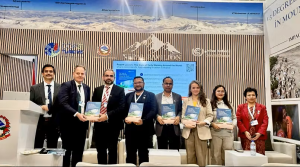
How the report was built
The report draws on the Eyes on the Storm webinar series, convened by IWMI with the World Meteorological Organization, the UN Office for Disaster Risk Reduction, the International Telecommunication Union, the International Federation of Red Cross and Red Crescent Societies and other partners in 2025–26. Close to a hundred practitioners from meteorological and disaster services, space agencies, humanitarian networks, insurers, hydropower operators and community organisations described what is working and what is not.
It is structured around the four pillars of early warning and examines advances for heatwaves, floods, droughts, landslides and tsunamis, community-led and inclusive approaches, early warning for hydropower and compound crises, artificial intelligence and Earth observation, last-mile communication and financing and public–private partnerships. The authors are Giriraj Amarnath and Niranga Alahacoon.
Community first
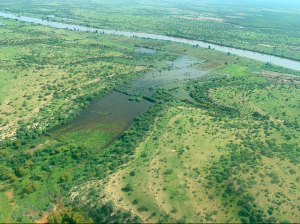
The report says the first stage of an effective system involves co-creating it with communities, and it highlights examples such as a community-led early warning system that saves lives in the Hindu Kush. The logic is practical: warnings fail when people do not trust the source, understand the message or know what to do. Trusted local actors, such as community leaders, can carry a message that national agencies cannot.
Background: Early Warnings for All
The report supports the UN’s Early Warnings for All initiative. The initiative aims to protect everyone from hazardous weather, water or climate events through early warning systems by the end of 2027. The 2025 status report shows that 119 countries are now covered by a multi-hazard early warning system, a 113 percent increase since 2015. UN Secretary-General António Guterres has said disaster-related mortality is at least six times lower in countries with good early warning systems, and that reaching every community requires a surge in financing.
Why finance is the sticking point
The report’s financing message matches its warnings from earlier this autumn. In an October analysis of El Niño risk in South Asia, IWMI argued that forecasts alone do not release money, and that forecast-based financing, with agreed triggers, lets help arrive before disaster strikes. The new report extends that argument globally, pointing to early action protocols and, where possible, pre-agreed financing, as ways to give warnings a route into farmers’ decisions while there is still time to act.
This lands at a summit where money is the central dispute. Developing countries are pressing for predictable adaptation finance, and the COP31 draft cover decision proposes tripling it to at least $120 billion by 2035. Early warning is among the cheapest adaptation measures, so advocates will want it named in any adaptation finance outcome.
What to watch
Three signals will show whether the report has influence. First, whether COP31 decisions on adaptation or Early Warnings for All refer to community-led design and pre-arranged finance. Second, whether donors, development banks or climate funds announce support for forecast-based financing. Third, how the 2027 deadline for universal coverage is treated, since the report suggests many countries still have gaps in the last mile.
Conclusion
IWMI’s report argues that early warning is as much about people and money as about technology. With El Niño building and food systems under strain, the message from Antalya is that communities must help design the systems and that funds should be arranged before shocks, not after. Whether negotiators and donors act on that will become clearer when COP31’s final texts are published on 20 November.