
WAPDA Briefs Balochistan Delegation on Water, Hydropower Plans
WAPDA briefed a National Workshop Balochistan delegation on its water and hydropower projects, including Diamer Basha and Dasu Dam developments.
National Workshop Balochistan Delegation Briefed on WAPDA’s Water and Hydropower Development Plans
Chairman WAPDA highlights climate change challenges and India’s suspension of the Indus Waters Treaty as delegation tours ongoing mega dam and hydropower projects
A delegation of the National Workshop Balochistan visited WAPDA House in Lahore on July 28, 2026, for a detailed briefing on the Water and Power Development Authority’s (WAPDA) plans for the development of water and hydropower projects across Pakistan.
Pakistan’s Water Security Challenges
Pakistan’s water security has come under increasing strain in recent years, driven by a combination of factors including climate change impacts on glacial melt and rainfall patterns, rapid population growth, and rising agricultural and industrial demand. As one of the most water-stressed countries globally in terms of per capita water availability, Pakistan has faced mounting pressure to expand its water storage capacity, much of which remains significantly below levels recommended for a country of its size and agricultural dependency.
These challenges have been further complicated by regional tensions surrounding the Indus Waters Treaty, the decades-old water-sharing agreement between Pakistan and India governing the Indus River system. India’s unilateral suspension of the treaty has introduced additional uncertainty into Pakistan’s water planning, adding urgency to domestic efforts to expand water storage and hydropower infrastructure as a means of strengthening national water security independent of cross-border arrangements.
WAPDA, as Pakistan’s principal authority for water and power infrastructure development, sits at the center of the country’s response to these compounding pressures, overseeing a portfolio of major dam and hydropower projects intended to expand both water storage capacity and clean energy generation.
Briefing Overview
During the visit, the National Workshop Balochistan delegation received a comprehensive briefing covering Pakistan’s water, food, and energy security, the country’s broader water dynamics, the effects of climate change on national water resources, and the implications of what officials described as India’s “weaponization of water” through its handling of the Indus Waters Treaty. The delegation was also briefed on WAPDA’s contributions to national development more broadly.
WAPDA’s Major Infrastructure Projects
As part of the briefing, the delegation was informed of WAPDA’s ongoing construction of several major water and hydropower projects, including the Diamer Basha Dam, Mohmand Dam, Dasu Hydropower Project, and the Tarbela 5th Extension. According to WAPDA, these projects collectively will add approximately 10 million acre-feet (MAF) to the country’s gross water storage capacity, alongside 10,000 megawatts of what officials described as clean, green, and affordable hydroelectric power to the National Grid.
Given Pakistan’s persistent water storage shortfalls and growing energy demand, these combined additions to storage and generation capacity represent a substantial component of the country’s broader strategy for addressing simultaneous water and energy security challenges.
Remarks from Chairman WAPDA
During the interactive session, Chairman WAPDA Lt Gen Muhammad Saeed (Retd) highlighted the challenges facing Pakistan’s water security, attributing these challenges to both climate change and India’s unilateral decision to hold the Indus Waters Treaty in abeyance. The Chairman elaborated on the need for new water reservoirs and discussed the factors behind what he characterized as the slow pace of water resource development in the country historically.
Chairman Saeed emphasized that a “Whole of Nation Approach” is essential to ensuring Pakistan’s water, food, and energy security going forward, underscoring the need for coordinated action across government institutions and stakeholders rather than efforts isolated to WAPDA alone. He also used the session to clarify WAPDA’s current role and institutional mandate following the organization’s unbundling in 2007, a restructuring that reshaped the division of responsibilities within Pakistan’s water and power sector.
Senior Officials in Attendance
The session was also attended by several senior WAPDA officials, including Member (Finance) Naveed Asghar Chaudhry, Member (Power) Muhammad Arfan Miana, and Member (Water) Asim Rauf Khan, alongside other senior officers of the organization.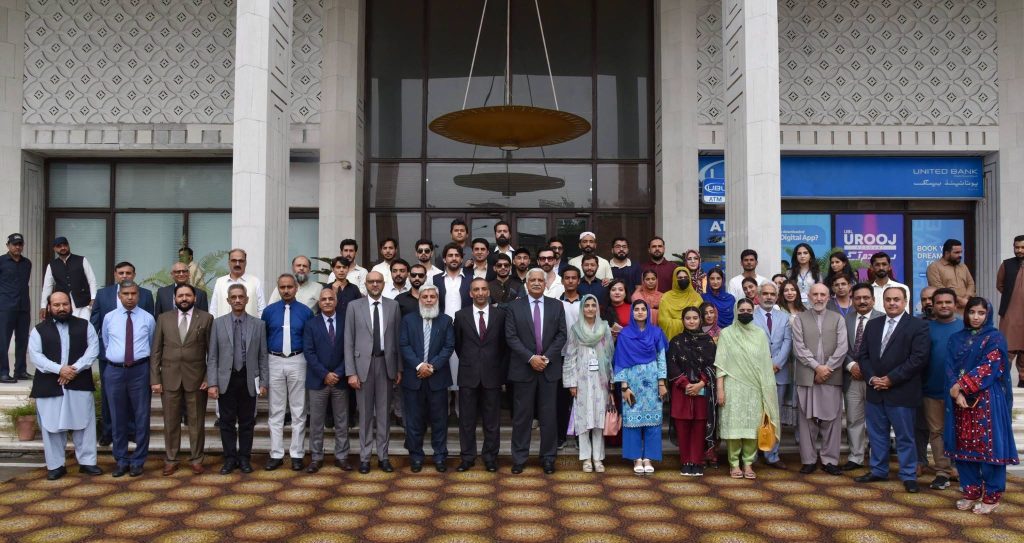
Why This Matters
Briefings of this kind, involving delegations from across Pakistan’s provinces, reflect an ongoing effort by WAPDA to build broader national awareness and support for its infrastructure development agenda, particularly as the organization seeks to position major projects like Diamer Basha Dam and the Dasu Hydropower Project as central components of Pakistan’s response to compounding water, food, and energy security pressures. The emphasis placed on regional dynamics surrounding the Indus Waters Treaty during the session also underscores the extent to which Pakistan’s domestic water infrastructure planning has become increasingly intertwined with broader questions of national security and cross-border water diplomacy.