

Pakistan Water Week 2026 Day 2: Moving From Water Policy to Implementation
On Day 2 of Pakistan Water Week 2026, experts said Indus Basin water governance needs implementation, not new policies, and highlighted IWMI's Pywr model.
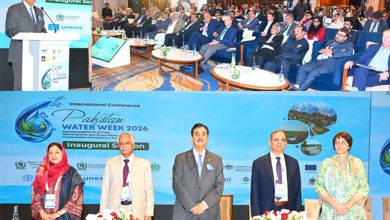
Islamabad, 3 November 2026: Day 2 of Pakistan Water Week 2026 brought national and international experts together to ask how stronger institutions, scientific evidence and practical solutions can improve water governance in the Indus Basin. The central message, repeated by speakers, was that Pakistan has most of the policies it needs and the real challenge is putting them into practice.
The plenary
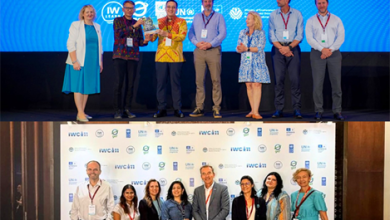
The plenary session was moderated by Mohsin Hafeez of the International Water Management Institute (IWMI). Speakers were IWMI Director General Mark Smith, Will Fargher, Claudia Ringler and Neil Lazarow, who drew on global experience and the perspectives of water users.
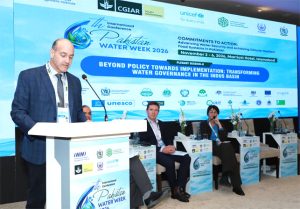
Hafeez said Pakistan already has many of the policies, laws and plans it needs, and that implementation is the real challenge. He made the same point at the opening session on Monday, when he said decisions taken in Islamabad must bring tangible changes for farmers.
Two themes: policy to practice, innovation to impact
Discussions on Day 2 centred on two thematic areas.
Policy to practice covered strengthening legislation, financing and accountability so that water and agricultural policies are carried out. It also covered advancing climate adaptation, inclusive decision-making and the role of women in water governance.
Innovation to impact looked at improving early warning for cascading mountain hazards, expanding access to safe water and sanitation, and using data-driven tools to support better decisions in the Indus Basin. One of those tools is IWMI’s Pywr Water Allocation Model.
Background: the Pywr model
The Water Allocation Planning Model for the Indus Basin Irrigation System is based on open-source Pywr software. It was developed with the University of Manchester under the CGIAR Policy Innovations Program, and with partners including the Indus River System Authority (IRSA), the Water and Power Development Authority (WAPDA) and provincial irrigation departments. The tool lets managers test “what-if” scenarios, such as changes in river flows, diversions and energy use. For the Indus Basin, IWMI says it promotes collaboration among provinces and aligns water-sharing practice with agreements such as the 1991 Water Apportionment Accord. At its launch last year, IRSA’s chairman described it as a confidence-building measure for water management.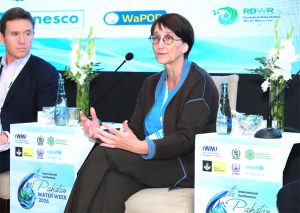
About the conference
The sixth Pakistan Water Week runs in Islamabad from 2 to 6 November under the theme “Commitments to Action: Advancing Water Security and Achieving Climate-Resilient Food Systems in Pakistan.” It is organised by IWMI with the Pakistan Council of Research in Water Resources and the Ministry of Water Resources, and has two parallel tracks of 13 sessions each. Senate Chairman Yousaf Raza Gilani opened the event on Monday and pledged parliamentary support for water security through legislation, oversight and budget allocations.
Why it matters
The Indus Basin supports Pakistan’s agriculture and food security, and water is shared among four provinces under the 1991 accord. Data tools that show every user the same picture can help reduce disputes. Early warning for mountain hazards and safe water access are also practical priorities as climate pressures grow.
Conclusion
Day 2 reinforced the need to connect policy, research, investment and the realities of water users to deliver lasting improvements in water security. With the conference running until 6 November, including a study tour on the final day, the test will be whether the commitments made this week turn into follow-up action.