
IWMI: Water Cycle No Longer Matches Our Institutions’ Design
IWMI warns the water cycle no longer follows historical patterns, urging institutions to move beyond traditional planning to build real climate resilience.
IWMI Warns the Water Cycle No Longer Follows the Patterns Our Institutions Were Built For
October 5, 2026 — The past is now an unreliable guide for predicting water risks, the International Water Management Institute (IWMI) warned in a new analysis, arguing that climate resilience requires water institutions to move decisively beyond traditional planning approaches built on the assumption that historical rainfall and river patterns will repeat themselves.
Background
For the past two centuries, the basic premise underlying water resource planning and management has rested on a simple assumption: that analyzing previous long-term patterns can reliably predict future water risks — in other words, that the past predicts the future. This assumption has shaped how dams are sized, how irrigation systems are designed, how flood defenses are built, and how water allocation agreements between regions and countries are negotiated.
That core tenet of water planning is now being undermined as the water cycle shifts and new uncertainties emerge. Water’s inherent variability has always posed a challenge for human-water interactions, but IWMI argues this challenge is fundamentally changing in nature and scale, as the water cycle becomes less predictable and historical baselines lose their reliability as planning tools.
Why Institutions Are Falling Behind
Decades of undervaluation and mismanagement have left the world’s water resources increasingly strained, even as economies remain under pressure to maintain business-as-usual while climate change intensifies temperatures, disrupts rainfall patterns, and dries aquifers. New demands on water are increasingly out-competing existing ones: in the energy sector, for example, thermoelectric power generation — coal, gas and nuclear — depends heavily on water for cooling, adding further strain to already stressed systems.
IWMI has also pointed to a structural gap in how financial and governance institutions assess water-related risk. Current debt sustainability analyses, fiscal frameworks and stress tests used by international financial institutions remain built on assumptions of a stable water supply that no longer hold — a gap the organization argues needs to be addressed within Resilience and Sustainability Facility conditionalities, sovereign debt assessments and central bank scenario analysis. Separately, underpriced and poorly regulated water continues to make water-intensive production in water-scarce regions appear economically rational, even where it is not environmentally sustainable, because allocation decisions remain grounded in historical assumptions that climate change has already invalidated.
Moving Beyond a Single Optimized Design
In order to fully harness the strength of water systems for climate adaptation, IWMI argues that water management cannot be approached as a search for a single optimized design or a fixed set of guidelines. Instead, climate-resilient water management should become the unifying agenda connecting water management and broader climate change adaptation efforts — treating variability itself, rather than a presumed stable baseline, as the central design challenge.
This reframing builds on IWMI’s broader recent messaging around the hydrological cycle as an interconnected system spanning blue, green and atmospheric water, and on growing recognition within the global water community — including discussions at Stockholm World Water Week 2026 — that institutional architecture and accountable governance, not just more data or more commitments, are what will determine whether water systems can adapt to accelerating climate volatility.
Conclusion
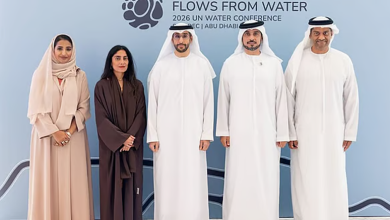
IWMI’s warning adds to a growing body of evidence suggesting that water institutions worldwide — from national water ministries to international financial institutions — are operating on outdated assumptions about hydrological stability that climate change has already overtaken. As the 2026 UN Water Conference in Abu Dhabi approaches this December, the organization’s call to move “beyond traditional planning” underscores a central challenge for governments and financiers alike: redesigning water governance systems for a world where the past can no longer reliably predict the future, before that uncertainty translates into deeper economic and social losses.