

IWMI and UN Global Compact Network Sri Lanka Link Water Research With Private-Sector Action at IWMI Open Day 2026
WMI and UN Global Compact Network Sri Lanka held a session on research and private-sector water stewardship on 6 November 2026, covering groundwater and watersheds.
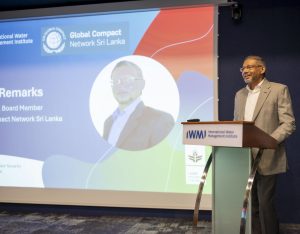
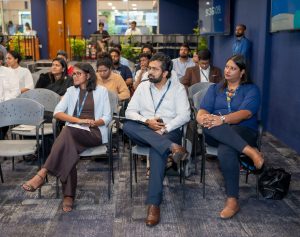
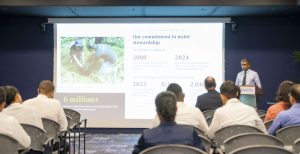
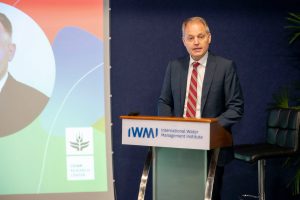
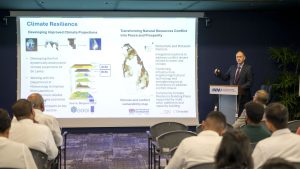
Colombo, 6 November 2026: The UN Global Compact Network Sri Lanka, in collaboration with the International Water Management Institute (IWMI), convened a session titled “Water Stewardship in Sri Lanka: Partnering in Knowledge, Research and Innovation for Collective Action” as part of IWMI Open Day 2026. The announcement was published after the event.
Why the session was held
The organisers’ starting point is that scientific evidence is critical to understanding the changing pressures on Sri Lanka’s water resources, from water availability and quality to ecosystem health. Turning that knowledge into effective water management, they say, requires stronger links between research and private-sector practice.
The session built on discussions begun at CATALYZE 2025 and was aligned with the 2026 agenda of the Network’s Water & Ocean Stewardship Working Group. It examined Sri Lanka’s current and emerging water challenges and explored what the organisers call the innovation-industry nexus.
Research spotlight
The research segment presented solutions in three areas:
- Groundwater monitoring and management
- Efficient agricultural water use
- Restoration of Sri Lanka’s upper watersheds
The announcement does not name the researchers or describe specific findings, so details of the presentations are not covered here.
A private-sector case study
The session also featured a case study from Kelani Valley Plantations PLC (KVPL), one of the Patrons of the Water & Ocean Stewardship Working Group. The announcement does not give details of what KVPL presented. Earlier reports describe its water work: KVPL became a Patron of the working group in late 2025, has been a signatory to the UN Global Compact since 2006 as the first plantation company in Sri Lanka to sign, and aligned with the CEO Water Mandate in 2008. At its Dunedin Skim Rubber Factory, process-level water audits led to the reuse of treated milling water. The company also runs the Kelani Valley Protectors Initiative under the National Surakimu Ganga Programme, which protects water sources, plants native trees and engages communities through green clubs, with more than 4,500 plants planted and over 8,000 volunteer hours logged. Those are older results and may not be what was presented on 6 November.
The role of the Global Compact Network
The Network describes itself as a convenor of the private sector. It says it facilitates dialogue and partnerships that connect businesses with relevant knowledge, expertise and stakeholders. Through its Water & Ocean Stewardship Working Group, it aims to strengthen private-sector engagement in water stewardship and create pathways for research-informed collaborative action toward the long-term sustainability of Sri Lanka’s water resources.
Background: IWMI in Sri Lanka
IWMI is a CGIAR research centre headquartered in Colombo, with offices in 17 countries and scientists working in more than 55 countries. It has worked in Sri Lanka for decades on water management and environmental resilience for agriculture and ecosystems, including ecosystem services and wetland management that contributed to Colombo’s Ramsar Wetland City Accreditation in 2018. That makes Open Day a natural place for local companies to meet the researchers who study their water sources.
IWMI also hosted a high-profile meeting in Colombo in September, when the institute and the Intergovernmental Panel on Climate Change brought together about 60 experts on addressing water risks and building resilience to climate change. Together, the two events show Colombo functioning as a hub for water and climate discussion this autumn.
Why the research-industry link matters
Businesses use water directly, in factories, plantations, hotels and supply chains, and they also share watersheds with communities and farms. Stewardship means managing water use with the wider catchment in mind, not only the company’s own site. But companies often lack the data to do that well: how fast an aquifer is declining, how much water crops need, or whether a restored forest upstream improves dry-season flows. Researchers hold that evidence, and the session was designed as a bridge.
Each of the three research topics has a private-sector angle. Groundwater monitoring matters to any firm that pumps wells. Efficient agricultural water use concerns plantations and food companies. Upper watershed restoration affects the water quality and flow that downstream factories and utilities depend on.
What to watch
Three developments would show whether the session leads anywhere. First, whether companies in the working group commit to shared water-monitoring or restoration projects. Second, whether IWMI and the Network formalise a research partnership, for example on groundwater data. Third, whether results from the KVPL case study are scaled to other plantation firms. None of these is announced.
Conclusion
The 6 November session at IWMI Open Day 2026 put researchers and a plantation company in the same room to discuss groundwater, farm water use and watershed restoration. Its premise is that water stewardship works best when companies act on evidence. The test is whether that conversation turns into joint projects that protect Sri Lanka’s water resources over the long term.