
PM Shehbaz Sharif Attends COP31 Leaders’ Summit in Antalya, Seeking Predictable Climate Finance
PM Shehbaz Sharif addresses the COP31 Leaders' Summit in Antalya on 11 November, urging predictable climate finance and highlighting Pakistan's solarisation.
Islamabad/Antalya, 11 November 2026: Prime Minister Shehbaz Sharif is attending the Leaders’ Summit of the 31st UN climate conference, COP31, in Antalya, Türkiye. The Foreign Office (FO) said he would address the summit on 11 November and urge the global community to take concrete action against the threat climate change poses to the planet. The visit runs from 10 to 12 November.
What the prime minister will say
According to the FO, the prime minister will highlight Pakistan’s “rapid solarisation” and the expansion of its renewable energy capacity as part of a transition to a cleaner, more resilient economy. He will also point to efforts to strengthen disaster preparedness and early-warning systems. He will call for predictable, adequate and accessible climate finance for developing countries, so they can build resilience and pursue sustainable development.
The prime minister will also attend a high-level roundtable convened by the COP31 presidency on the sidelines of the summit, and hold bilateral meetings with the Turkish leadership and several other world leaders. The FO described his participation as an expression of Pakistan’s strong support for the climate agenda.
Arrival and schedule
The prime minister arrived in Antalya on Tuesday and was received by Türkiye’s Deputy Minister of Culture and Tourism, Gökhan Yazgı, Pakistan’s Ambassador-designate to Türkiye, Amna Baloch, and senior Turkish officials. He is also due to address the High-Level Dialogue on Clean Energy Transition and Electrification, titled “35 by 35: Powering the Future.” Pakistan has set up a pavilion at the COP31 venue that will host 54 events on various themes.
Background: Pakistan’s climate argument
Pakistan’s position has been consistent for years. It contributes less than one percent of global emissions but remains among the countries most vulnerable to climate change. It argues that the countries that contribute least bear a disproportionate share of the damage.
Pakistan played a prominent role at COP27 in Egypt in 2022, where it pushed for a Loss and Damage Fund to help vulnerable countries recover from climate disasters. Islamabad has also repeatedly urged developed countries to deliver on their commitment to mobilise $100 billion a year in climate finance, and has called for more money for adaptation and disaster resilience. The 2022 floods, the worst natural calamity in decades for Pakistan, prompted a 2023 international conference in Geneva where the government and the UN sought support for recovery and resilience.
The mood in Antalya
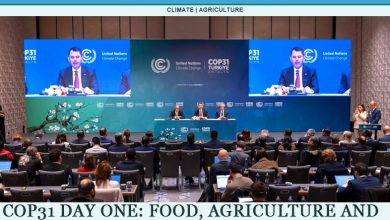
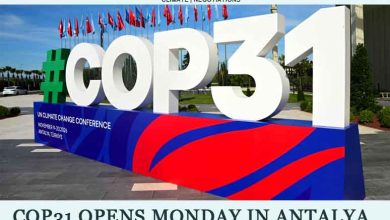
The prime minister arrives at a summit that opened with a finance row. Delegates from nearly 200 countries are meeting as emissions show little sign of falling and wars, inflation and other crises compete for political attention. COP31 opened on Monday with an early dispute over whether climate finance items would be on the official agenda, and a senior EU official warned last week that there would be no political will for additional funding pledges. Observers expect few major breakthroughs as countries grapple with an oil price shock and geopolitical tensions.
In that setting, Pakistan’s call for predictable finance is aimed at a gap developing countries say is widening. The EU’s climate monitoring service expects 2026 to be the second-hottest year on record.
Why the solarisation message matters
Pakistan’s pitch combines two themes: a plea for support and a record of its own action. Highlighting rapid solar adoption lets the government argue that it is cutting emissions and reducing fuel imports even as it asks for money. It also fits the host’s push on electrification. The “35 by 35” dialogue refers to the COP31 presidency’s goal of raising the share of global energy demand met by electricity to 35 percent by 2035. Pakistan’s participation in that dialogue signals alignment with Türkiye’s agenda.
Early warning and disaster preparedness are the other practical point. After repeated floods and heatwaves, the government can present these as concrete measures that need funding, not as abstract commitments. The FO statement frames both as part of building resilience, not only reducing emissions.
What to watch
The speech itself is the first test: whether the prime minister names specific figures, such as the finance Pakistan needs for adaptation, or keeps to general calls. The second is the bilateral meetings, which the FO has not detailed beyond naming the Turkish leadership. The third is the presidency’s roundtable, where the content of discussions may not be public. The FO has not said what outcomes Pakistan expects from any of these meetings.
Conclusion
Prime Minister Shehbaz Sharif’s trip puts Pakistan’s long-standing climate-finance argument in front of world leaders at a summit already split over money. His message pairs a call for predictable support with Pakistan’s solarisation and early-warning efforts. Whether that lands will depend on specifics in the speech and on whether donors move beyond opening-day positions as negotiations continue until 20 November.