

Pakistan Turns to Smarter Irrigation to Fight Water Scarcity
At Agri-Connections 2026 in Lahore, experts urge Pakistan to boost water productivity through laser land levelling and smarter irrigation amid shrinking supplies.
Pakistan Turns to Smarter Irrigation to Produce More Food With Less Water
Lahore, Pakistan — October 1, 2026 — Pakistan will need to produce more food from increasingly constrained water resources, placing growing importance on improving irrigation efficiency and raising agricultural output generated from every unit of water used, according to industry experts speaking at the Pakistan Agriculture Coalition’s Agri-Connections 2026 conference in Lahore.
Background
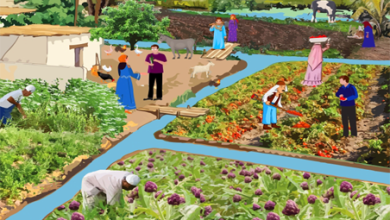
Pakistan’s agricultural system remains heavily dependent on irrigation, even as water availability has declined sharply over recent decades. The country’s per capita water availability has dropped from around 5,600 cubic meters in 1956 to less than 800 cubic meters today — well below internationally recognized scarcity thresholds. This decline, combined with population growth and intensifying climate-related stress, has made improving how efficiently water is used in agriculture an increasingly urgent national priority, rather than a secondary consideration to simply expanding irrigated area.
Water Productivity Over Water Consumption
Speaking at the conference, Zeeshan Baig, Country General Manager at Syngenta Pakistan, said improving water productivity would be critical as agriculture faces growing pressure from population growth, declining water availability and climate-related stress. He pointed to laser land levelling as an example of how relatively simple interventions can simultaneously improve water efficiency and crop productivity — a technique that flattens and grades fields to ensure more even water distribution, reducing wastage from uneven pooling and runoff.
Baig emphasized that better land preparation, improved irrigation practices, and more informed farm management could allow farmers to generate higher output while reducing avoidable water losses. For Pakistan, he noted, the shift toward smarter irrigation is therefore increasingly about water productivity rather than simply water consumption — producing more food from the same, or potentially smaller, volume of increasingly scarce water.
Conclusion
As Pakistan’s water security challenges continue to intensify, the emphasis placed on water productivity at Agri-Connections 2026 reflects a broader shift in how the country’s agricultural sector is approaching resource constraints — moving from a mindset of water consumption toward one centered on efficiency and output per unit of water used. With techniques like laser land levelling offering a relatively low-cost entry point, the coming years will test how quickly such practices can be scaled across Pakistan’s vast irrigated farmland to help the country produce more food even as its water resources continue to shrink.