
Pakistan, Bangladesh Seek Stronger Agrifood Partnership and Climate Resilience
Pakistan and Bangladesh discuss stronger cooperation in agriculture, livestock, fisheries, climate resilience and One Health during a high-level meeting in Rome.
Pakistan, Bangladesh Seek Stronger Agrifood Partnership and Climate Resilience
Rome, September 23, 2026: Pakistan and Bangladesh have discussed expanding cooperation in agriculture, livestock, fisheries, climate adaptation and the One Health approach, with both sides highlighting the need for stronger and more resilient agrifood systems.
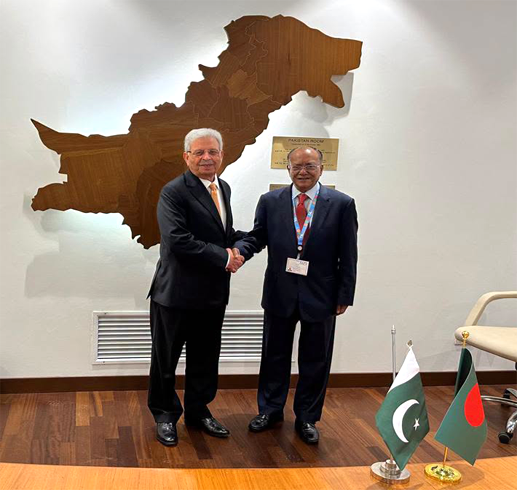
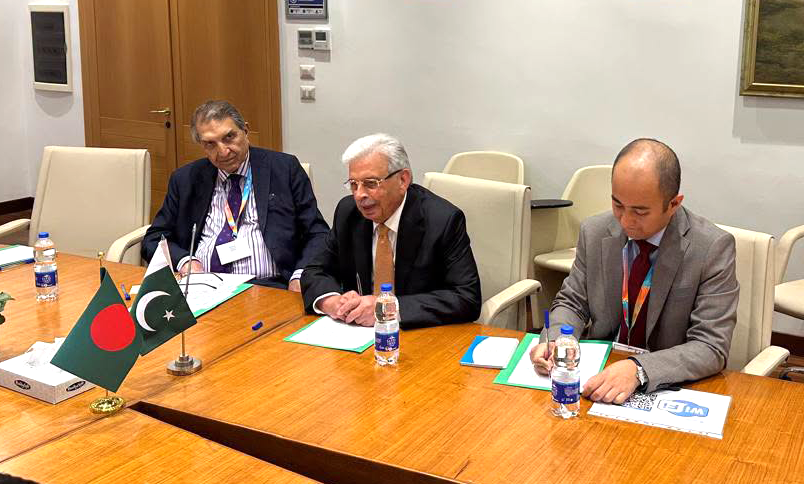
Federal Minister for National Food Security and Research Rana Tanveer Hussain held a high-level meeting with Bangladesh’s Minister of Environment, Forest and Climate Change Abdul Awal Mintoo and Minister of State for Fisheries and Livestock Sultan Salauddin Tuku on the sidelines of the FAO Global Conference for Actions on One Health in Agrifood Systems in Rome.
Background
Pakistan and Bangladesh are both countries where agriculture, livestock and fisheries play important roles in food security and rural livelihoods. Climate change, changing environmental conditions, animal diseases and pressure on food systems have increased the importance of cooperation on agricultural resilience and sustainable production.
The FAO Global Conference for Actions on One Health in Agrifood Systems in Rome provided a platform for countries to discuss coordinated approaches to challenges involving food systems, animal health, human health and the environment.
Against this backdrop, the Pakistan-Bangladesh meeting provided an opportunity to discuss areas where greater technical cooperation could support sustainable and climate-resilient agrifood systems
Pakistan-Bangladesh Agrifood Cooperation Discussed
The meeting focused on strengthening bilateral cooperation across several areas, including agriculture, livestock, fisheries, climate adaptation, food security and One Health.
Rana Tanveer Hussain highlighted the shared challenges faced by Pakistan and Bangladesh as agriculture-dependent countries. He noted that both countries are increasingly dealing with the effects of climate change, emerging diseases and environmental pressures.
The Pakistani minister stressed that closer cooperation between the two countries in animal, human and environmental health could contribute to stronger food security, protect rural livelihoods and improve the resilience of agricultural communities.
Focus on Agriculture, Trade and Research
During the meeting, Pakistan highlighted opportunities to expand cooperation in agricultural trade, research, mechanisation, livestock breed improvement and capacity building.
Rana Tanveer Hussain also pointed to the potential for institutional partnerships and technical exchanges in agriculture and veterinary sciences. He reaffirmed Pakistan’s commitment to developing relations with Bangladesh based on mutual respect, sovereign equality and shared development priorities.
The proposed areas of cooperation could provide opportunities for both countries to exchange technical knowledge and practical experience in agriculture and related sectors.
Bangladesh Highlights Climate Resilience
Abdul Awal Mintoo welcomed the engagement and emphasised the importance of coordinated action to address climate change and environmental challenges.
He highlighted the value of exchanging knowledge, experiences and practical approaches aimed at strengthening climate resilience and promoting sustainable agrifood systems.
The discussions reflected the common importance of climate adaptation for countries whose rural economies and food systems are significantly connected to agriculture and natural resources.
Fisheries and Livestock Cooperation
Bangladesh Minister of State for Fisheries and Livestock Sultan Salauddin Tuku highlighted the important role of the fisheries and livestock sectors in supporting food security, nutrition and rural livelihoods.
He expressed support for greater cooperation in livestock development, production systems, disease prevention, research and technical capacity building.
Pakistan and Bangladesh also identified opportunities for sharing expertise and strengthening institutional connections in fisheries and livestock development.

One Health and Disease Prevention
A key part of the discussions was the One Health approach, which recognises the close relationship between human health, animal health and the environment.
The two sides explored potential cooperation in areas including:
- Climate-smart livestock production
- Feed and fodder systems
- Disease surveillance
- Antimicrobial resistance
- Food safety
- Agricultural value addition
- Veterinary research
- Technical capacity building
Both sides recognised that sustained technical engagement would be important to identify priority areas and convert the discussions into practical initiatives.
Invitation for Further Bilateral Engagement
Rana Tanveer Hussain invited the Bangladeshi ministers to visit Pakistan for further bilateral discussions.
The proposed visit could provide an opportunity to continue consultations on agriculture, fisheries, livestock and climate-resilient agrifood systems.
The invitation also reflects the broader objective of strengthening technical and institutional engagement between Pakistan and Bangladesh.
Conclusion
Pakistan and Bangladesh have identified several areas for potential cooperation, ranging from agricultural trade and research to livestock, fisheries, climate adaptation and disease prevention.
The discussions in Rome placed particular emphasis on technical exchanges, institutional partnerships and the One Health approach. The invitation for further bilateral engagement in Pakistan could provide an opportunity for both sides to develop the ideas discussed into more detailed areas of cooperation.
Stronger collaboration in agrifood systems could also contribute to broader efforts to improve food security, protect rural livelihoods and strengthen resilience to climate and environmental challenges in the region.