Global Water Crisis Deepens: Why Water Diplomacy and Cross-Border Cooperation Are Now Urgent
As freshwater scarcity intensifies worldwide, experts warn water conflict is rising — but new diplomacy tools, data-sharing technology and joint partnerships offer a path to lasting water cooperation.
-
Global Water Crisis Deepens: Why Water Diplomacy and Cross-Border Cooperation Are Now Urgent
-
As freshwater scarcity intensifies worldwide, experts warn water conflict is rising — but new diplomacy tools, data-sharing technology and joint partnerships offer a path to lasting water cooperation.
-
Technology and Partnership Are Reshaping Water Diplomacy
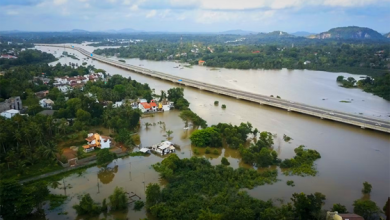
More than 60 percent of the world’s freshwater flows across international borders, running through over 310 transboundary river basins and hundreds of shared aquifers that span roughly 150 countries. As climate change accelerates droughts, glacial melt and erratic rainfall, and as populations and industries expand, demand for this finite resource is colliding with shrinking supply. The United Nations has repeatedly warned that by 2030, global water demand could outstrip sustainable supply by 40 percent. Against this backdrop, water is increasingly described as both a flashpoint for conflict and, paradoxically, one of humanity’s greatest opportunities for cooperation — because unlike other strategic resources, water cannot be substituted, and its shared nature forces neighboring states into some form of negotiated relationship, whether adversarial or collaborative.
The world is entering what analysts increasingly call the “age of the global water crisis” — a period defined not simply by scarcity, but by the geopolitical tension that scarcity produces. From the Nile to the Indus, the Tigris-Euphrates to the Mekong, rivers that once symbolized shared prosperity are now flashpoints of diplomatic strain, as upstream and downstream nations compete over dams, irrigation rights and drinking water access.
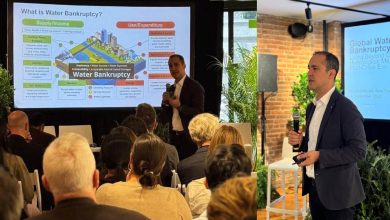
Yet alongside the headlines of conflict, a quieter but equally significant story is unfolding: the steady expansion of water diplomacy. A recent UNESCO-IHE Delft Institute for Water Education (IHE Delft) alumni seminar, titled “Can Countries Trust Each Other When Sharing Water?” and led by water governance expert Bota Sharipova, put this tension at the center of discussion — asking whether trust between nations sharing a river or aquifer is even possible in a world of rising climate stress, and what tools exist to build it.
Why Water Is Becoming a Geopolitical Flashpoint
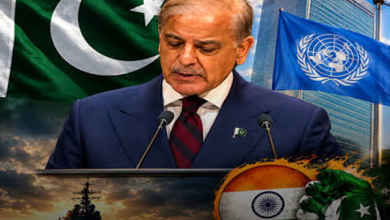
Water conflict rarely erupts as open warfare over water alone; rather, water scarcity acts as a stress multiplier that inflames existing political, ethnic and economic tensions. In the Nile Basin, Ethiopia’s Grand Ethiopian Renaissance Dam has strained relations with downstream Egypt and Sudan for over a decade, with talks repeatedly stalling over how much water Ethiopia can withhold while filling its reservoir. In South and Central Asia, the Indus Waters Treaty — long considered a model of durable water diplomacy between India and Pakistan — has come under renewed pressure amid broader bilateral tensions. In the Middle East, the Tigris-Euphrates system remains contested between Turkey, Syria and Iraq as upstream dam construction reduces downstream flow.
These disputes share a common thread: water infrastructure built unilaterally, without binding data-sharing agreements or dispute-resolution mechanisms, breeds suspicion. When one country cannot verify how much water another is withholding, releasing, or diverting, trust erodes quickly — and with it, the willingness to cooperate.
The Case for Cooperation Over Conflict on Water
Despite these tensions, history shows that water more often drives cooperation than war. Since 1948, states have signed more than 300 international water treaties, and instances of active armed conflict fought solely over water remain exceptionally rare. The reason, experts argue, is structural: rivers and aquifers do not respect borders, so unilateral action by one state inevitably affects its neighbors, creating a shared incentive to negotiate rather than escalate.
The Indus Waters Treaty of 1960, despite recent strains, functioned for over six decades even through wars between India and Pakistan. The Senegal River Basin Development Organization has enabled Mali, Mauritania and Senegal to jointly manage dams and irrigation for over 40 years. The Mekong River Commission, while imperfect, provides Cambodia, Laos, Thailand and Vietnam a standing forum for data exchange and dispute discussion. These examples demonstrate that even amid political rivalry, functional water-sharing frameworks can endure — provided they are built on transparency, verification and mutual benefit rather than one-sided control.
Building Trust Through Transparency
Central to the IHE Delft seminar’s discussion was a simple but critical question: what actually builds trust between water-sharing states? Experts point to several recurring ingredients — independent, jointly verified hydrological data; formal institutions or river basin commissions with real authority; legally binding dispute-resolution mechanisms; and, crucially, a willingness by upstream states to accept limits on their sovereign control of water in exchange for long-term regional stability.
Without these elements, even well-intentioned agreements collapse under the weight of suspicion. With them, water sharing can become a durable foundation for broader diplomatic and economic ties — turning a potential source of conflict into a platform for regional integration.
Conclusion: Technology and Partnership Are Reshaping Water Diplomacy
Looking ahead, the future of water diplomacy is being reshaped by a new generation of tools, techniques and technology that are making cooperation more transparent, verifiable and scalable than ever before. Satellite-based hydrological monitoring — including missions like NASA and CNES’s SWOT satellite — now allows river flows and reservoir levels to be tracked independently of any single government’s data, reducing the information asymmetry that has historically fueled mistrust. Artificial intelligence and predictive modeling are helping basin authorities forecast droughts and floods months in advance, enabling joint contingency planning rather than reactive crisis management. Blockchain-based water-data platforms are being piloted to create tamper-proof records of water allocation and usage across borders, while digital twins of entire river basins allow negotiators to simulate the downstream impact of proposed dams or withdrawals before they are built.
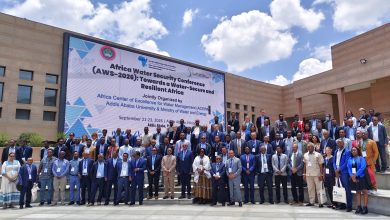
Equally important is the expansion of institutional partnerships. Organizations such as UNESCO-IHE Delft, the Global Water Partnership, the UN Watercourses Convention framework, and regional river basin commissions are training a new generation of water diplomats equipped to negotiate technical, legal and political dimensions of shared water resources simultaneously. Joint conservation initiatives — from transboundary wetland restoration to shared groundwater recharge projects — are increasingly framed not as concessions, but as mutual investments in long-term water security.
As the global water crisis intensifies, the message emerging from experts and institutions alike is clear: water need not be a zero-sum resource that divides nations. With modern monitoring technology, transparent data-sharing, and strengthened diplomatic institutions, water is proving that it can also be the resource that brings neighboring countries to the same table — cooperating not despite scarcity, but because of it.

Source for more details: UN-IHE Delft — “Can Countries Trust Each Other in Sharing Water?” with Bota Sharipova