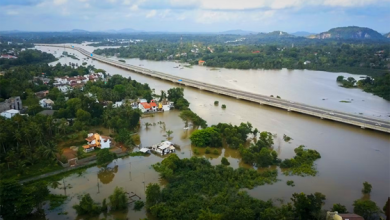

Senate Committee Raises Serious Concerns Over Delays in K-IV Water Project
Senate Standing Committee on Water Resources reviewed the K-IV Project in Karachi, raising concerns over delays, transparency issues, and cost escalation from Rs25 billion to Rs171 billion as the city’s water crisis continues
KARACHI: The Senate Standing Committee on Water Resources reviewed the progress of the Greater Karachi Bulk Water Supply Scheme, commonly known as the K-IV Project, during a meeting held in Karachi on May 4, 2026, under the chairmanship of Senator Jam Saifullah Khan.
The meeting was attended by Senators Asad Qasim, Quratul Ain Marri, Muhammad Aslam Abro, Poonjo Bheel, and Barrister Zamar Hussain Ghumro as a special invitee.
Committee Expresses Concern Over Delays
The Committee expressed serious concern regarding prolonged delays, massive cost escalation, transparency concerns, and quality issues in the execution of the K-IV Project.
The Chairman of the committee emphasized that despite the project’s importance for Karachi’s growing water needs, progress remained unsatisfactory and accountability for lapses had not yet been fixed.
“The K-IV Project is critically important for Karachi’s water supply, yet repeated delays and rising costs continue to create serious concerns,” the committee observed.
K-IV Project Cost Escalates to Rs171 Billion
Officials informed the Committee that approximately 70 to 80 percent of the project has been completed so far. However, the project cost has dramatically increased from the original estimate of Rs25 billion to nearly Rs171 billion.
The Committee questioned:
- Repeated design changes
- Lack of transparency
- Absence of accountability
- Delays in execution
- Consultants’ performance
Senators particularly raised concerns over the original design prepared by consultants and questioned why no action had been taken against those responsible for project flaws.
WAPDA Took Control in 2021
Officials informed lawmakers that the Water and Power Development Authority (WAPDA) assumed responsibility for the K-IV Project in April 2021.
Following the transfer, WAPDA revised the project design and updated the PC-1 documentation to align with new technical and financial requirements.
Authorities attributed the rising cost to several factors including:
- Exchange rate fluctuations
- Increase in construction material prices
- Dependence on imported components
- Technical redesign requirements
K-IV Project Expected Completion by 2026
According to officials, the revised target for project completion is now set for 2026.
The K-IV Project is considered one of Karachi’s most important infrastructure schemes aimed at addressing the city’s chronic water shortage by supplying additional bulk water to millions of residents.
Karachi, Pakistan’s largest city and economic hub, faces severe water scarcity due to population growth, aging infrastructure, and increasing urban demand.
Importance of the K-IV Project for Karachi
The K-IV Project is designed to improve water supply capacity for Karachi by transporting water from Keenjhar Lake to the metropolitan city.
Experts believe timely completion of the project is essential for:
- Reducing water shortages
- Supporting industrial growth
- Improving public health
- Enhancing urban resilience
- Meeting future population demands
Urban planners have repeatedly warned that delays in major water infrastructure projects could worsen Karachi’s ongoing water crisis.
Calls for Transparency and Accountability
The Senate Committee stressed the need for transparency, improved monitoring mechanisms, and accountability for cost overruns and project delays.
Lawmakers emphasized that public funds must be utilized efficiently and that responsible parties should be held accountable for administrative failures.
The Committee also directed relevant authorities to ensure timely completion of the remaining work while maintaining construction quality standards.
Conclusion
The Senate Standing Committee’s review of the K-IV Project highlights growing concerns over governance, transparency, and infrastructure management in Pakistan’s water sector.
As Karachi continues to face severe water shortages, the timely completion of the K-IV Project remains critical for the city’s future sustainability and economic stability.
Observers believe stronger institutional oversight and transparent project management will be essential to restore public confidence and ensure the successful delivery of one of Pakistan’s largest urban water supply projects.