

Kenya Builds Roadmap for Irrigation Financing with IWMI
Kenya partners with IWMI to build blended irrigation financing under its $4.6 billion National Irrigation Sector Investment Plan, targeting 400,000 new hectares.
Kenya Builds Durable Roadmap for Irrigation Financing Through IWMI Partnership
Nairobi, Kenya — 2026 — Kenya‘s irrigation sector is at a pivotal moment, with the government, the International Water Management Institute (IWMI), and development partners working together to build a durable financing roadmap capable of unlocking the substantial, sustained investment needed to expand irrigated land, strengthen water governance, and uplift rural economies across the country.
Background
Kenya’s agriculture sector remains a major driver of the national economy, but its contribution is increasingly constrained by erratic rainfall and frequent droughts. Despite an estimated irrigation potential of over 1.3 million hectares based on available surface water, water harvesting and storage, and groundwater resources, only 284,773 hectares — less than 5% of the country’s arable land — were under irrigation as of 2023. Like most Sub-Saharan African countries, Kenya remains primarily dependent on rain-fed agriculture, leaving farmers highly exposed to climate shocks and rainfall variability.
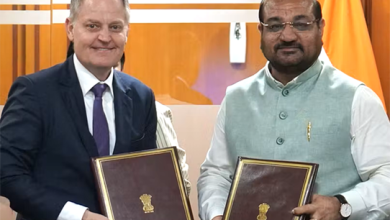
To address this gap, Kenya’s government launched the National Irrigation Sector Investment Plan (NISIP) in March 2025 — a 10-year roadmap aiming to mobilize KES 598 billion (approximately $4.6 billion) in public and private investment and add nearly 400,000 hectares of irrigated land over the plan’s lifespan. To translate this ambition into impact, the State Department for Irrigation under the Ministry of Water, Sanitation and Irrigation (MoWSI) signed a Memorandum of Understanding (MoU) with IWMI on December 11, 2025, marking the start of a long-term strategic partnership to advance sustainable and equitable irrigation development.
An Evidence-Driven, Inclusive Approach
IWMI and Kenyan officials are working to implement NISIP by refining the policy and governance frameworks that guide investment across the sector, with particular emphasis on ensuring smallholder farmers — especially women, youth, and marginalized groups — benefit directly from irrigation expansion. Strengthening analytical capacity has also been a priority: the Water Availability and Demand (WAD) platform, co-developed by IWMI and the National Irrigation Authority with support from the Food and Agriculture Organization (FAO), enables national and county-level technical experts to map water availability and assess agricultural demand, supporting more efficient land and water use planning.
IWMI’s East Africa Representative Abdulkharim Seid described the significance of the agreement: “The MoU is just the beginning. What really matters is what we make out of it.” IWMI brings research-based evidence, effective tools, and insights from countries across the Global South to support Kenya in implementing NISIP and scaling innovations that make irrigation more resilient and equitable.
Financing as the Cornerstone
Financing remains central to the transformation effort. Expanding irrigation services requires substantial, sustained investment that is fair, reliable and accessible — a challenge the Kenyan administration, IWMI, and development partners are addressing through innovative, blended financing models combining public, private and development finance. Under NISIP, plans call for accelerating irrigation investment by leveraging climate funds and carbon credits to support the scaling of green technologies, alongside structured collaboration between public and private sectors.
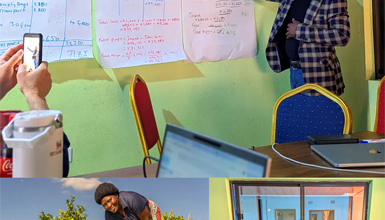
A multi-stakeholder workshop held on November 4, 2025, in Nairobi — convened by IWMI, the State Department for Irrigation, and the World Bank — brought together 60 participants from government agencies, development partners, commercial banks, research institutions and private irrigation service providers to co-design blended finance mechanisms specifically for farmer-led irrigation development in Kenya.
Central to these financing efforts is the development of fair and sustainable water tariffs. Festus Kani, Director of Quality Assurance at the State Department of Irrigation, highlighted this as a longstanding regulatory gap: the lack of a clear tariff structure has hindered both cost recovery and responsible water usage. Well-designed tariffs are intended to support efficient use, cover infrastructure maintenance costs, promote equity, and keep irrigation services affordable for farmers — strengthening the sector’s financial viability over time.
Technology’s Role in Scaling Impact
Technology is seen as equally pivotal in translating policy ambition into tangible improvements for smallholder farmers, with two areas standing out: solar-powered irrigation and environmentally sound water management. Kenya is already a regional leader in solar-powered solutions, accounting for over 65% of solar water pump sales in sub-Saharan Africa. Yet wider adoption remains constrained by policy gaps, limited financing, and uneven technical capacity.
Through the CGIAR Scaling for Impact Program and the Solar Energy for Agricultural Resilience (SoLAR) project, IWMI and partners are working to address these barriers and expand solar irrigation access across the country’s agricultural value chains. At the same time, environmental safeguards — including wastewater reuse, nature-based solutions, and stronger environmental oversight — are being integrated into irrigation expansion plans to ensure that growth in irrigated agriculture strengthens rather than undermines local ecosystems.
Conclusion
As Kenya moves to operationalize its 10-year National Irrigation Sector Investment Plan, the partnership with IWMI represents a deliberate effort to pair ambitious expansion targets with the institutional architecture, blended financing mechanisms, and technical tools needed to make those targets achievable. With irrigation financing, sustainable water tariffs, and solar-powered technology identified as interlocking priorities, the coming years will test whether Kenya can translate this roadmap into measurable gains for the smallholder farmers most exposed to the country’s mounting climate pressures.