IWMI’s Alok Sikka Briefs Indian MLAs on Water Security Policy
IWMI's Alok Sikka addressed 50 MLAs from 21 Indian states on water governance, groundwater management, and climate resilience policy.
Around 50 MLAs from 21 Indian states engaged in a wide-ranging policy dialogue on groundwater management, irrigation, and climate resilience, organized in partnership with PRS Legislative Research
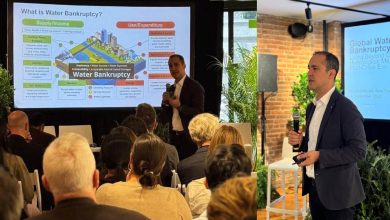
Alok Sikka, Emeritus Scientist at the International Water Management Institute (IWMI), delivered a session on “Water Management Policies and Programs for Water Security” to approximately 50 Members of Legislative Assemblies (MLAs) representing 21 Indian states, marking a significant engagement between the international research community and state-level policymakers on one of India’s most pressing governance challenges.
India’s Complex Water Governance Landscape
Water management in India presents a uniquely complex governance challenge, shaped by the country’s federal structure, its vast geographic and climatic diversity, and the sheer scale of demand placed on its water resources by agriculture, industry, and a rapidly growing population. Unlike many policy areas, water governance in India spans multiple jurisdictions and administrative layers, with states holding primary constitutional responsibility for water resources even as water issues frequently cross state boundaries through shared rivers, aquifers, and irrigation systems.
This structure means that meaningful progress on water security depends heavily on the knowledge, priorities, and coordination capacity of state-level legislators, who are often closest to the ground realities of water stress in their constituencies — from groundwater depletion in agricultural belts to urban water scarcity and the growing unpredictability of monsoon patterns under climate change. Bridging the gap between scientific research and legislative decision-making has increasingly been identified as essential to translating water policy commitments into effective, implementable action at the state level.
It is within this context that IWMI, a research organization with a long history of engagement on water security issues across South Asia, was invited to brief a cross-section of state legislators on current water management challenges and policy pathways.
Session Focus: From Water Availability to Governance Pathways
The session, organized in partnership with PRS Legislative Research, covered a broad range of issues central to India’s water security agenda. Discussions explored persistent challenges in water management and governance, patterns of water availability and connectivity across regions, and potential policy pathways for strengthening water security under increasingly volatile climate conditions.
Rather than functioning as a one-directional briefing, the session was structured to encourage direct engagement between the presenting scientist and the legislators in attendance, reflecting a broader push within research and policy circles to make technical water expertise more directly accessible to elected decision-makers.
Legislator Engagement Reflects Growing Policy Interest
According to those involved, the discussion that followed the presentation reflected a notable and growing interest among legislators in evidence-based approaches to water policy. MLAs raised detailed questions spanning several critical areas, including groundwater management — a particularly acute concern in many Indian states given widespread aquifer depletion — as well as irrigation practices, strategies for building climate resilience into water systems, institutional coordination challenges, and the practical difficulties of implementing water policies consistently across India’s diverse state contexts.
The range and depth of questions raised was described as highlighting the importance of bridging science, policy, and practice in order to effectively address India’s water challenges — a theme that has become increasingly central to discussions of water governance reform in the country.
IWMI’s Broader Engagement Strategy
IWMI has framed this kind of direct engagement with policymakers and legislators as a core part of its mission, emphasizing that translating research into meaningful action depends on sustained dialogue between scientific institutions and the political actors responsible for implementing water policy. The organization has stated that building resilient water systems — for communities, agriculture, and ecosystems alike — requires this kind of ongoing exchange rather than research that remains disconnected from legislative decision-making processes.
This approach reflects a broader trend among international research organizations working on water and climate issues, which have increasingly prioritized direct engagement with subnational and legislative bodies, recognizing that many of the most consequential water policy decisions are made not at the national or international level, but within state and regional governments closer to the communities directly affected by water insecurity.
Acknowledging the Partnership
IWMI extended thanks to PRS Legislative Research for facilitating the opportunity to contribute to the dialogue, and expressed interest in continued collaboration going forward to advance sustainable and inclusive water management approaches across India’s states.
PRS Legislative Research is known for its work supporting Indian legislators with independent research and analysis on policy issues, making it a natural convening partner for sessions aimed at strengthening the evidence base available to elected officials.
Looking Ahead
The session represents one instance of a broader ongoing effort to strengthen the connection between water research and state-level policymaking in India, at a time when water security concerns — from groundwater depletion to climate-driven changes in rainfall patterns — are placing growing pressure on state governments to develop more coordinated and forward-looking water management strategies. Continued engagement of this kind is likely to remain a priority for research organizations seeking to ensure that scientific evidence directly informs the policy choices shaping India’s water future.