IWMI Calls for Action to Bridge Water Commitment Gap at Dushanbe
At the Dushanbe water conference, IWMI launches its Water Governance Accelerator and urges nations to turn water pledges into measurable action.
As the UN Water Action Decade enters its final years, IWMI launches a new Water Governance Accelerator and calls for evidence-based solutions to turn commitments into measurable progress
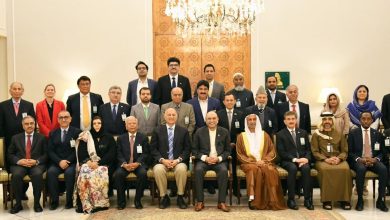
Delegates from more than 100 countries gathered in Dushanbe, Tajikistan, this week for one of the most consequential water diplomacy events of the decade, carrying with them a question that has shadowed international water policy for years: why does the gap between what governments pledge and what they actually deliver remain so persistent?
The Fourth High-Level International Conference on the International Decade for Action, “Water for Sustainable Development” 2018–2028, ran from May 25 to 28 under the patronage of the Tajik government and the United Nations Department of Economic and Social Affairs (UN/DESA). For the International Water Management Institute (IWMI), the conference offered a strategic platform to strengthen global partnerships and push for evidence-based solutions capable of accelerating water security worldwide.
A Decade Under Pressure
The UN Water Action Decade, launched in 2018, was designed to accelerate global progress toward Sustainable Development Goal 6 — universal access to clean water and sanitation — while mobilizing broader action to transform how water resources are managed. With the decade set to conclude in 2028, it is now entering its final and arguably most critical stretch.
Progress, however, has been uneven. Global implementation of integrated water resources management currently stands at just 57%, leaving a substantial and growing list of international commitments unmatched by action on the ground. This shortfall has become a defining concern for water policymakers, who increasingly warn that without a shift toward implementation, the decade risks ending with more declarations than measurable outcomes.
It is against this backdrop that the Dushanbe conference convened government officials, research institutions, and civil society organizations from around the world, tasked with confronting the widening gap between ambition and results before the window to act narrows further.
“Not a Sectoral Issue”: IWMI’s Case for Urgency
Addressing the conference plenary, IWMI Director General Mark Smith emphasized that the Decade has created an important shared understanding that water is not a sectoral issue, but sits at the center of food security, climate resilience, economic stability, ecosystem conservation, and cooperation and peace. He cautioned, however, that the gap between commitments and delivery remains too wide, and framed Dushanbe as an opportunity to narrow that gap through practical action rather than new declarations.
In his official statement, Smith outlined three priorities for the international community as the decade approaches its close: strengthening water intelligence, addressing the interconnection between water and food systems, and improving governance frameworks. IWMI’s delegation also played an active role in shaping the conference agenda, co-leading several plenaries and forums, including a special panel examining whether the UN’s Interactive Dialogues framework needs a thematic overhaul ahead of the 2028 UN Water Conference. That session was jointly opened by Smith and Tajikistan’s Permanent Representative to the UN, Jonibek Hikmat.
Launch of the Water Governance Accelerator
Among the conference’s most significant developments was IWMI’s launch of its Water Governance Accelerator (WGA), a new platform designed to connect stakeholders across the water sector, close accountability gaps, and support implementation at the country, basin, and transboundary levels. The Accelerator offers governments, river basin organizations, and development partners access to scientific expertise, digital decision-support systems, economic analysis, and climate intelligence tools.
Smith explained that the Accelerator was designed to help close the gap between international commitments and implementation by equipping countries and river basin organizations with practical tools, data and knowledge, and invited partners to collaborate on building solutions that can be scaled and sustained over time.
Regional Focus: Central Asia’s Transboundary Waters
Ahead of the main conference, IWMI joined the World Bank and partners from the Blue Peace Central Asia initiative, the International Union for Conservation of Nature (IUCN), and the Regional Environmental Centre for Central Asia (CAREC) to co-organize a dedicated forum on transboundary water cooperation in Central Asia. The forum brought together representatives from all five Central Asian countries — Kazakhstan, Kyrgyzstan, Tajikistan, Turkmenistan, and Uzbekistan — to discuss practical steps for sustainable water resource management, data exchange, and joint monitoring of river basin organizations.
Discussions at the forum centered on strengthening trust, dialogue, and basin-wide cooperation across shared water systems, with participants highlighting the importance of inclusive governance and institutional collaboration in sustaining long-term regional stability.
Looking Toward 2026 and 2028
The Dushanbe conference arrives at a pivotal juncture, with the 2026 UN Water Conference approaching and its shaping Interactive Dialogues currently being designed. IWMI has signaled its intention to contribute evidence, partnerships, and practical solutions to both the 2026 and 2028 conferences, drawing on tools ranging from AI-enabled water intelligence and climate risk analysis to governance support delivered through the newly launched Water Governance Accelerator.
Much will depend on whether the accountability structures established during this period can outlast the broader 2030 Agenda for Sustainable Development — a factor likely to determine the ultimate legacy of the Water Action Decade.
Smith left delegates with a pointed reminder of what will ultimately define success. He said that what will matter in the end is not what was promised, but whether water security has improved for communities, farmers and ecosystems under pressure.