
IWMI-IPCC Meeting Puts Water at Center of Climate Action
After the first IPCC expert meeting on water, IWMI's Henk Ovink argues water must anchor climate policy, finance and the post-2030 agenda.
IWMI-IPCC Colombo Meeting Makes the Case for Putting Water at the Center of Climate Action
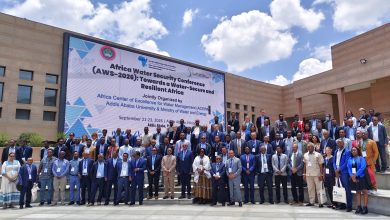
Colombo, Sri Lanka, October 8, 2026 — Water is the main channel through which climate change is felt, yet it remains underweighted in climate policy and underfinanced. That is the argument of Henk Ovink, Chair of the International Water Management Institute’s (IWMI) Board of Governors and Executive Director of the Global Commission on the Economics of Water, in a new feature on the institute’s website. He writes after the first-ever IPCC co-sponsored Expert Meeting dedicated to water, held in Colombo on September 8–10, 2026.
Background
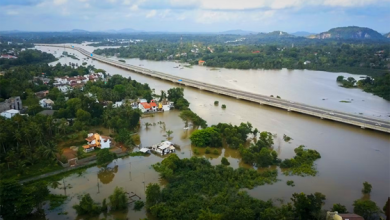
Climate change is altering rainfall and evaporation patterns, intensifying flood and drought risks, accelerating glacier and snow loss, and reshaping soil moisture, groundwater, rivers, lakes and wetlands. It is also changing demand for water as renewable energy systems expand and sea-level rise raises salinization risks. Ovink points to recent events in Nepal as proof that these shifts have immediate consequences for food and energy security, health, livelihoods and economies.
The relationship runs both ways. How water is governed shapes adaptation and development outcomes, and many mitigation choices, from hydropower and bioenergy to forests, wetlands and land restoration, depend on water systems and affect them. Ovink therefore describes water not as another sector hit by climate change but as the medium through which many climate responses succeed or fail.
A First for the IPCC
The meeting, titled Addressing Water Risks and Building Resilience to Climate Change: Evidence, Needs and Policy Pathways, was held at IWMI’s headquarters. It is the first IPCC Expert Meeting on water in the panel’s 38-year history. It was co-chaired by Cromwel Lukorito, IPCC Working Group II Vice-Chair, and Ovink.
About 60 experts, chosen by a Scientific Steering Committee, examined how water risks are evolving, what evidence is needed to address them, and how science can better inform resilience pathways. The mix was deliberate: hydrologists and climate scientists worked alongside specialists in ecosystems, agriculture, infrastructure, economics, equity and governance, as well as practitioners and policymakers.
IPCC Expert Meetings are focused scientific gatherings. They do not carry out full assessments, but they help clarify what is known, flag knowledge gaps and shape future assessment cycles. The Colombo meeting came at a critical point in preparation of the IPCC’s Seventh Assessment Report (AR7), due in about two years.
What the Sixth Assessment Report Showed
A background document prepared for the meeting reviewed how water was treated in the IPCC’s Sixth Assessment Report (AR6). It found, with high confidence, that water is one of the principal pathways through which climate change affects societies, ecosystems and economies. Water-related risks are increasingly systemic and cascade across water, food, energy, health and ecological systems, often across borders.
The review also found that many gaps reflect fragmented assessment as much as missing knowledge. AR6 represents physical hydrology more effectively than the coupled human–water systems that determine real-world outcomes, such as institutions, governance, infrastructure, political choices and social inequality. Ovink argues that the key evidence gap is not how climate change affects the water cycle, but how institutions, finance and decisions manage the water systems that make societies climate resilient.
From Evidence to Architecture
The meeting’s findings and recommendations will appear in a formal report in December 2026, in time to feed into the 2026 UN Water Conference in Abu Dhabi. Ovink calls Abu Dhabi a waypoint rather than the destination. He sees the more consequential horizon in 2027, when the SDG Summit is expected to begin formal intergovernmental consideration of the development framework beyond 2030.
He argues that the post-2030 agenda should treat water as a foundation and organizing principle for climate stability, ecosystems, food systems, energy transitions, public health, peace and economic security. That does not mean another water silo or institutional layer. It means designing global commitments around the systems that sustain well-being. Such a water–climate–economy foundation, he says, would make hydrological resilience, healthy ecosystems, equitable access, water security and transboundary cooperation central to national planning and international accountability, and would steer climate, development and private finance toward the places that reduce systemic risk.
What Comes Next
Ovink says the task now is to turn the Colombo evidence into a wider agenda for collective action. That means bringing hydrologists and climate scientists into sustained dialogue with finance and planning ministries, economists, development banks, farmers, city leaders, Indigenous peoples and river-basin organizations. It also means strengthening water data, institutions, capacity and inclusive governance, making sure investment decisions account for the water consequences of mitigation and development choices, and building accountability frameworks that track whether countries are reducing water-related climate risk.
Conclusion
The Colombo meeting gave water a place in the IPCC process that it has not had before, and Ovink frames it as a step toward a pathway from science to policy, finance and implementation grounded in water management across the Global South. With the UN Water Conference in December and COP31 in Antalya next month, his core question is whether the world can build a credible climate and development agenda without placing the water cycle at its center.