

Dangerous India Water War Escalates as Pakistan Faces Deepening Indus Crisis
India Pakistan water war intensifies as the Indus Waters Treaty remains suspended, raising fears of water shortages, food insecurity, and climate-driven instability across Pakistan.
The growing India Pakistan water war has emerged as one of South Asia’s most dangerous geopolitical crises, with experts warning that water security may become more destabilizing than conventional military conflict between the two nuclear-armed neighbors.
One year after India launched Operation Sindoor — a series of precision strikes and aerial combat operations deep inside Pakistan — tensions between the two countries remain dangerously high.
Although a US-brokered ceasefire formally ended direct military confrontation on May 10, 2025, the conflict evolved into a new battlefield centered on water control and hydrological leverage.
At the center of the crisis lies the suspension of the historic Indus Waters Treaty (IWT), a move that has intensified fears of food insecurity, agricultural collapse, and economic destabilization across Pakistan.
Operation Sindoor and Treaty Suspension
India Suspends Indus Waters Treaty
The turning point in the escalating India Pakistan water war came on April 23, 2025, following a deadly militant attack in Pahalgam’s Baisaran Valley that killed 26 tourists.
India subsequently placed the Indus Waters Treaty “in abeyance,” effectively suspending a decades-old framework that had survived wars, political crises, and nuclear tensions since 1960.
The Indian government halted:
- Hydrological data sharing
- Flood forecasting coordination
- Permanent Indus Commission meetings
- Bilateral consultation mechanisms
India also accelerated hydropower projects on western rivers traditionally allocated to Pakistan under the treaty.
Indian Prime Minister Narendra Modi declared:
“Blood and water cannot flow together.”
Meanwhile, Indian Home Minister Amit Shah stated that the treaty “will never be restored,” signaling a major strategic shift in regional water politics.
Why the Indus Waters Treaty Matters
Indus Waters Treaty and Pakistan’s Water Security
For more than six decades, the Indus Waters Treaty remained one of the few stable agreements between India and Pakistan.
Signed in 1960 with World Bank mediation, the treaty allocated control of the:
- Indus River
- Jhelum River
- Chenab River
to Pakistan, while eastern rivers were largely assigned to India.
The agreement is critical because these rivers sustain Pakistan’s economy and agriculture.
Key Dependence Figures:
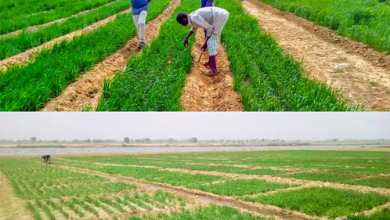
- 80% of Pakistan’s farmland depends on Indus basin irrigation
- Nearly 25% of GDP is linked to water-dependent sectors
- Around 40% of the workforce relies on agriculture
The treaty provided predictability and seasonal stability essential for Pakistan’s food production and rural livelihoods.
With the treaty suspended, those guarantees have effectively disappeared.
India’s Upstream Water Control Strategy
Water Becomes Strategic Leverage
Analysts argue that India has transformed water into a strategic instrument of pressure in the evolving India Pakistan water war.
With treaty safeguards weakened, India now has greater control over:
- Reservoir releases
- River flow timing
- Hydropower operations
- Water diversion management
Experts warn that Pakistan does not require a complete water cutoff to experience severe disruption.
Even small manipulations in timing and flow volumes can destabilize:
- Crop planting cycles
- Irrigation schedules
- Electricity generation
- Food supply chains
India’s Baglihar Dam on the Chenab River remains a major focal point in the dispute.
At the same time, India is rapidly expanding hydropower infrastructure in Indian-administered Kashmir.
Hydropower capacity in the region is expected to rise significantly by late 2026 with projects such as:
- Pakal Dul
- Kiru Hydropower Project
Economic and Agricultural Consequences for Pakistan
Pakistan Faces Severe Water Stress
The suspension of treaty mechanisms has intensified Pakistan’s already fragile water crisis.
Pakistan currently stores only around 30 days of water supply, far below the recommended international benchmark for water-stressed countries.
The consequences are already becoming visible across multiple sectors.
Major Impacts Include:
- Falling wheat and rice yields
- Cotton and sugarcane losses
- Food inflation
- Electricity shortages
- Industrial disruption
- Rural income decline
Hydroelectric production, which contributes nearly 30% of Pakistan’s electricity generation, has become increasingly unstable.
Agricultural uncertainty is particularly dangerous because millions of Pakistanis depend directly on farming for survival.
Climate Change Worsens the Water Crisis
Climate Stress Intensifies India Pakistan Water War
Climate change is significantly amplifying regional water insecurity.
Studies indicate that Pakistan’s Indus basin has experienced nearly 24.8% net loss in perennial snow and ice cover between 2001 and 2021.
The region now faces:
- Accelerated glacier melting
- Irregular monsoon patterns
- Extreme heatwaves
- Reduced water predictability
- More frequent droughts
Pakistan remains among the countries most vulnerable to climate change despite contributing minimally to global greenhouse gas emissions.
Experts warn that climate-driven water scarcity combined with geopolitical tensions could create long-term instability across South Asia.
Pakistan’s Legal and Diplomatic Response
Islamabad Struggles to Gain International Support
Pakistan has pursued legal and diplomatic channels to challenge India’s actions.
The dispute was taken to the Permanent Court of Arbitration in The Hague, which reportedly ruled that the treaty does not permit unilateral suspension.
However, India rejected the rulings and continued infrastructure expansion upstream.
Pakistan has also attempted to mobilize support from:
- China
- Gulf states
- Western governments
- International organizations
Yet global responses have remained limited and cautious.
Analysts believe geopolitical interests and economic ties with India have prevented stronger international pressure.
Global Silence and Regional Geopolitics
International Community Remains Cautious
The international response to the growing India Pakistan water war has largely remained muted.
China has avoided direct confrontation to preserve regional balancing strategies, while Gulf countries have encouraged restraint without taking strong positions.
Western governments have similarly refrained from significant intervention despite rising concerns over regional stability.
Meanwhile, India has framed treaty revision efforts as modernization and responsible water management rather than geopolitical coercion.
This diplomatic narrative has complicated Pakistan’s efforts to internationalize the crisis.
The Future of Water Security in Pakistan
Water Crisis Becomes National Security Threat
Experts warn that Pakistan’s water crisis is no longer only an environmental or developmental challenge.
It is increasingly becoming:
- A food security crisis
- An economic crisis
- A humanitarian crisis
- A national security issue
The Indus basin supports nearly 195 million Pakistanis and covers approximately 65% of the country’s territory.
Disruptions to water flows could trigger widespread instability affecting agriculture, migration, employment, and social cohesion.
Analysts argue that Pakistan urgently requires:
- Expanded water storage infrastructure
- Climate adaptation strategies
- Efficient irrigation systems
- Regional diplomacy initiatives
- Water conservation policies
Without structural reforms, Pakistan’s vulnerability to upstream water pressure may continue to deepen.
Conclusion
The escalating India Pakistan water war marks a dangerous new chapter in South Asian geopolitics, where rivers and water infrastructure are increasingly intertwined with national security and regional power dynamics.
The suspension of the Indus Waters Treaty has shattered decades of predictability, exposing Pakistan’s fragile water systems to unprecedented uncertainty.
As climate change accelerates glacier melt and water stress across the region, the combination of geopolitical rivalry and environmental instability could have devastating consequences for millions.
The crisis now extends far beyond diplomacy or treaty interpretation — it has become a struggle over survival, resilience, and the future stability of one of the world’s most vulnerable regions.