
Antalya Civil Platform Unveils 2050 Climate Roadmap Three Weeks Before COP31
Antalya's civil platform presented three climate-resilience reports and a 2050 roadmap ahead of COP31, covering water security, buildings and green finance.
ANTALYA, 19 October 2026 – Three weeks before COP31 opens in Antalya on 9 November, a coalition of local business, civil society and academic groups has presented a roadmap for turning the UN climate summit into lasting change for the city. The reports aim to give Antalya a practical plan for climate resilience well beyond the two weeks of negotiations.
Three reports, one roadmap
The COP31 Antalya Civil Platform, led by the Antalya Industrialists and Businesspeople Association (ANSİAD) and including NGOs, professional chambers and academics, introduced its report at its third and final meeting. The document sets out a strategic roadmap to 2050 covering climate resilience, water security, agriculture-tourism integration and green transformation.
ANSİAD chair Ercan Özbek said the group sees the COP31 process as a chance for permanent change rather than simply a hosting task. He said the report would not sit on a shelf: the platform plans to follow it up with the relevant institutions and turn it into workable projects.
Built to unlock climate finance
A notable feature is the format. Cem Arüv, who heads ANSİAD’s climate change and environment desk, said the platform prepared three core reports in a UNDP-style format, so that local businesses and actors can cite them directly when applying for green finance and climate funds. Stakeholders from different disciplines have worked on the material since February. The documents are available digitally through QR codes, and the Turkish texts are due to be translated into English before the conference so they can be shared on international platforms.
What the experts said
Academics who contributed to the platform highlighted three pressure points for the city.
Extreme weather. Doç. Dr. Güray Doğan of Akdeniz University said heavy rainfall and climate swings in Antalya are no longer exceptions but the new normal. He argued that stormwater channels, infrastructure and zoning plans must be redesigned accordingly, and that agriculture and tourism should be managed within a blue-green ecosystem that respects nature.
Water. Prof. Dr. Ethem Karadirek, who directs the university’s environmental problems research centre, said water security is at a critical threshold under rapid urbanisation, population growth and economic pressure. The report sets out short-, medium- and long-term action plans for water resources.
Buildings and energy. Prof. Dr. İbrahim Atmaca said nearly 48 percent of carbon emissions in Antalya come from the building sector, especially tourism-related construction, unlike many cities where industry and transport lead. He said the population is expected to grow by at least 35 percent, with energy demand rising similarly. He called for distributed energy systems, trigeneration, removal of legal barriers to solar photovoltaics and waste-to-energy.
Background: COP31 and the host city
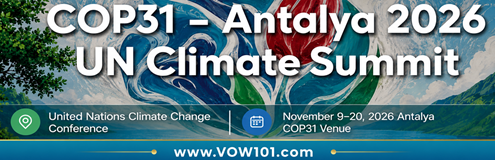
COP31 runs from 9 to 20 November 2026 in Antalya. Türkiye is the host, with Environment Minister Murat Kurum as COP31 President-designate, while Australia’s Chris Bowen serves as President of Negotiations. A World Leaders’ Summit is planned for 11 and 12 November.
The scale is considerable. Antalya’s governor expects 80,000 to 120,000 participants from 196 countries and an economic boost of roughly $2 billion. Alongside the optimism, local voices have asked a harder question. Commentators have asked what will remain for Antalya after COP31 ends and argued that the summit should be more than a hospitality showcase. The civil platform’s roadmap is, in effect, an attempt to answer that question.
Why it matters
Large UN conferences often leave host cities with hotel bookings and headlines but little structural change. By preparing finance-ready documents in an internationally recognised format, Antalya’s civil society is trying to turn visibility into funding access. The emphasis on buildings is also significant. If nearly half of local emissions come from the building stock, then measures on energy efficiency, rooftop solar and permitting could do more for the city’s climate record than headline pledges.
The focus on extreme rainfall and water security reflects a reality that planners across the Mediterranean face: infrastructure designed for past conditions is increasingly strained. Whether the recommendations are adopted will depend on municipal and national follow-through, which the platform says it will track.
Conclusion
Three weeks out, Antalya is preparing not only roads, hotels and conference halls but also a policy agenda for its own future. The civil platform’s reports offer a roadmap to 2050, a path to international finance and a set of measurable priorities on water, buildings and resilience. The real test will come after 20 November, when the delegations leave and the city must decide how much of the roadmap becomes reality.
Sources: Ekonomi Gazetesi (19 October 2026); Milliyet; UNFCCC; Daily Sabah.