
National Youth-Led Policy Roundtable on Water Resilience and Climate Action in Pakistan
Youth of Pakistan at the heart of its climate strategy, launching a Climate University, green jobs, and water resilience plans.
-
Youth-Led Policy Roundtable on Water Resilience and Climate Action Held in Pakistan
-
Youth at the heart of its climate strategy, launching a Climate University, green jobs, and water resilience plans.
Islamabad: Pakistan remains among the countries most vulnerable to climate change, facing recurring floods, prolonged droughts, and mounting pressure on its water resources. In response, the Ministry of Climate Change and Environmental Coordination (MoCC&EC) has been recalibrating its national strategy to make climate resilience more inclusive, technically grounded, and future-focused. A key pillar of this recalibration is youth engagement — recognizing that Pakistan’s large young population represents both the demographic most affected by climate disruption and the strongest potential resource for driving long-term solutions.

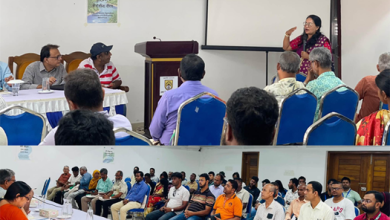
It is within this context that the government convened the National Youth-Led Policy Roundtable on Water Resilience and Climate Action, aimed at formally embedding young Pakistanis into the policymaking process rather than treating them as passive stakeholders.
Youth Given a Central Role in Policy
The Ministry of Climate Change and Environmental Coordination (MoCC&EC) is placing youth at the center of Pakistan’s climate strategy. Leading the National Youth-Led Policy Roundtable on Water Resilience and Climate Action, Federal Minister Dr. Musadik Malik made the mandate clear: young people must lead in policy formulation, monitoring, and on-the-ground implementation — not merely participate at the margins of climate discussions.
This shift signals a broader change in how Pakistan intends to approach environmental governance, moving away from top-down policymaking toward a model where youth voices directly shape strategy and hold implementation accountable.
Key Initiatives Announced
The roundtable outlined several concrete measures designed to translate the youth-centered approach into action:
Launch of a Climate University — along with startup incubation and green skills training programs — to create tangible career and innovation pathways for young Pakistanis entering the climate sector.
Inclusion of women and marginalized communities as central stakeholders in water and climate projects, ensuring resilience efforts do not overlook the groups most affected by climate stress.
Integration of indigenous knowledge with technical expertise, building region-specific resilience strategies tailored to local flood and drought risks rather than one-size-fits-all national policy.
From Commitments to Measurable Impact
Officials emphasized that the initiative marks a shift from policy commitments to measurable, on-the-ground impact. Rather than treating climate resilience as a set of abstract targets, the ministry is positioning youth-led monitoring and community-rooted knowledge as the mechanisms through which real accountability will be tracked.
Youth-Led Policy:
Young people are not only the leaders of tomorrow—they are important policy actors today. Youth-led policy can bring fresh ideas, innovation, and community-based solutions to water resilience and climate action. Governments should create meaningful platforms for youth participation in decision-making, climate planning, water governance, research, and entrepreneurship. By investing in education, green skills, technology, and youth-led initiatives, societies can empower a generation capable of developing practical solutions to water scarcity, climate risks, and environmental degradation.
Water Resilience & Climate Action:
Building water resilience requires climate action that protects freshwater resources, strengthens communities, and prepares societies for droughts, floods, changing rainfall patterns, and rising temperatures. Sustainable irrigation, rainwater harvesting, watershed restoration, groundwater protection, wastewater reuse, and climate-smart agriculture can help secure water for people, food production, and ecosystems. When youth leadership is combined with strong water governance and ambitious climate action, it can transform today’s challenges into a more resilient, sustainable, and water-secure future.
Conclusion
Pakistan’s latest climate policy push reflects a recognition that lasting resilience against floods and droughts cannot be built through top-down mandates alone. By placing youth, women, and marginalized communities at the core of water and climate governance — and by pairing indigenous knowledge with technical expertise — the MoCC&EC is signaling a more grounded, locally-driven approach to climate adaptation. Whether this translates into measurable, lasting impact will depend on how effectively these youth-led structures are resourced and sustained in the months ahead.