

NDMA Concludes First Batch of 2026 Internship Programme in Islamabad
NDMA marks successful completion of its 2026 Internship Programme's first batch, as 100 young interns receive certificates for disaster resilience training.
NDMA Concludes First Batch of 2026 Internship Programme, Honors 100 Young Interns
Islamabad: The National Disaster Management Authority (NDMA) marked the successful culmination of the first batch of its Internship Programme 2026 with a closing ceremony held in Islamabad, celebrating the achievements of 100 young interns who completed an intensive learning journey focused on building disaster resilience across Pakistan.
The programme, designed to cultivate a new generation of leaders equipped to respond to Pakistan’s growing exposure to natural and man-made disasters, brought together a diverse cohort of young participants for months of structured training, field engagement, and hands-on skill development.
Comprehensive Training in Disaster Management
Throughout the internship, participants were immersed in Pakistan’s disaster management framework through a blend of interactive sessions, expert-led lectures, field visits, and simulation exercises. This multi-pronged approach was designed to bridge the gap between theoretical knowledge and practical application, giving interns direct exposure to the operational realities of disaster preparedness, response, and mitigation.
The hands-on component of the programme proved particularly valuable, with interns participating in simulation exercises that replicated real-world emergency scenarios. These activities allowed young participants to test their decision-making, coordination, and problem-solving abilities under conditions designed to mirror the pressures of actual disaster response operations.
Partnerships That Strengthened Practical Learning
A defining feature of the internship was its collaborative structure, which saw NDMA partner with several key organizations to broaden the scope of practical experience available to interns. Engagements with the Pakistan Boy Scouts Association and the Pakistan Girl Guides Association gave participants opportunities to build on established community service and volunteer response traditions, while additional partnerships with other stakeholders further diversified the skill sets interns were able to develop.
These collaborations enabled interns to cultivate essential competencies in leadership, teamwork, and emergency response, skills considered critical for effective disaster management at both community and institutional levels. By working alongside experienced partner organizations, interns were able to observe and practice coordination mechanisms that are central to Pakistan’s broader disaster risk reduction strategy.
Closing Ceremony Highlights Youth’s Role in Resilience
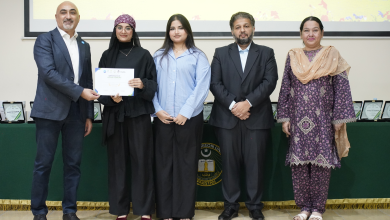
Addressing the closing ceremony, NDMA Executive Director Mr. Tanveer Piracha congratulated the interns on successfully completing the programme, commending their dedication and active engagement throughout the internship period. In his remarks, Mr. Piracha encouraged the graduating batch to carry forward the knowledge and skills they had acquired, urging them to serve as ambassadors of resilience within their own communities.
Certificates of completion were formally awarded to all 100 interns in recognition of their commitment and participation, marking a symbolic close to the first batch of the 2026 programme and setting a benchmark for subsequent cohorts.
NDMA’s Push to Build a Resilient Youth Cadre
The National Disaster Management Authority, established under the National Disaster Management Act of 2010, serves as Pakistan’s apex body for coordinating disaster preparedness, mitigation, and response efforts across federal and provincial levels. Pakistan remains one of the countries most vulnerable to climate-induced disasters, having experienced recurring floods, glacial lake outburst floods (GLOFs), earthquakes, and extreme weather events in recent years, most notably the catastrophic 2022 floods that affected over 33 million people and caused damages exceeding $30 billion.
Against this backdrop, NDMA has increasingly prioritized capacity building and youth engagement as core pillars of its long-term disaster risk reduction strategy. The Internship Programme 2026 reflects this shift, aiming to institutionalize a pipeline of young, trained individuals who can support disaster management efforts at the grassroots level while also feeding into Pakistan’s broader emergency response ecosystem.
The involvement of organizations such as the Pakistan Boy Scouts Association and the Pakistan Girl Guides Association is consistent with international best practices in disaster preparedness, where youth-focused civil society organizations often serve as first responders and community mobilizers during emergencies. By formally integrating these groups into its internship structure, NDMA has sought to strengthen linkages between state disaster management institutions and grassroots volunteer networks.
Pakistan’s disaster management architecture operates on a multi-tiered basis, with NDMA at the federal level working in coordination with Provincial Disaster Management Authorities (PDMAs) and District Disaster Management Authorities (DDMAs). Youth capacity-building initiatives like this internship programme are viewed as essential to strengthening this framework from the ground up, ensuring that community-level actors are equipped with the technical knowledge and practical skills needed to respond effectively when disasters strike.
With climate change projected to intensify the frequency and severity of extreme weather events in South Asia, initiatives aimed at expanding Pakistan’s trained human resource base for disaster management are expected to play an increasingly important role in the country’s resilience strategy. NDMA has indicated that the successful conclusion of this first batch will inform the design and expansion of future cohorts under the internship programme.