

Revolutionary AI Farming Solutions Could Transform Pakistan’s Agriculture Sector
AI farming in Pakistan could improve agricultural productivity, water efficiency, and climate resilience through smart irrigation, drones, and precision farming technologies, experts say.
The future of AI farming in Pakistan took center stage at the 19th Agri Asia Conference 2026 in Lahore, where experts emphasized the transformative potential of artificial intelligence, drones, and smart irrigation systems for improving agricultural productivity and water efficiency.
Amid growing concerns over climate change, water scarcity, and declining crop yields, specialists argued that technology-driven farming solutions are becoming essential for Pakistan’s agricultural sustainability.
The conference, held at the Expo Centre Lahore, brought together researchers, policymakers, farmers, and industry leaders to discuss innovative approaches for strengthening climate resilience in Pakistan’s farming sector.
Smart Agriculture Takes Center Stage at Agri Asia Conference 2026
Experts Promote Precision Farming Technologies
Speaking on the topic “Smart Farming and Agricultural Robotics for Precision and Sustainable Agriculture,” Muhammad Abubakr highlighted the urgent need for modern farming technologies in Pakistan.
Dr. Abubakr serves as:
- Associate Professor at the LUMS Syed Babar Ali School of Science & Engineering
- Founding Director of the Center for Water Informatics & Technology (WIT)
He stressed that climate-smart agriculture and AI-driven farming systems are critical to addressing Pakistan’s worsening environmental and water-related challenges.
According to Dr. Abubakr, precision farming technologies can help farmers make data-driven decisions that improve productivity while reducing environmental damage.
AI and Drones Improving Crop Productivity
AI Farming in Pakistan Enhances Precision Agriculture
Experts explained that artificial intelligence and drone technologies are rapidly changing the way farming is managed in Pakistan.
Using drone imaging and satellite-based monitoring systems, researchers are now able to create “digital twins” of agricultural fields.
These systems allow real-time monitoring of:
- Crop health
- Irrigation needs
- Soil conditions
- Vegetation stress
- Pest outbreaks
Dr. Abubakr said AI algorithms are helping farmers reduce costs and increase crop yields by enabling precision agriculture techniques.
The technology minimizes unnecessary pesticide and water use while improving farming efficiency.
Smart Irrigation and Water Efficiency Solutions
Water Scarcity Drives Innovation in Agriculture
Water scarcity remains one of the biggest threats facing Pakistan’s agriculture sector.
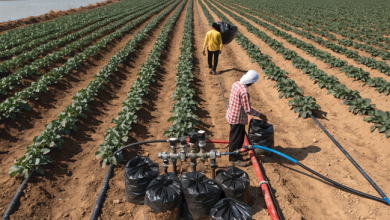
Experts at the conference emphasized that smart irrigation systems could significantly improve water-use efficiency in farming.
The LUMS Agricultural Robotics Lab has reportedly developed several indigenous technologies, including:
- Soil moisture sensors
- Smart irrigation systems
- Digital canal gauges
- AI-powered crop monitoring platforms
These technologies are already being used by:
- Farmers
- Government departments
- Multinational food companies
Dr. Abubakr stated:
“We are not only doing academic research; we are also providing practical solutions to industry and government institutions.”
Climate Change Threatens Pakistan’s Agriculture
Climate Risks Increase Pressure on Farmers
Climate change is increasingly disrupting Pakistan’s agriculture sector through:
- Heatwaves
- Droughts
- Irregular rainfall
- Water shortages
- Flooding events
Agriculture remains one of the most climate-vulnerable sectors in Pakistan’s economy.
Experts warned that declining water availability and rising temperatures could reduce crop productivity and worsen food insecurity if adaptation measures are not implemented.
Dr. Abubakr highlighted the importance of sustainable water management practices and methane emission reduction strategies.
He specifically pointed to alternate wetting and drying irrigation techniques as effective methods for reducing water use and environmental impact.
Indigenous Technologies Developed by LUMS
Pakistan Developing Local Agri-Tech Solutions
One of the key highlights of the conference was the growing role of locally developed agricultural technologies.
The LUMS Agricultural Robotics Lab has reportedly been working on solutions related to:
- Water efficiency
- Environmental sustainability
- Forestry management
- Satellite crop monitoring
- Carbon footprint reduction
These technologies aim to strengthen resource management while supporting climate-resilient agriculture.
According to Dr. Abubakr, several public and private sector organizations are already benefiting from these innovations.
Institutions using these technologies include:
- Punjab Irrigation Department
- Agriculture Department
- Food and Agriculture Organization (FAO)
- Multinational food companies
International Collaboration on Climate-Resilient Farming
Global Research Partnerships Expand
The conference also highlighted international collaboration efforts focused on sustainable agriculture and water management.
Dr. Abubakr shared details of ongoing partnerships with research institutions in:
- Germany
- Australia
These projects focus on:
- Climate-resilient agriculture
- Sustainable water allocation
- Smart irrigation technologies
Several of the initiatives reportedly involve research funding worth millions of euros.
Experts believe international scientific cooperation can help Pakistan accelerate agricultural innovation and climate adaptation efforts.
Experts Encourage Youth Participation in Agri-Tech
Students Urged to Join Emerging Agriculture Technologies
Dr. Abubakr encouraged young researchers, students, and agriculture professionals to explore opportunities in agri-tech and climate-smart farming.
He urged students to participate in:
- Research projects
- Internships
- Technology development programs
- Precision farming initiatives
The session attracted significant interest from participants, particularly regarding the commercial potential of:
- Smart irrigation systems
- Agricultural robotics
- AI-driven crop management solutions
Experts say investment in agricultural technology could help Pakistan modernize farming while improving food security and climate resilience.
Conclusion
The growing focus on AI farming in Pakistan reflects increasing recognition that technology-driven agriculture may play a crucial role in addressing the country’s climate and water challenges.
Experts at the Agri Asia Conference 2026 emphasized that artificial intelligence, drones, smart irrigation systems, and precision farming technologies can help improve productivity, reduce water waste, and strengthen climate resilience across Pakistan’s agriculture sector.
As climate pressures intensify and water scarcity worsens, experts believe innovation, collaboration, and investment in smart agriculture will become essential for ensuring Pakistan’s long-term food security and sustainable economic growth.