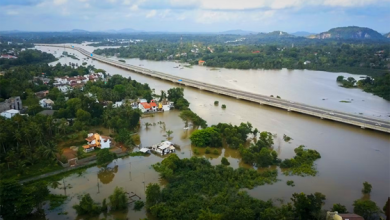

Pakistan Warns India Against Blocking Water Flows: Alarming Water Dispute Escalates
Pakistan warns India against blocking water flows, calling it a violation of the Indus Waters Treaty and international law. Islamabad vows diplomatic and legal action.
Pakistan warns India against blocking water flows essential to millions of people, describing any deliberate effort to restrict water supplies as a dangerous act with far-reaching consequences. The warning came during the weekly Foreign Office briefing in Islamabad, where officials responded to recent statements from India suggesting efforts to stop water from reaching Pakistan.
The development has intensified concerns about regional water security and raised fresh questions regarding the future of bilateral relations between the two neighboring countries.
Pakistan Issues Strong Warning to India
Speaking at the weekly media briefing, Foreign Office spokesperson Tahir Andrabi emphasized that any attempt to significantly reduce or block water flows reaching Pakistan would be unacceptable.
His comments followed remarks attributed to India’s Water Minister, who reportedly stated that India was working toward ensuring that no water reaches Pakistan in the coming years.
Pakistan strongly rejected such statements and warned that restricting water vital to the country’s agriculture, economy, and human wellbeing could have severe regional consequences.
Officials stressed that water is not merely a political issue but a matter of national survival for more than 250 million Pakistanis.
Water Security and National Survival
Water remains one of the most critical resources for Pakistan’s economy. Agriculture contributes significantly to the country’s GDP and employs millions of people across rural areas.
The Indus River system serves as the backbone of Pakistan’s agricultural sector, supporting crop production, livestock farming, and food security.
Experts warn that any disruption to water flows could impact:
- Agricultural productivity
- Food security
- Hydropower generation
- Drinking water supplies
- Rural livelihoods
Pakistan maintains that uninterrupted access to water resources is essential for economic stability and social wellbeing.
The latest dispute has therefore triggered widespread concern among policymakers, farmers, environmental experts, and security analysts.
Indus Waters Treaty Under Pressure
The ongoing tensions have once again placed the Indus Waters Treaty at the center of regional discussions.
Signed in 1960 with international mediation, the treaty has long been considered one of the world’s most successful transboundary water-sharing agreements.
Despite multiple wars and political disputes between Pakistan and India, the treaty has largely survived and continued to regulate water-sharing arrangements.
Pakistan argues that any attempt to intentionally restrict water flows would violate both the treaty framework and established international norms governing shared river systems.
Officials reiterated that international agreements must be respected regardless of political disagreements.
Pakistan Rejects Water as a Political Weapon
Islamabad has strongly opposed the use of water as a political tool.
Foreign Office officials emphasized that water should never be used as an instrument of coercion, pressure, or conflict.
According to Pakistan, weaponizing water resources would create unnecessary instability in South Asia and could increase tensions between two nuclear-armed neighbors.
Government representatives stated that such actions would undermine trust, damage regional cooperation, and potentially affect millions of ordinary citizens who depend on river systems for their daily needs.
Pakistan has therefore urged all parties to uphold international obligations and avoid actions that could escalate existing disputes.
Diplomatic and Legal Options on the Table
Pakistan has reaffirmed its commitment to protecting its water rights through peaceful and lawful means.
Officials indicated that Islamabad is prepared to utilize all available diplomatic, political, legal, and economic avenues to safeguard national interests.
These options may include:
Diplomatic Engagement
Pakistan plans to continue engaging international partners and relevant stakeholders to highlight concerns regarding water security.
Legal Measures
Authorities may explore legal mechanisms available under international law and treaty provisions.
Multilateral Forums
Pakistan could raise the issue at regional and international forums where water security and transboundary river management are discussed.
Government officials stressed that Pakistan’s rights over its water resources remain non-negotiable.
Concerns Over India’s Nuclear Expansion
During the same briefing, Pakistan also responded to a recent report regarding India’s expanding nuclear capabilities.
Officials noted that Pakistan has consistently expressed concerns over India’s strategic modernization programs, including developments in missile systems, sea-based deterrence capabilities, and longer-range delivery platforms.
According to Islamabad, such developments could affect strategic stability across South Asia and create broader security implications beyond the region.
Pakistan urged the international community to closely monitor the evolving security environment and support measures that promote regional peace and stability.
Analysts believe that growing military competition and disputes over critical resources such as water could further complicate relations between the two countries.
Pakistani Sailors Held Hostage Near Somalia
The Foreign Office briefing also addressed the ongoing hostage situation involving Pakistani sailors captured by pirates near Somalia.
Eleven Pakistani crew members remain in captivity after armed pirates hijacked the vessel MT Honour 25 off Somalia’s southeastern coast earlier this year.
Officials confirmed that securing the release of the sailors remains a top priority.
Pakistan continues to coordinate closely with:
- Somali authorities
- The vessel’s owners
- Diplomatic missions
- Relevant government departments
Authorities expressed hope that ongoing diplomatic efforts would result in the safe release and return of the hostages.
Foreign Minister Ishaq Dar has reportedly raised the issue directly with Somali officials as part of Pakistan’s broader efforts to resolve the crisis.
Regional Stability at Stake
The latest developments highlight the growing importance of water security in South Asia.
Climate change, population growth, increasing demand for water, and geopolitical tensions are placing additional pressure on shared river systems.
Experts warn that cooperative water management will become increasingly important in the coming decades.
Constructive dialogue, adherence to international agreements, and confidence-building measures are widely viewed as essential tools for preventing future disputes.
Regional peace and economic development depend heavily on the responsible management of shared natural resources.
Conclusion
Pakistan warns India against blocking water flows at a time when water security is becoming one of the most critical challenges facing South Asia. Islamabad maintains that any deliberate effort to restrict water reaching Pakistan would violate international obligations and threaten regional stability.
The dispute underscores the continuing importance of the Indus Waters Treaty and the need for cooperative management of shared river resources. As tensions persist, diplomatic engagement and adherence to international law will remain essential for preventing escalation and ensuring sustainable access to water for future generations.
Internal Links
- Pakistan Water Security Challenges
- Climate Change and Water Scarcity in Pakistan
- Indus Waters Treaty Explained