Hatay Declaration Adopted on Climate-Resilient Cities Ahead of COP31
Ministers adopt the Hatay Declaration in Türkiye, committing to climate-resilient urban transformation and linking city action to COP31 and WUF13.
Ministers Adopt Hatay Declaration on Climate-Resilient Cities Ahead of COP31
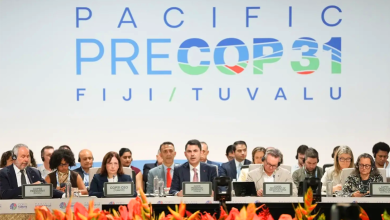
Hatay, Türkiye: Ministers and high-level representatives from across the international community have adopted the Hatay Declaration on Climate-Resilient and Sustainable Cities, a landmark commitment aimed at accelerating urban climate action and positioning cities at the center of the global response to the climate crisis. The declaration was adopted at the international event “Türkiye’s Road to COP31: Resilient Cities,” held in Hatay, a province still bearing the scars of one of the deadliest natural disasters in the country’s modern history.
The declaration explicitly frames cities as the frontline of the climate crisis, asserting that urban centers are not only among the most exposed to climate risks but also essential platforms for translating global climate commitments into tangible, on-the-ground results.
Rebuilding From Disaster as a Catalyst for Transformation
Central to the declaration is a direct reference to the catastrophic earthquakes that struck Türkiye in February 2023, disasters that killed tens of thousands of people and devastated large parts of the country’s southeastern provinces, including Hatay itself. Signatories emphasized that post-disaster recovery efforts must extend beyond simple reconstruction, framing the rebuilding process instead as a transformative opportunity to establish cities that are resilient, low-carbon, inclusive, and sustainable by design.
This framing positions Hatay, the very site of the declaration’s signing, as a symbolic and practical testing ground for the principles the document seeks to advance, linking disaster recovery directly to long-term climate adaptation and sustainable urban planning.
From Policy to Implementation
A key message running through the declaration is the assertion that the primary global challenge is no longer a lack of policy frameworks, but rather the need to accelerate implementation at scale. Signatories underscored that cities represent the essential platforms where international commitments must be converted into concrete, measurable action, reflecting a broader shift in global climate discourse toward execution and delivery rather than further framework development.
Five Core Commitments
The Hatay Declaration outlines five central areas of commitment. Signatories pledged to advance climate-resilient urban transformation and expand access to adequate housing, integrating adaptation measures, disaster risk reduction, demographic resilience, and sustainability principles into every stage of urban planning and reconstruction processes.
The declaration also commits signatories to strengthening multi-level, data-driven governance structures, with a specific emphasis on empowering local authorities as the primary actors responsible for implementation. Additionally, the document calls for scaling up financing mechanisms for resilient and sustainable cities, encompassing climate finance, blended finance models, and public-private partnerships designed to mobilize the substantial capital required for urban climate transformation.
Further commitments include accelerating the urban energy transition and low-carbon development, covering energy efficiency improvements, renewable energy integration, and sustainable mobility systems, alongside a pledge to promote nature-based solutions and inclusive, people-centred approaches that combine demographic resilience with climate resilience, explicitly grounded in the principle of leaving no one behind.
Linking COP31 and the World Urban Forum
A distinctive feature of the Hatay Declaration is its explicit effort to strengthen linkages between two major global processes: the upcoming COP31 climate summit, which will serve as a platform for advancing climate commitments and mobilizing action, and the 13th World Urban Forum (WUF13), which will function as a platform for dialogue, knowledge exchange, and the shaping of global urban agendas.
Signatories committed to working toward translating outcomes from COP31 into concrete city-level implementation pathways, while using WUF13 as a venue for sharing and scaling successful practices across different national and municipal contexts. This dual-track approach reflects growing recognition within international climate governance that urban policy and global climate negotiations need tighter integration to achieve meaningful impact.
The declaration further expresses signatories’ shared intention to deepen international cooperation and partnerships among governments, international organizations, financial institutions, local authorities, and other stakeholders, with the explicit goal of accelerating progress on urban climate resilience worldwide.
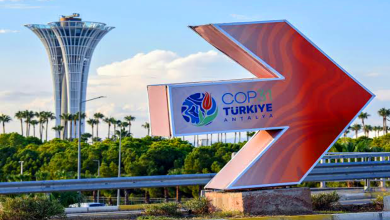
Signatories confirmed they will carry the declaration’s principles forward to WUF13, scheduled to take place in Baku in 2026, and will present the document as a formal input to COP31, set to be hosted in Antalya, Türkiye, later in 2026.
Background: Türkiye’s Path From Disaster to Climate Diplomacy
The February 2023 earthquakes that struck southern and southeastern Türkiye, along with parts of northern Syria, ranked among the deadliest seismic disasters of the twenty-first century, killing more than 50,000 people across both countries and displacing millions. Hatay province was among the areas hit hardest, with entire neighborhoods in cities such as Antakya reduced to rubble. The scale of destruction prompted an extensive, still-ongoing reconstruction effort that has drawn significant international attention and financial support.
Türkiye’s decision to host both a pre-COP31 resilient cities event in Hatay and the COP31 summit itself in Antalya later in 2026 reflects a deliberate diplomatic strategy to position the country’s earthquake recovery experience within the broader global climate agenda. By anchoring international climate discussions in a region directly affected by catastrophic disaster, Turkish officials and international partners have sought to demonstrate how post-disaster reconstruction can be leveraged as an opportunity for climate-resilient urban redesign, rather than a simple return to pre-disaster conditions.
The World Urban Forum, established by UN-Habitat, serves as the world’s premier conference on sustainable urbanization, convening governments, local authorities, civil society, and private sector actors biennially to address the challenges of rapid urbanization. WUF13, scheduled for Baku, Azerbaijan, in 2026, will follow Baku’s earlier role as host of COP29 in 2024, continuing a recent pattern of Caspian and Black Sea region cities taking on prominent roles in global climate and urban governance discussions.
The Hatay Declaration’s emphasis on multi-level governance and local authority empowerment reflects a broader international consensus that has emerged in recent years, recognizing that national-level climate commitments, such as Nationally Determined Contributions under the Paris Agreement, often depend heavily on municipal and local government capacity for actual implementation. Cities are estimated by UN agencies to account for a significant majority of global greenhouse gas emissions while simultaneously housing more than half the world’s population, a share projected to grow substantially in coming decades, making urban climate resilience an increasingly central pillar of global climate strategy.
As COP31 approaches, the Hatay Declaration is expected to serve as one of several regional and thematic inputs shaping the summit’s agenda, alongside other preparatory processes addressing climate finance, adaptation, and sector-specific transformation pathways.