
ICRWMSA-2026 Multan: Climate-Resilient Water Management Conference, 16–17 November
ICRWMSA-2026, on climate-resilient water management and sustainable agriculture, takes place 16–17 November at MNS University of Agriculture, Multan.
Multan, 14 November 2026: The International Conference on Climate Resilient Water Management and Sustainable Agriculture (ICRWMSA-2026) will be held on 16 and 17 November 2026 at Muhammad Nawaz Shareef University of Agriculture (MNSUAM) in Multan, Punjab. Organisers say the event is just days away.
What the conference will cover
The announcement says researchers, policymakers, practitioners and students will come together to explore solutions for water security, climate adaptation and sustainable farming. It frames the event as part of the conversation on building a climate-resilient future for water and agriculture.
Event details
- Event: International Conference on Climate Resilient Water Management and Sustainable Agriculture (ICRWMSA-2026)
- Dates: 16–17 November 2026
- Venue: Muhammad Nawaz Shareef University of Agriculture, Multan
- Audience: researchers, policymakers, practitioners and students
Partners
The conference is organised in collaboration with a mix of international, national and provincial bodies, as listed in the announcement:
- UNESCO Chair
- CWRR
- small PAK
- PARB
- FutureWater
- FAO
- PHED
The announcement does not spell out these names. From general knowledge, PARB is likely the Punjab Agricultural Research Board and PHED the Public Health Engineering Department, while FAO is the UN Food and Agriculture Organization and FutureWater is a water research and consulting organisation. Please confirm each name and the full forms of “CWRR” and “small PAK” with the organisers before publishing.
Background: why Multan, why now
Multan is in southern Punjab, in the heart of Pakistan’s irrigated Indus plain, where farming depends on canal water and groundwater and where heat, floods and water shortages all affect harvests. MNSUAM is a major agricultural university in the region, and it hosts a range of climate and agriculture conferences. Holding a water and agriculture conference there places the discussion close to the farming systems it aims to improve.
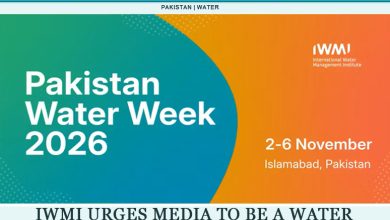
The timing also fits a busy month for water and climate policy in Pakistan. Pakistan Water Week 2026 ended in Islamabad earlier this month, with participants stressing implementation over new policy and calling for a legal framework for groundwater management. Pakistan is also taking part in COP31 in Antalya, where it has pressed for predictable climate finance. A university conference in Multan can connect that national and global debate to local research.
Why the themes matter
The three themes in the announcement, water security, climate adaptation and sustainable farming, cover problems farmers already face:
- Water security: Pakistan depends heavily on a single river system, and groundwater use has risen. Managing both sustainably is a recurring policy concern.
- Climate adaptation: Floods and heatwaves have repeatedly damaged crops and rural incomes, raising demand for early warning, resilient crop varieties and efficient irrigation.
- Sustainable agriculture: Farmers need practices that raise yields while using less water and fewer inputs.
Because the conference includes students and practitioners alongside researchers and policymakers, it may also offer a route for new research to reach people who apply it.
What the announcement does not say
The announcement does not give a programme, keynote speakers, registration process, fees or a contact. I also could not find an official conference page with those details. People planning to attend should contact MNSUAM or the organisers directly for the schedule, registration and any requirements.
What to watch
Three things would show whether the conference has impact beyond the two days. First, whether it produces a set of recommendations or a joint statement that policymakers in Punjab can use. Second, whether the involvement of FAO and FutureWater leads to follow-up projects or data tools for water management. Third, whether provincial bodies such as those named in the announcement commit to acting on the findings.
Conclusion
ICRWMSA-2026 brings researchers, policymakers, practitioners and students together in Multan on 16 and 17 November to discuss water security, climate adaptation and sustainable farming. With a mix of UN, research and provincial partners, the event has the ingredients for a useful exchange, but the published details are thin. Anyone interested should confirm the programme and registration directly with the organisers and follow the outcomes after the conference ends.