
Pakistan GLOF Risk: Sherry Rehman Demands Urgent Action
Senate climate committee warns 7.1M people face GLOF risk in Pakistan. Sherry Rehman calls for glacier monitoring, early warning systems & resilience building.
Sherry Rehman calls for glacier monitoring, early warning systems & resilience building.
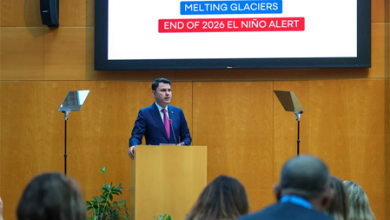
Islamabad — Pakistan’s exposure to glacial lake outburst floods (GLOFs) and broader climate risks came under sharp scrutiny this week as the Senate Standing Committee on Climate Change, chaired by Senator Sherry Rehman, held a detailed briefing on the state of the country’s endangered cryosphere, disaster preparedness systems, and enforcement of environmental laws.
The session laid bare the scale of the challenge: Pakistan is home to 13,032 glaciers and more than 3,000 glacial lakes, with 131 recorded GLOF events in its history. Of growing concern, 33 glacial lakes have now been identified as dangerous and capable of bursting without warning — a risk that threatens an estimated 7.1 million people across Gilgit-Baltistan and Khyber Pakhtunkhwa.
“We are talking about a very serious and immediate risk. Communities are directly impacted by GLOFs, and many of these glacial lakes are effectively ticking time bombs,” Senator Rehman told the committee, pointing to Attabad Lake as a stark example of the devastation such events can cause.
A Country Losing Its Ice, Without the Data to Prove It
Senator Rehman pressed officials on Pakistan’s glacial retreat rate, cited at around 16 percent, but noted that no agency in the room could provide a current, nationwide figure.
“We need to know at what speed our glaciers are receding. Does anyone in the relevant authorities have the exact current figure for the country? We need the latest statistics and data,” she said, calling for a comprehensive, countrywide glacier monitoring system rather than fragmented, range-specific assessments.
Officials from the Provincial Disaster Management Authority (PDMA) told the committee that protective bunds and automatic monitoring systems had been installed in high-risk areas. A joint study by SUPARCO and the Government of Khyber Pakhtunkhwa identified 24 glacial lakes in the region, five of which were classified as high-risk. Climate-related incidents in 2026 alone had already damaged 535 houses and 31 bridges.
The committee was also briefed on GLOF mitigation projects supported by UNDP — GLOF-I (2011–2016) and GLOF-II (2017–2024) — but Senator Rehman noted their geographical coverage remains too limited, calling for stronger coordination between SUPARCO, NDMA, the Pakistan Meteorological Department (PMD), and provincial authorities.
“This is both a climate finance problem and a disaster management problem. There are serious institutional gaps, and cooperation between institutions remains far too limited. We need an integrated response rather than institutions working in parallel,” she said.
Early Warning Systems: Progress, But Gaps Remain
A central theme of the briefing was the reliability of early warning infrastructure. Senator Rehman raised concerns over malfunctioning sensors and SIM-based alert systems in vulnerable communities, stressing that “early warning systems are only useful if they function when people need them.”
Minister of Climate Change Musadik Malik told the committee that of the early warning systems planned since 2017, only 34 have been installed to date, with 284 more expected within six months. He acknowledged supervision gaps and noted that many systems cannot function in areas without adequate communication signals — a shortfall being addressed in some locations through satellite packages, alongside a special audit now underway.
The Minister also explained that GLOFs differ fundamentally from conventional floods, carrying debris and force that smaller infrastructure cannot withstand, and called for safer zoning, integrated data systems, and stronger regional data-sharing mechanisms.
Deforestation, the Timber Mafia, and a Push for Accountability
The committee’s discussion extended to Pakistan’s deforestation crisis, with Senator Rehman directly linking forest loss and “browning” in vulnerable regions to illegal timber cutting.
“Pakistan is severely deforested. There was legislation that allowed the cutting of trees, and that created serious problems. The real browning in many areas is being driven by the timber mafia,” she said, calling for an independent audit of timber-related activity over the past 15 years.
Officials reported that the Forestry Component of the Green Pakistan/Uplift Green Pakistan Programme (2019–25) had reached 54 percent of its physical progress target, with additional land needed to raise forest cover by just one percent — underscoring how far the country remains from its reforestation goals.
Building Resilience From the Ground Up
The Senate briefing arrives at a critical moment for Pakistan, which continues to rank among the countries most affected by climate change despite contributing minimally to global emissions. The 2022 floods — which submerged nearly a third of the country, displaced over 33 million people, and caused more than $30 billion in damages — remain a defining reference point for why proactive, localized resilience-building is now treated as a national priority rather than an optional investment.
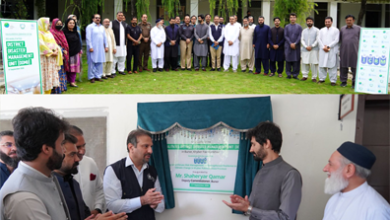
That shift is visible on the ground. In Buner, Khyber Pakhtunkhwa, the World Food Programme (WFP) and the District Administration recently inaugurated a newly rehabilitated District Disaster Management Unit (DDMU) under the Green Climate Fund-financed “Integrated Climate Risk Management” project. The upgraded facility now serves as a central coordination hub for early warning, inter-agency coordination, emergency operations, and district-level climate risk management — precisely the kind of localized institutional capacity Senator Rehman argues is missing at scale across the country.
Similar disaster management units are being progressively rolled out in other flood- and drought-prone districts across Khyber Pakhtunkhwa, Sindh, and Balochistan, reflecting a broader national push to move from reactive disaster response toward anticipatory, community-level risk management. Senator Rehman’s committee echoed this same logic in its recommendations: establishing a unified national glacier inventory, expanding satellite and drone-based monitoring, deploying artificial intelligence for risk detection, and building community-based early warning networks — all measures designed to put decision-making and response capacity closer to the communities facing the greatest risk.
“I should not have to tell you what the solutions are. We need proactive measures, creative solutions and clear lessons from countries such as Nepal, particularly from their experience with floods. This cannot be a business-as-usual presentation or a business-as-usual committee response,” Senator Rehman said.
Enforcement, Not Just Legislation
The session closed with a review of the Islamabad Capital Territory (Prohibition of Plastic Book Covers) Act, 2026, which Senator Rehman said was intended as a simple, practical step to cut plastic pollution but continues to be poorly enforced.
“Parliament is not a joke. Once Parliament passes a law, its implementation and compliance must be ensured. We cannot continue passing laws without ensuring that they are actually enforced,” she said, adding that only nine percent of plastic is recycled globally and that claims about biodegradable alternatives require closer scrutiny.
The committee called for stronger enforcement of the plastic book cover ban and broader action on plastic waste, which continues to contribute to blocked drains and urban pollution in the capital.
Senators Syed Waqar Mehdi, Sarmad Ali, Khalida Ateeb, and Bushra Anjum Butt attended the meeting, alongside the Minister for Climate Change and Environmental Coordination.