

Pakistan Monsoon Emergency Fund Flood Preparedness: PM Shehbaz Issues Urgent Nationwide Orders
Pakistan monsoon emergency fund flood preparedness gets decisive push as PM Shehbaz Sharif orders Finance Minister Aurangzeb to finalise rapid-response contingency funds and directs province-by-province readiness review.
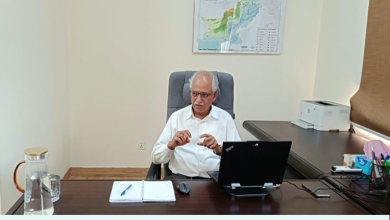
Pakistan monsoon emergency fund flood preparedness has been elevated to the highest level of government priority, as Prime Minister Shehbaz Sharif chaired a high-level review meeting in Islamabad and issued a sweeping set of directives designed to ensure the country is not caught unprepared for what forecasters warn could be another punishing monsoon season.
The Prime Minister directed Finance Minister Muhammad Aurangzeb to swiftly finalise an emergency contingency fund for rapid response to any climate-driven disaster this season — ensuring that resources can be deployed without delay if flooding or other natural disasters strike.
With Pakistan facing its fourth consecutive year of severe monsoon threats, and NDMA assessments pointing to above-normal temperatures and irregular rainfall patterns in July, the urgency of the Prime Minister’s directives was unmistakable.
1. PM Shehbaz’s High-Level Meeting: Who Was in the Room
The scale and seniority of the Pakistan monsoon emergency fund flood preparedness review meeting signals how seriously the Prime Minister is treating the approaching monsoon season.
The meeting was attended by:
- Defence Minister Khawaja Asif
- Finance Minister Muhammad Aurangzeb
- Planning Minister Ahsan Iqbal
- Information Minister Attaullah Tarar
- Power Minister Awais Leghari
- Climate Change Minister Musadik Malik
- IT Minister Shaza Fatima
- Law Minister Azam Nazeer Tarar
- Adviser on Political Affairs Rana Sanaullah
- Minister of State for Finance Azhar Bilal Kiyani
- NDMA Chairman Inam Haider Malik (a sitting three-star military general)
- WAPDA Chairman
- All provincial chief secretaries
- Senior officials from relevant federal and provincial institutions
The presence of all provincial chief secretaries alongside the full federal cabinet is particularly significant. It signals that the Pakistan monsoon emergency fund flood preparedness effort is being framed explicitly as a federal-provincial coordination exercise — not merely a federal government announcement.
Track Pakistan’s official monsoon preparedness updates at the NDMA Pakistan official website
2. Pakistan Monsoon Emergency Fund: What Aurangzeb Has Been Directed to Do
The most immediate and operationally significant directive from the Pakistan monsoon emergency fund flood preparedness meeting was aimed directly at Finance Minister Muhammad Aurangzeb:
Ensure advance groundwork for the emergency contingency fund so that resources could be deployed without delay in the event of flooding or other natural disasters.
This directive addresses one of the most persistent failures of Pakistan’s disaster response history: the gap between funds being available in principle and being deployable in practice.
When floods strike — often with minimal warning — the ability to release emergency funds rapidly, to the right institutions, in usable form, is the difference between effective response and bureaucratic paralysis. PM Sharif’s explicit directive to Aurangzeb to finalise the groundwork in advance reflects a hard-earned understanding that financial preparedness must precede disaster, not follow it.
Pakistan Climate Budget Cut: Sherry Rehman’s Warning on Inadequate Funding
3. Rs330 Billion for Water Security: The Budget Commitment Behind the Orders
The Pakistan monsoon emergency fund flood preparedness meeting was also an occasion for the Prime Minister to highlight a significant budget commitment: in the federal budget for 2026-27, an additional Rs330 billion has been allocated for water-related development projects.
The stated purpose of this allocation: strengthening national water security and accelerating completion of critical infrastructure.
This is one of the largest single-budget water security commitments in Pakistan’s recent history — and it provides the financial foundation that makes the Pakistan monsoon emergency fund flood preparedness agenda credible rather than aspirational.
The specific projects that this Rs330 billion supports include major dam construction, water storage enhancement, irrigation infrastructure and related works that reduce Pakistan’s vulnerability to both flood and drought extremes.
PM Sharif also directed that projects financed through foreign assistance should be explicitly directed toward improving the operational capacity of national and provincial institutions — particularly in disaster response and water management.
This directive addresses a common critique of international development aid to Pakistan: that it funds infrastructure projects rather than the institutional capacity needed to maintain and effectively use that infrastructure.
4. Province-by-Province Review: Musadik Malik and NDMA Chief Deployed
One of the most concrete and immediate directives from the Pakistan monsoon emergency fund flood preparedness meeting was the deployment of senior officials for on-the-ground provincial readiness reviews.
PM Sharif instructed:
- Climate Change Minister Musadik Malik
- NDMA Chairman Inam Haider Malik (a sitting three-star general)
…to undertake immediate visits to all provinces, Azad Jammu and Kashmir, and Gilgit-Baltistan to review on-ground arrangements and ensure readiness before peak monsoon activity.
This directive is significant for several reasons:
- It assigns ministerial and military-level oversight to provincial preparedness — not merely bureaucratic inspection
- It covers the full geography of Pakistan, including the mountain territories most exposed to GLOF and flash flood risks
- The word “immediate” signals that this is not a scheduled future exercise but an urgent, near-term action
- Having the NDMA Chairman — a three-star general — personally conduct provincial reviews sends a signal about the seriousness with which the government is approaching the 2026 monsoon threat
Pakistan Flood Alert Glacial Lake Outburst: NDMA’s Critical Nationwide Warning
5. Encroachment Removal: The PM’s Warning on Obstructed Flood Routes
One of the most operationally specific directives in the Pakistan monsoon emergency fund flood preparedness meeting concerned a problem that has historically worsened the scale of flood damage: encroachment on riverbeds and natural water channels.
PM Sharif directed provincial governments to urgently remove encroachments from riverbeds and natural water channels — particularly in vulnerable districts — with an explicit warning that obstruction of flood routes had “historically worsened the scale of damage.”
This directive addresses the same structural problem documented by SUPARCO’s satellite data for Bahrain in Swat: the progressive occupation of active floodplains and river corridors by human construction — narrowing natural water pathways and increasing the destructive energy of floodwaters when high-flow events occur.
The political challenge of encroachment removal is significant. Many structures occupying riverbed and floodplain areas belong to local residents, businesses and sometimes politically connected interests. Removing them requires not only technical capacity but political will — and the directive’s explicit urgency from the Prime Minister personally provides both impetus and cover for provincial governments to act.
6. Emergency Response Committee: Ahsan Iqbal to Lead Weekly Coordination
To ensure sustained, structured coordination throughout the Pakistan monsoon emergency fund flood preparedness effort, PM Sharif ordered the formation of a dedicated emergency response committee.
The committee will comprise:
- Planning Minister Ahsan Iqbal (lead)
- NDMA officials
- Other relevant federal departments
Mandate: weekly coordination with provincial counterparts throughout the monsoon season.
This weekly coordination mechanism addresses one of the most persistent weaknesses identified in post-disaster analyses of Pakistan’s flood response: the breakdown of federal-provincial communication during peak emergency periods, when multiple institutions are simultaneously responding to different aspects of the same disaster without adequate coordination.
By institutionalising weekly meetings — with a minister-level federal lead — the Prime Minister is creating a standing mechanism that keeps federal-provincial communication open and structured throughout the monsoon season rather than activating it only after disaster strikes.
7. NDMA’s Forecast: Above-Normal Temperatures and Irregular Rainfall
NDMA Chairman Inam Haider Malik briefed the high-level Pakistan monsoon emergency fund flood preparedness meeting with a forecast that provides the scientific foundation for the Prime Minister’s urgent directives.
Key NDMA assessments:
- Extreme heatwaves and unusual weather variability are anticipated globally in 2026
- Pakistan is expected to experience above-normal temperatures in July
- Irregular rainfall patterns are forecast for the monsoon period
- Evolving climate trends continue to increase the unpredictability and potential severity of extreme weather events
These forecasts are consistent with the temperature data already documented: Pakistan’s temperatures running 1.56°C above baseline levels in June 2026, as previously disclosed at the Senate Standing Committee on Climate Change.
The NDMA also outlined operational preparedness measures currently underway to mitigate potential impacts — confirming that the emergency preparedness effort is already active rather than merely planned.
8. Foreign Aid Redirected: PM Orders Focus on Disaster and Water Capacity
A noteworthy and strategically significant directive in the Pakistan monsoon emergency fund flood preparedness meeting concerned the use of foreign assistance.
PM Sharif directed that projects financed through foreign assistance should be explicitly directed toward improving the operational capacity of national and provincial institutions — particularly in disaster response and water management.
This directive addresses a well-documented critique of international development aid to Pakistan: the tendency of foreign-funded projects to build physical infrastructure — roads, buildings, equipment — without proportionate investment in the human and institutional capacity to operate, maintain and effectively use that infrastructure.
Pakistan’s disaster management institutions — from NDMA at the federal level to provincial disaster management authorities (PDMAs) — have repeatedly been found wanting in terms of operational capacity, training and coordination during major flood events. If foreign aid is redirected toward this capacity gap, it could produce more durable improvements in Pakistan’s actual disaster resilience than equivalent investment in new physical infrastructure.
9. Federal-Provincial Coordination: The Institutional Gap PM Sharif Addressed
The Pakistan monsoon emergency fund flood preparedness meeting placed particular emphasis on something that sounds procedural but is substantively critical: effective coordination between federal and provincial authorities.
PM Sharif explicitly underlined that this coordination was “essential” — noting that Pakistan remains among the countries most severely affected by climate change.
Pakistan’s federal-provincial coordination on disaster response has historically been one of the weakest links in the country’s emergency management chain. The 2022 floods revealed how dramatically coordination failures multiplied human and economic costs — with federal and provincial responses sometimes working at cross-purposes, resources misallocated, and information flows breaking down precisely when they were most needed.
The three mechanisms PM Sharif has ordered — the provincial review visits by Musadik Malik and NDMA Chairman Malik, the Ahsan Iqbal-led weekly emergency response committee, and the presence of all provincial chief secretaries in the preparedness meeting — are designed to close this coordination gap before the 2026 monsoon season reaches its peak.
Pakistan Flood Victims Recovery 2025: What Coordination Failure Costs
10. Pakistan’s Climate Reality: Why This Level of Preparedness Is Necessary
The urgency behind the Pakistan monsoon emergency fund flood preparedness directives reflects a stark climate reality that Pakistan’s leadership now publicly acknowledges at the highest level.
PM Sharif himself highlighted that Pakistan remains “among the countries most severely affected by climate change” — and his emphasis on lessons learned from past flood events reflects a documented pattern of escalating disaster severity:
- 2022: Catastrophic floods killed nearly 1,700 people, displaced 30 million and caused $30 billion in damages
- 2023: Continued flood impacts across multiple provinces
- 2024: Persistent climate-related disruptions
- 2025: Floods killed over 1,000 people including 275 children and displaced three million
- 2026: NDMA forecasting above-normal temperatures and irregular rainfall; fourth consecutive year of severe monsoon threat
This trajectory — each year adding to a cumulative burden of disaster that recovery has not kept pace with — is the direct context for PM Sharif’s Wednesday directives. The Pakistan monsoon emergency fund flood preparedness is not preventative planning in comfortable peacetime conditions. It is emergency preparation by a government that knows, from hard experience, exactly what insufficient preparation costs.
11. Conclusion: Pakistan Monsoon Emergency Fund Flood Preparedness Must Deliver Results
PM Shehbaz Sharif’s directives at Wednesday’s high-level meeting represent one of the most comprehensive and actionable Pakistan monsoon emergency fund flood preparedness frameworks issued before a monsoon season in recent years.
The directives are clear and specific:
- Finance Minister to finalise emergency contingency fund groundwork immediately
- Climate Minister and NDMA Chairman to conduct urgent provincial review visits
- Planning Minister to lead weekly federal-provincial coordination committee
- Provincial governments to remove riverbed and floodplain encroachments urgently
- Foreign aid to be directed toward institutional capacity, not just infrastructure
- Rs330 billion in water security budget committed for the 2026-27 cycle
The frameworks are right. The political commitment — signalled by the seniority of the meeting’s attendance and the specificity of the directives — appears genuine.
What remains is delivery. Pakistan’s history with disaster preparedness declarations is mixed: intentions stated at the highest level do not always translate into actions executed at the district and community level where floods actually strike.
The Pakistan monsoon emergency fund flood preparedness effort will ultimately be judged not by Wednesday’s meeting, but by whether encroachments are actually removed, whether emergency funds are actually deployed rapidly when needed, and whether the communities in Sindh, Balochistan, KPK and Punjab that have faced repeated floods are better prepared this year than last.
The 2026 monsoon is coming. The question is whether Pakistan is ready.