
Pakistan Climate Budget Cut: Sherry Rehman Issues Shocking Warning Amid Growing Climate Polycrisis
Pakistan climate budget cut from Rs3.5bn to Rs2.48bn draws a fierce warning from Senator Sherry Rehman — as El Niño threatens to intensify extreme weather events and glaciers accelerate their retreat.
The Pakistan climate budget cut has drawn one of the most forceful and alarming responses yet from inside the country’s own legislature — as Senator Sherry Rehman, Chairperson of the Senate Standing Committee on Climate Change and Environmental Coordination, described the reduction in climate funding as “shocking” and warned that the country is entering a period of heightened and accelerating environmental vulnerability.
Her warning came as the committee received sobering briefings on El Niño conditions, record temperatures and glacier loss — painting a picture of a nation whose climate risks are rising steeply while its financial commitments to address them are moving in the opposite direction.
1. The Shocking Numbers: How Deep Is the Pakistan Climate Budget Cut?
The Pakistan climate budget cut that has prompted Senator Rehman’s alarm is not a marginal adjustment. It represents a significant reversal of financial commitment to the country’s most urgent long-term challenge.
| Fiscal Year | Climate Ministry PSDP Allocation |
|---|---|
| Previous fiscal cycle | Rs3.5 billion |
| 2026-27 allocation | Rs2.478 billion |
| Reduction | Rs1.022 billion (~29% cut) |
A 29% reduction in climate funding — at a moment when Pakistan faces worsening heatwaves, accelerating glacier melt, erratic rainfall, urban environmental degradation and the approach of an El Niño-influenced monsoon season — is the central contradiction the committee meeting placed on public record.
Rehman put it plainly: “Climate risks are increasing, not decreasing, yet allocations continue to shrink.”
Track Pakistan’s climate finance flows at the Climate Policy Initiative Global Landscape of Climate Finance
2. Sherry Rehman’s Warning: Climate Risks Are Rising, Funding Is Falling
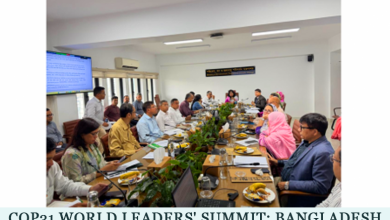
Senator Sherry Rehman — one of Pakistan’s most experienced and vocal climate advocates — presided over the Senate Standing Committee meeting with unmistakable urgency.
The Pakistan climate budget cut, in her assessment, is not merely a fiscal miscalculation. It is a strategic failure at precisely the moment when investment should be accelerating.
Her concerns were multi-dimensional:
- Shrinking financial commitments to climate action at a time of rising vulnerability
- Limited institutional capacity of the Climate Ministry to fully utilise even the reduced allocations provided
- Bureaucratic proliferation risk from the proposed Climate Authority adding institutional overlap without clear value
- Monsoon preparedness gaps as El Niño conditions threaten to intensify the upcoming season’s extreme weather events
Rehman’s use of the term “climate polycrisis” — a term gaining traction in international policy circles to describe the simultaneous compounding of multiple climate-related emergencies — signals that she is framing Pakistan’s challenge in its full systemic complexity, not as a series of isolated weather events.
Pakistan PSDP 2026-27 Climate Allocation: What the Budget Actually Funds | Pakistan Green University and Climate Skills Investment
3. Climate Polycrisis: What Pakistan Is Actually Facing Right Now
The Pakistan climate budget cut is happening against a backdrop that makes it doubly alarming. The country is not facing one climate challenge. It is facing many — simultaneously, and with compounding interactions.
Senator Rehman enumerated them in the committee meeting:
3.1 Intensifying Heatwaves
Pakistan has recorded some of the most extreme heat events in Asia in recent years. In 2026, global temperatures in June were running approximately 1.47°C above historical averages — while Pakistan’s own temperatures were running even higher, at 1.56°C above baseline levels.
3.2 Accelerated Glacier Melt
Pakistan hosts more than 7,000 glaciers in the Karakoram, Hindukush and Himalayas — the largest concentration of glacial ice outside the polar regions. Accelerating melt is already altering river flow patterns and threatening long-term water security.
3.3 Erratic Rainfall Patterns
Pakistan’s agricultural calendar — and the food security of over 220 million people — depends on relatively predictable seasonal rainfall. Increasing variability is undermining crop planning, irrigation management and rural livelihoods.
3.4 Growing Water Scarcity
Per-capita water availability in Pakistan has fallen dramatically over recent decades and continues to decline — a trend driven by population growth, inefficient use, groundwater depletion and climate-driven changes to river hydrology.
3.5 Deteriorating Urban Environment
Pakistan’s rapidly growing cities face intensifying heat islands, air quality deterioration, inadequate drainage systems vulnerable to extreme rainfall, and rising demand on water and energy infrastructure.
Each of these challenges is serious in isolation. Together — as a polycrisis — they are overwhelming Pakistan’s institutional and financial capacity to respond.
4. El Niño 2026: NDMA’s Alarming Forecast for the Monsoon Season
Perhaps the most alarming testimony at the committee meeting came from NDMA Chairman Inam Haider Malik, whose briefing on the upcoming monsoon season provided the immediate context for why the Pakistan climate budget cut carries such acute risk.
Malik informed committee members that the 2026-27 period is expected to be influenced by El Niño conditions — a climate pattern that, in Pakistan’s geographic context, is associated with:
- More intense and erratic monsoon rainfall in some regions
- Heightened flood risk particularly in river basins already stressed by glacier melt
- Intensification of extreme weather events across the broader South Asian region
The NDMA chairman also disclosed temperature data that reframes the urgency of the Pakistan climate budget cut in stark scientific terms:
- Global temperatures in June 2026 are running 1.47°C above historical averages
- Pakistan’s temperatures are running 1.56°C above baseline — above the global average overshoot
Malik’s most sobering observation: climate thresholds once expected to be reached later in the decade are arriving earlier than anticipated.
This is not a future problem. The thresholds are being crossed now.
Track El Niño developments at the World Meteorological Organization El Niño/La Niña Update
5. Temperature Records: Pakistan Already Above Global Warming Thresholds
The temperature data presented to the committee by NDMA deserves particular attention in the context of the Pakistan climate budget cut.
Pakistan is already operating at 1.56°C above baseline temperatures — a level that the international community has treated as a critical threshold since the Paris Agreement’s aspiration to limit warming to 1.5°C.
Pakistan has, in other words, already crossed the temperature threshold that the world’s governments have committed to preventing — and it did so while contributing less than one percent of global greenhouse gas emissions.
This is the injustice at the heart of the Pakistan climate budget cut debate: a country that bears minimal responsibility for global warming is experiencing its consequences at above-average intensity — and is now reducing the financial resources it deploys to protect its population from those consequences.
6. Glacier Loss and Water Security: The Long-Term Threat Behind the Budget Debate
Senator Rehman raised a question during the committee meeting that cut to the existential core of Pakistan’s climate challenge: how will future reservoir supplies be sustained as glaciers retreat?
This question has no comfortable answer.
Pakistan’s 7,000+ glaciers are currently acting as a vast, natural water storage system — releasing meltwater during dry seasons to supplement river flows that feed the Indus irrigation network. As glaciers retreat, this buffering function diminishes.
The projected long-term trajectory is deeply concerning:
- Initial phase: Accelerated melt temporarily increases river flows — raising flood risk
- Transition phase: As glacier mass diminishes, meltwater contributions begin to decline
- Long-term phase: Significantly reduced dry-season river flows — threatening the Indus irrigation system’s ability to sustain Pakistani agriculture
The Pakistan climate budget cut is happening precisely as this trajectory accelerates. Investment in water storage alternatives — dams, reservoirs, groundwater recharge systems — requires sustained, increasing financial commitment, not reduction.
Explore glacier retreat and water security data at the International Centre for Integrated Mountain Development (ICIMOD)
7. The Climate Authority Question: Creating Overlap or Adding Value?
One of the most pointed governance questions raised in the committee meeting concerned the proposed Pakistan Climate Change Authority (PCCA).
Senator Rehman asked directly: what additional role would the Climate Authority serve beyond the existing Ministry of Climate Change?
Her concern reflects a recurring challenge in Pakistan’s public sector: the proliferation of new institutions — each requiring its own budget, staff, and administrative infrastructure — without clarity on how they differ from or improve upon existing bodies.
In the context of the Pakistan climate budget cut, the question carries particular weight. If climate funding is declining while institutional overhead is potentially increasing through new authorities, the actual resources available for on-the-ground climate action could be squeezed even further.
The committee’s scrutiny of this question is appropriate and necessary. Climate governance in Pakistan requires coordination and effectiveness, not duplication — and every rupee spent on institutional overhead is a rupee not spent on heatwave adaptation, flood preparedness or glacier monitoring.
8. SOE Losses and Fiscal Priorities: Where Pakistan’s Money Is Actually Going
Senator Rehman placed the Pakistan climate budget cut in a broader and deeply troubling fiscal context by citing official figures on State-Owned Enterprise (SOE) losses:
| SOE Financial Indicator | Figure |
|---|---|
| SOE losses in fiscal year 2025 | Rs832.848 billion |
| Cumulative SOE losses | Over Rs6.5 trillion |
| SOE allocation in current budget | Rs451 billion |
To put this in perspective: Pakistan is allocating Rs451 billion to loss-making state enterprises in the current budget — while simultaneously cutting the climate budget to Rs2.478 billion.
The proportions are staggering. SOE support is running at nearly 182 times the climate budget allocation.
This is not merely a climate finance problem. It is a statement of political priorities — and it reveals the structural constraints within which Pakistan’s climate policy must operate, regardless of the urgency of the threats it faces.
9. Monsoon Preparedness: The Immediate Priority Rehman Is Demanding
Beyond the longer-term debates on budget architecture and institutional design, Senator Rehman identified monsoon preparedness as the immediate national priority that the committee’s work must serve.
The 2026 monsoon season — approaching under El Niño conditions, with temperatures already above critical thresholds — represents the most imminent test of Pakistan’s climate resilience capacity.
The committee received briefings from both NDMA and the Capital Development Authority (CDA) on preparedness measures. Rehman’s call for stronger institutional coordination to address the polycrisis reflects her assessment that current arrangements are insufficient to manage the scale and complexity of what the monsoon season may bring.
Pakistan’s experience in 2022 — when catastrophic flooding inundated one-third of the country, killing over 1,700 people and causing more than $30 billion in damages — remains the defining recent evidence of what inadequate preparedness costs.
Pakistan Climate Action Budget 2026-27: Full Breakdown of PSDP Allocations
10. Conclusion: The Pakistan Climate Budget Cut Is a Decision Pakistan Cannot Afford
The Pakistan climate budget cut — from Rs3.5 billion to Rs2.478 billion — is more than a line item in a fiscal document. It is a political decision about priorities, made at a moment when the scientific evidence, the NDMA’s own forecasts, and the lived experience of millions of Pakistanis demand the opposite choice.
Senator Sherry Rehman’s use of the word “shocking” was not hyperbole. It was a measured response from an experienced legislator who understands that Pakistan is:
- Already operating above the 1.5°C Paris threshold
- Approaching a monsoon season intensified by El Niño
- Losing glaciers that sustain the country’s water supply
- Simultaneously cutting the budget designed to respond to all of the above
The contradiction at the heart of Pakistan’s 2026-27 climate budget is not subtle. And the consequences of allowing that contradiction to persist — through inadequate monsoon preparedness, insufficient glacier monitoring, underfunded urban resilience, and weakened institutional capacity — will be paid not by the policymakers who made the decision, but by the communities already on the frontlines of Pakistan’s intensifying climate polycrisis.
Sherry Rehman has sounded the alarm. The question is whether anyone with the power to act is listening.