Pakistan Flood Victims Recovery 2025: Damning Report Exposes Shocking Inequality and Broken Promises
Pakistan flood victims recovery 2025 remains devastatingly incomplete — a Pattan-Coalition38 report finds 79% of households still poorer than before, with only 4.7% fully recovering losses and deepening inequality.
Pakistan flood victims recovery 2025 has failed the most vulnerable — and the numbers are damning.
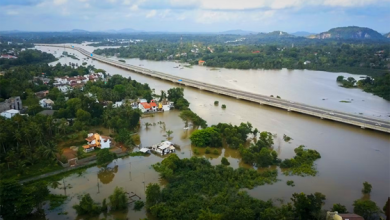
A new report by Pattan-Coalition38, based on survey research conducted in May-June 2026 with 140 flood-affected households across 35 severely-affected communities in Punjab and Khyber Pakhtunkhwa, has documented a recovery process marked by striking inequality, inadequate government response and deepening poverty.
The findings are a direct indictment of Pakistan’s disaster rehabilitation system — and of the gap between government announcements and the lived reality of the communities left behind.
1. The Report: Methodology and Scope
The Pakistan flood victims recovery 2025 report by Pattan-Coalition38 is one of the most substantively grounded assessments of post-flood recovery to emerge from affected communities in Punjab and KPK.
The research was designed to assess:
- The extent of recovery from the 2025 mega floods
- Current vulnerabilities facing affected households
- Preparedness for future flood events
- Public perceptions of government disaster management and rehabilitation efforts
Field research was conducted across 35 severely-affected communities, including:
- Remote areas with limited government reach
- Highly flood-prone riverine areas along major rivers
- Communities that have experienced repeated flooding over the last 15 years — meaning these populations have faced multiple cycles of loss without cumulative recovery
The 140-household sample provides a detailed, qualitative and quantitative picture of Pakistan flood victims recovery 2025 that aggregate national statistics frequently obscure.
2. Pakistan Flood Victims Recovery 2025: The Core Statistics
The headline findings of the Pakistan flood victims recovery 2025 report are stark and unambiguous:
| Key Finding | Data |
|---|---|
| Households still poorer than before floods | 79% |
| Households with no recovery at all from flood losses | 42% |
| Households with no livelihood recovery | 57% |
| Households unable to substantially repair or rebuild homes | More than two-thirds |
| Households reporting full recovery of losses, livelihoods, housing or assets | Less than 7% |
| Households reporting being economically better off | 2.8% |
| Households that reported receiving government compensation | 20 out of 140 (14.3%) |
| Respondents dissatisfied with government compensation and recovery efforts | More than 70% |
| Respondents unaware of government compensation packages announced after floods | Nearly 50% |
| Respondents reporting no community-based disaster preparedness activities | Nearly 90% |
| Respondents believing government is not doing enough to build resilience | More than 90% |
These numbers describe not a recovery in progress. They describe a recovery that has largely not happened — for the majority of the most vulnerable communities affected by the 2025 floods.
3. Unequal Recovery: Elites Benefited, the Poor Were Left Behind
The Pakistan flood victims recovery 2025 report documents something more disturbing than simple government failure: it documents structured inequality in recovery.
The report found that recovery processes “appeared to have disproportionately benefited a small segment of local elites and influential groups, while poorer households continued to struggle.”
This pattern — in which disaster recovery resources flow upward to those with existing power and connections, rather than downward to those with greatest need — is a documented phenomenon in post-disaster contexts globally. But its documentation in Pakistan’s 2025 flood recovery is a significant and serious finding.
The consequences are compounding:
- Pre-existing inequalities have not merely persisted during the recovery period
- They have, in many cases, deepened — with the gap between those who recovered and those who did not widening over time
- Poverty and marginalisation have intensified, particularly in south Punjab
A disaster that began as a natural event has been allowed — through inequitable recovery processes — to function as a mechanism of social stratification, leaving the most vulnerable communities less equal, less resilient and more exposed than they were before the floods struck.
4. Livelihood Loss: The Economic Devastation That Hasn’t Healed
The Pakistan flood victims recovery 2025 data on livelihoods reveals the depth of economic devastation that persists more than a year after the floods:
- 57% of households reported no recovery of livelihood-related losses
- 42% of respondents reported no recovery at all from overall flood losses
- Losses of livestock, agricultural assets, household possessions and personal belongings remained largely unaddressed
In rural flood-affected communities in Punjab and KPK, livelihoods are not merely sources of income. They are the entire economic foundation of household survival: the crop that feeds the family, the livestock that provides milk and income, the tools that enable labour.
When these assets are destroyed by floods — and not restored by recovery programmes — households face a vicious cycle:
- Lost assets → reduced income → inability to invest in reconstruction
- Growing debt taken on to survive → reduced future economic capacity
- Depleted savings → no buffer against future shocks
- Lost social capital as families sell remaining assets and cut spending
The Pakistan flood victims recovery 2025 report finds that this cycle has already entrapped the majority of affected households — leaving them more economically precarious entering the 2026 monsoon season than they were entering the 2025 floods that devastated them.
5. Housing: More Families Living Under Fragile Homes Than Before the Floods
Perhaps the most vivid indicator of the Pakistan flood victims recovery 2025 failure is the finding on housing:
“More than two-thirds of affected households had been unable to substantially rebuild or repair their homes. One year later, more families lived under fragile (kutcha) houses than before.”
Kutcha (unfinished, fragile) housing — typically made from mud, unbaked brick or other impermanent materials — provides minimal protection against flooding, monsoon rains or extreme heat. It is the form of housing most likely to collapse in the next flood event.
The fact that more families are now living in kutcha homes than before the 2025 floods is not merely a housing statistic. It is a vulnerability indicator — a measure of how much less protected these communities are against the next disaster event, which the fourth consecutive year of severe monsoon conditions suggests may arrive imminently.
Housing reconstruction is the most visible metric of disaster recovery. When more than two-thirds of households cannot rebuild a year later, the recovery process has not merely underperformed. It has failed.
6. Government Compensation: Most Victims Received Nothing
The Pakistan flood victims recovery 2025 report documents a compensation and relief system that failed the overwhelming majority of its intended beneficiaries:
- Only 20 out of 140 surveyed households (14.3%) reported receiving any government compensation
- More than 70% expressed dissatisfaction with government compensation and recovery efforts
- Nearly half of respondents said they were unaware of the government compensation packages announced after the floods
The awareness finding is particularly telling. When nearly half of affected households don’t know that compensation packages exist, the problem is not merely administrative — it is communicative. Communities were not reached with information about their entitlements.
The finding that friends and relatives were identified as the most trusted source of support during emergencies — above government institutions, NGOs or formal aid systems — quantifies the institutional trust collapse that the report documents throughout.
When the people most affected by a disaster trust their neighbours more than their government for life-saving support, the state has failed at its most fundamental level.
7. Early Warning and Preparedness: Virtually Absent at Community Level
The Pakistan flood victims recovery 2025 report’s findings on disaster preparedness are directly connected to the ongoing Pakistan flood alert glacial lake outburst emergency — and they paint a troubling picture of what happens when the next flood arrives.
The study found:
- Nearly 90% of respondents reported no community-based disaster preparedness activities in their localities
- Preparedness measures, early warning systems, evacuation planning and community-based disaster risk reduction activities were “either absent or ineffective”
- The study found “virtually no evidence of meaningful community-level disaster preparedness”
This means that the communities hit hardest by the 2025 floods — identified as among the most flood-prone and repeatedly flood-affected in Pakistan — are entering the 2026 monsoon season with:
- No early warning systems
- No evacuation plans
- No community-level disaster risk reduction programmes
- No meaningful preparedness infrastructure
The gap between Pakistan’s international commitments — including the Sendai Framework for Disaster Risk Reduction and the UN Early Warning for All initiative — and the reality documented in these communities could not be wider.
8. Climate Awareness Is High — But Institutional Trust Has Collapsed
One of the most striking contrasts in the Pakistan flood victims recovery 2025 report is between climate awareness and institutional trust.
- More than 90% of participants identified climate change as a major contributor to increasingly severe and unpredictable flooding — a level of climate literacy rarely found in such remote, disaster-affected rural populations
- Yet an equally large majority expressed dissatisfaction with government efforts to strengthen community resilience or prepare vulnerable populations for future disasters
- More than 90% believed government institutions were not doing enough to build community resilience
The communities of flood-prone Punjab and KPK understand, viscerally and with near-universal consensus, that climate change is making floods worse. What they do not believe — with equally near-universal consensus — is that their government is doing anything meaningful to protect them from the consequences.
This combination — high climate awareness, collapsed institutional trust — is one of the most dangerous social conditions a disaster-vulnerable country can face. It means communities understand the threat but do not believe in the institutions nominally responsible for protecting them from it.
9. South Punjab: Anger, Marginalisation and Deepening Poverty
The Pakistan flood victims recovery 2025 report gives particular attention to south Punjab as a region where recovery failure has been most acute — and where the social and political consequences are most severe.
In south Punjab, the report documents that the combination of damaged homes, lost livelihoods, inequitable compensation distribution and absent government support has produced not merely poverty but anger.
The report notes that recovery failures have deepened inequality, poverty and marginalisation in the region — “causing not only dissatisfaction but also anger amongst the affected communities.”
South Punjab has long been one of Pakistan’s most economically marginalised regions — with indicators of poverty, education access, health infrastructure and institutional presence that lag significantly behind central and northern Punjab. The 2025 floods hit this already vulnerable region hard. The recovery process has, according to the Pattan-Coalition38 findings, deepened rather than redressed its marginalisation.
A population that is angry, marginalised, flooded, uncompensated and entering its next flood season without preparedness infrastructure is a social and political tinderbox.
10. What the Report Recommends: A Roadmap for Genuine Recovery
The Pakistan flood victims recovery 2025 report translates its findings into a concrete set of recommendations:
10.1 Community-Level Disaster Preparedness
Introduce and fund community-based disaster preparedness programmes — including early warning systems, evacuation planning and community disaster risk reduction activities — particularly in repeatedly flood-prone areas.
10.2 Transparent and Equitable Compensation
Improve transparency in compensation and relief distribution to prevent the elite capture documented in the report. Digital systems should be introduced to reduce corruption opportunities and ensure compensation reaches intended beneficiaries.
10.3 Social Accountability Mechanisms
Establish robust social accountability frameworks that give communities the ability to monitor, question and demand accountability for recovery resource allocation.
10.4 Empowering Local Government
Strengthen and empower local governments to play a lead role in disaster response and recovery — bringing decision-making closer to affected communities and reducing the distance between need and response.
10.5 Renewable Energy and Long-Term Resilience
Promote renewable energy solutions and invest in long-term resilience-building measures for flood-prone populations — reducing vulnerability at its structural roots rather than merely responding to each disaster cycle.
11. Conclusion: Pakistan Flood Victims Recovery 2025 Demands Urgent Political Will
The Pakistan flood victims recovery 2025 report by Pattan-Coalition38 is not merely a research document. It is an indictment.
It documents, with specific evidence from 140 households across 35 communities, that Pakistan’s most vulnerable flood-affected families have been left behind — by inadequate compensation systems, inequitable recovery processes, absent preparedness infrastructure and a government that, as the report notes, has “shown little political will” to support millions of affected people.
The numbers speak with terrible clarity:
- 79% still poorer than before
- 42% with no recovery at all
- Only 14.3% received any government compensation
- Nearly 90% with no community disaster preparedness
And these communities are now entering the 2026 monsoon season — the fourth consecutive year of severe monsoon threats — more vulnerable, less prepared, more indebted and angrier than they were when the 2025 floods struck them.
The Pakistan flood victims recovery 2025 failure is not a natural consequence of disaster magnitude. It is a political choice — about who matters, whose losses are compensated, and whose communities are prepared for the next flood.
Unless that choice changes, the 2026 monsoon season will produce another cycle of devastating loss, inequitable recovery and deepening marginalisation — for the communities that can least afford it, and the government that has already failed them once.