

Pakistan Water Insecurity: 7 Urgent Warnings as India’s Treaty Move Triggers a Dangerous Crisis
Pakistan water insecurity emerges as a global risk as Islamabad warns the UN over India’s Indus Waters Treaty suspension and erratic river flows.
Pakistan water insecurity has emerged as a defining global challenge, with Islamabad urging the international community to recognize water stress as a systemic global risk rather than a localized or regional concern. Speaking at the United Nations, Pakistani officials warned that disruptions in shared river basins—particularly following India’s unilateral suspension of the Indus Waters Treaty—threaten food security, livelihoods, and long-term regional stability across South Asia.
The warning comes at a time when climate volatility, population growth, and geopolitical strain are converging to expose deep vulnerabilities in transboundary water governance.
Understanding Pakistan water insecurity
Pakistan water insecurity is not a future scenario—it is a present-day crisis. The country ranks among the world’s most water-stressed nations, with per capita water availability falling sharply over the past decades. Rapid urbanization, groundwater depletion, erratic monsoon patterns, and accelerated glacier melt are pushing Pakistan’s water systems beyond sustainable limits.
As a lower-riparian state, Pakistan’s dependence on upstream flows makes it particularly vulnerable to unilateral actions affecting shared rivers.
Why water insecurity is now a global systemic risk
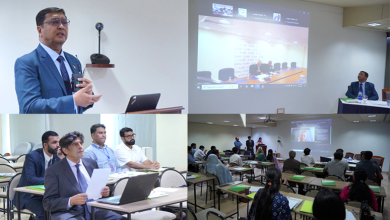
Addressing a UN policy roundtable, Pakistan’s Acting Permanent Representative, Ambassador Usman Jadoon, emphasized that water insecurity now functions as a systemic global risk—one capable of triggering cascading failures across food systems, energy infrastructure, public health, and human security.
According to the UN Water framework, shared river basins support nearly 40% of the global population, meaning instability in one region can ripple far beyond national borders.
External link: https://www.unwater.org
Indus Waters Treaty: Backbone of regional water stability
The 1960 Indus Waters Treaty (IWT) has long been regarded as one of the world’s most durable water-sharing agreements. Brokered by the World Bank, the treaty governs the allocation of the Indus River system between India and Pakistan and has survived wars and political crises.
For Pakistan, the Indus Basin:
- Supplies over 80% of agricultural water
- Sustains the world’s largest contiguous irrigation system
- Supports livelihoods of more than 240 million people
External link: https://www.worldbank.org
India’s treaty suspension and its cascading impacts
Pakistan water insecurity intensified sharply after India’s unilateral decision last year to place the Indus Waters Treaty “in abeyance.” Islamabad argues that the treaty does not permit unilateral suspension under international law.
Since the move:
- River flows have become increasingly irregular
- Hydrological data sharing has reportedly declined
- Farmers in Punjab face uncertainty during critical sowing seasons
Deputy Prime Minister Ishaq Dar recently highlighted abrupt flow variations that disrupted agricultural planning, amplifying economic stress in Pakistan’s eastern breadbasket.
Climate change and downstream vulnerability in Pakistan
Climate change acts as a threat multiplier for Pakistan water insecurity. The country faces:
- Intensifying floods and prolonged droughts
- Rapid glacier retreat in the Hindu Kush–Himalayan region
- Rising groundwater extraction in urban and agricultural zones
The devastating 2025 monsoon floods, which killed over 1,000 people and submerged vast tracts of farmland in Punjab, underscored how climate extremes and river mismanagement can combine into humanitarian disasters.
National resilience efforts: What Pakistan is doing
Pakistan has acknowledged its internal challenges and is strengthening water resilience through:
- Integrated water resource management
- Flood protection infrastructure
- Irrigation system rehabilitation
- Groundwater recharge initiatives
Flagship programs such as Living Indus and Recharge Pakistan aim to restore ecosystems, enhance flood buffering capacity, and improve long-term water availability.
Why domestic action alone is not enough
Despite these efforts, Islamabad stresses that Pakistan water insecurity cannot be solved through national action alone. Transboundary rivers demand cooperative governance, transparent data sharing, and respect for international water law.
Ambassador Jadoon warned that unilateral actions upstream undermine predictability, making adaptation planning nearly impossible for downstream communities already coping with climate shocks.
Food security, agriculture, and economic risks
Agriculture employs a significant share of Pakistan’s workforce and contributes heavily to exports. Disruptions in Indus flows directly threaten:
- Wheat and rice production
- Rural employment
- National food prices
The FAO has repeatedly warned that water insecurity in agrarian economies can quickly translate into inflation, malnutrition, and social instability.
External link: https://www.fao.org
The road to the 2026 UN Water Conference
Looking ahead, Pakistan is pushing for water insecurity to be formally recognized as a systemic global risk at the 2026 UN Water Conference. Islamabad is calling for:
- Reinforced respect for international water treaties
- Stronger dispute-resolution mechanisms
- Real protection for vulnerable downstream states
The message is clear: water cooperation is no longer optional—it is essential for global stability.
Conclusion: A defining test for water diplomacy
Pakistan water insecurity represents a defining test for international water governance in an era of climate stress and geopolitical tension. As India-Pakistan treaty disputes intersect with climate volatility, the stakes extend far beyond South Asia.
Without cooperation, transparency, and adherence to international law, shared rivers risk becoming fault lines of instability. Pakistan’s warning to the world is unequivocal: water insecurity is no longer a regional issue—it is a global risk demanding urgent collective action.