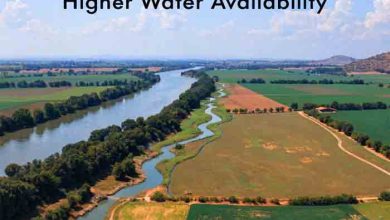

Urgent Relief Ahead: 2 New Dams Planned to Ease Water Shortage in Twin Cities
Two new dams planned to ease water shortage in twin cities as Pakistan approves Dotara and Shahdara dam projects to secure Islamabad and Rawalpindi’s water future.
Two new dams planned to ease water shortage in twin cities of Islamabad and Rawalpindi mark a critical and long-awaited step toward addressing one of Pakistan’s most pressing urban challenges: water scarcity. After years of mounting pressure on existing water resources, federal and provincial authorities have approved the construction of Dotara Dam and Shahdara Dam, two projects expected to significantly improve water availability by December 2027.
The decision comes amid growing concern over Islamabad’s widening water demand-supply gap and signals renewed urgency from the government to prevent a looming urban water crisis.
Background: Twin Cities Facing Severe Water Stress
Islamabad and Rawalpindi—often referred to as the twin cities—are experiencing chronic water shortages, particularly during summer months. Despite rapid population growth and urban expansion, water infrastructure development has remained stagnant for nearly two decades.
Currently, the Capital Development Authority (CDA) supplies approximately 70 million gallons per day (mgd), while actual demand stands close to 220 mgd. This alarming gap has left many urban and rural communities dependent on bore wells, water tankers, and unsafe sources.
Government Approval and High-Level Meeting
The approval for the two dams was granted during a high-level meeting chaired by Interior Minister Mohsin Raza Naqvi, attended by Adviser to the Prime Minister Dr Syed Tauqir Hussain Shah, CDA Chairman Mohammad Ali Randhawa, and senior officials from Wapda and the Punjab government.
The meeting formally authorized the priority launch of the Dotara and Shahdara dams, classifying them as short-term, high-impact projects.
Dotara Dam Project Overview
The Dotara Dam will be constructed upstream of Khanpur Dam, a key water source for Islamabad and Rawalpindi.
Key Features of Dotara Dam:
- Water Supply Capacity: 72 mgd
- Estimated Cost: Rs40 billion (excluding land acquisition)
- Height: 122 metres
- Length: 350 metres
- Catchment Area:
- 40% overlapping Khanpur Dam
- 57% independent catchment
Wapda has been directed to complete a comprehensive feasibility report within two months, after which construction will begin immediately.
Why Dotara Dam Is a Game-Changer for Islamabad
Officials emphasized that Dotara Dam will be unique in Islamabad’s history because it allows water to be supplied through gravity, reducing energy costs and operational losses.
This feature not only enhances efficiency but also aligns with climate-resilient urban planning, a growing priority for Pakistan.
External reference: Water and Power Development Authority – WAPDA
Shahdara Dam: A Small Project with Big Impact
Alongside Dotara, authorities approved the Shahdara Dam, a smaller but strategically vital project to be built on the Shahdara stream in the Margalla Hills.
Shahdara Dam Highlights:
- Water Supply Capacity: 10 mgd
- Estimated Cost: Rs4 billion
- Purpose: Supplement Islamabad’s municipal supply
Despite its modest size, Shahdara Dam is expected to provide immediate relief to water-stressed sectors of the capital.
Project Timeline and Completion Target
Both dams are scheduled for completion by December 2027, though officials aim to finish construction within two years if feasibility, funding, and approvals move swiftly.
Participants stressed that early execution is essential to prevent further deterioration of water security in the region.
Funding Strategy and Institutional Coordination
The meeting decided that both the federal and Punjab governments will be approached to jointly fund the projects. Given their strategic importance, these dams are expected to receive priority budget allocations.
CDA and Wapda will jointly oversee technical execution, while provincial authorities will facilitate land and regulatory clearances.
Addressing Water Losses and Infrastructure Decay
Beyond new supply sources, the meeting also highlighted the need to:
- Stop water leakages
- Replace rusting pipelines
- Upgrade distribution networks
Experts estimate that up to 30% of Islamabad’s water is lost due to leakages—an issue CDA has now been instructed to tackle urgently.
Comparison with Long-Term Mega Water Projects
The meeting also reviewed the Ghazi Brotha/Indus River project, designed to supply 100 mgd each to Islamabad and Rawalpindi.
However, officials agreed that while mega projects remain important, Dotara and Shahdara dams offer faster, more realistic relief and must be prioritized.
External reference: Indus River System Authority (IRSA)
Islamabad’s Water Crisis: A Two-Decade Failure
Islamabad’s water scarcity is not sudden—it is the result of policy neglect, delayed planning, and unchecked urban growth. No major alternative water source has been developed in over 20 years, despite repeated warnings.
CDA Chairman Mohammad Ali Randhawa recently acknowledged this gap, stating that water projects are now a top institutional priority, alongside major urban development initiatives.
Why These Dams Matter for the Future
The approval of the two dams represents:
- Improved water security
- Reduced reliance on groundwater
- Climate-resilient urban planning
- Economic stability for the capital region
For residents of Islamabad and Rawalpindi, these projects offer long-overdue hope amid worsening water shortages.
Two new dams planned to ease water shortage in twin cities could mark a historic turning point if implemented on schedule. With strong political backing, technical feasibility, and clear deadlines, Dotara and Shahdara dams have the potential to reshape Islamabad and Rawalpindi’s water future.
The challenge now lies not in planning—but in execution, transparency, and timely completion.