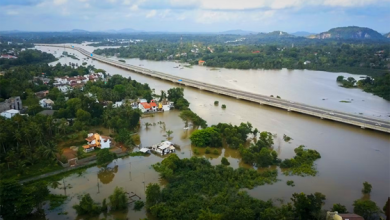

Urgent Questions Arise as India Signals Plans to Restrict Water Reaching Pakistan
India Pakistan Water Dispute intensifies after India's water minister says efforts are underway to ensure no river water reaches Pakistan, raising concerns over the Indus Waters Treaty.
India Pakistan Water Dispute has entered a new phase after India’s Water Minister C.R. Patil stated that New Delhi is actively pursuing measures aimed at ensuring that river water flowing from India does not reach Pakistan in the future.
The remarks have heightened tensions between the two nuclear-armed neighbors and reignited concerns over the future of the historic Indus Waters Treaty, a landmark water-sharing agreement that has governed transboundary river management between the two countries since 1960.
Pakistan has strongly criticized the statements, warning that any attempt to alter the natural flow of shared rivers would have serious regional consequences and could undermine international treaty obligations.
India Pakistan Water Dispute Escalates
The latest developments have intensified the ongoing India Pakistan Water Dispute, which has become one of the most significant geopolitical issues in South Asia.
Speaking in a television interview, Indian Water Minister C.R. Patil said the government was implementing directives from Prime Minister Narendra Modi aimed at ensuring that “not a single drop of water” reaches Pakistan.
The comments came amid ongoing tensions following India’s suspension of participation in the Indus Waters Treaty in 2025.
The statement has drawn widespread attention because water remains a critical resource for both countries, particularly for Pakistan’s agriculture-dependent economy.
Water Minister’s Statement Raises Concerns
According to Indian officials, the government is examining infrastructure and river management options that could potentially alter the timing and utilization of water resources originating within Indian territory.
The remarks have raised questions about:
- Future river flow management
- Regional water security
- Treaty obligations
- Agricultural impacts
- Cross-border cooperation
Observers note that water-sharing arrangements have historically remained one of the few areas of sustained cooperation between India and Pakistan despite broader political tensions.
Background of the Indus Waters Treaty
India Pakistan Water Dispute and the 1960 Agreement
The Indus Waters Treaty was signed in 1960 with the support of the World Bank.
The treaty governs the distribution and management of six major rivers within the Indus Basin.
Rivers Covered Under the Treaty
| Western Rivers | Eastern Rivers |
|---|---|
| Indus | Ravi |
| Jhelum | Beas |
| Chenab | Sutlej |
The agreement has survived multiple wars and periods of heightened political tension between the two countries.
For decades, it has been considered one of the world’s most durable international water-sharing arrangements.
Why the Indus River System Matters
The Indus River system serves as a lifeline for millions of people across Pakistan and India.
The river network supports:
- Agriculture
- Drinking water supplies
- Industrial activity
- Hydropower generation
- Food security
In Pakistan, the majority of agricultural production depends on irrigation systems connected to the Indus Basin.
Any significant disruption to water flows could therefore have major economic and social consequences.
Pakistan Rejects India’s Position
Pakistan Calls for Treaty Compliance
Pakistan has strongly opposed India’s recent statements and actions.
Officials in Islamabad maintain that the treaty remains legally valid and binding.
Pakistan argues that:
- The treaty contains no provision for unilateral suspension.
- Shared water resources should not be politicized.
- International obligations must be respected.
- Water should not be used as a geopolitical tool.
Pakistani authorities have repeatedly warned against what they describe as attempts to “weaponize” water resources.
Suspension of the Indus Waters Treaty
Tensions increased significantly after India announced in May 2025 that it was suspending its participation in the treaty.
The move followed accusations related to a security incident in Indian-administered Kashmir.
Pakistan denied the allegations and rejected the linkage between security issues and water-sharing arrangements.
The dispute has since evolved into a broader debate about treaty obligations and regional stability.
Chenab River at the Center of Controversy
The Chenab River has emerged as a key focus of recent developments.
Pakistan has expressed concerns regarding:
- New infrastructure proposals
- River flow management
- Water regulation projects
- Hydropower developments
The Chenab is one of the western rivers allocated to Pakistan under the treaty framework, making developments on the river particularly sensitive.
Proposed Water Diversion Projects
Reports indicate that India’s state-owned National Hydroelectric Power Corporation has issued a tender related to a proposed tunnel project.
The project aims to transfer water from the Chenab River basin toward the Beas basin.
Additionally, sediment removal work has reportedly been undertaken at the Salal Hydroelectric Power Station.
These developments have generated debate regarding their potential long-term implications for river flows.
Expert Analysis on India’s Capabilities
Current Infrastructure Limitations
Water experts note that India’s existing infrastructure does not currently provide the capability to completely block river flows into Pakistan.
According to analysts:
- Most current facilities are run-of-the-river projects.
- Existing dams have limited storage capacity.
- Infrastructure primarily regulates timing and flow rates.
- Large-scale diversion remains technically challenging.
Experts emphasize that major river diversion projects would require extensive engineering works and significant investment.
Implications for Pakistan’s Agriculture
Agriculture remains one of Pakistan’s most important economic sectors.
The country relies heavily on irrigation from the Indus Basin.
Potential concerns include:
| Sector | Possible Impact |
|---|---|
| Agriculture | Reduced irrigation certainty |
| Food Production | Increased risk to crop planning |
| Rural Communities | Livelihood challenges |
| Water Management | Greater operational complexity |
| Economic Stability | Increased vulnerability |
Farmers depend on predictable water availability when making planting and harvesting decisions.
Regional Water Security Challenges
The dispute highlights broader concerns regarding transboundary water management.
Shared river basins exist across:
- South Asia
- Africa
- Europe
- Latin America
Experts argue that maintaining predictable water-sharing frameworks is essential for regional stability and sustainable development.
Growing populations and rising demand for water resources are placing additional pressure on existing arrangements.
Climate Change and Water Stress
India Pakistan Water Dispute Amid Climate Challenges
Climate change is complicating water management throughout South Asia.
Regional challenges include:
- Glacier retreat
- Changing rainfall patterns
- Extreme weather events
- Water scarcity
- Flood risks
These environmental pressures increase the importance of cooperation and effective water governance.
Many analysts argue that climate resilience requires stronger collaboration rather than increased disputes over shared resources.
International Legal Questions
The ongoing disagreement raises important questions regarding international water law and treaty governance.
Legal experts emphasize that:
- International agreements provide predictability.
- Dispute resolution mechanisms are important.
- Treaty obligations help prevent conflict.
- Cooperative frameworks support regional stability.
The future interpretation of treaty provisions could have implications beyond South Asia.
Future Outlook
While political rhetoric has intensified, experts caution that significant changes to river flows are unlikely in the immediate future.
Current assessments suggest:
- Major infrastructure projects may take years to complete.
- Construction activity could extend beyond 2030.
- Existing technical limitations remain significant.
- Water-sharing issues will likely remain a key diplomatic concern.
Observers believe that negotiations, legal processes, and regional dialogue will continue to shape developments.
Conclusion
The India Pakistan Water Dispute has entered a sensitive new phase following statements from Indian officials regarding future river management plans.
While experts note that existing infrastructure limits the immediate ability to significantly alter river flows, the controversy has raised broader concerns about water security, treaty obligations, and regional stability.
As climate change intensifies water-related challenges across South Asia, the future of the Indus Waters Treaty and cross-border water cooperation will remain critical issues for both countries.
The coming years may determine whether shared water resources continue to serve as a basis for cooperation or become an increasingly contentious source of geopolitical tension.