
IRS Convenes Pre-COP31 Dialogue to Strengthen Pakistan’s Climate Governance Framework
IRS hosts Pre-COP31 dialogue in Islamabad to address institutional reforms, local governance gaps, and climate justice in Pakistan.
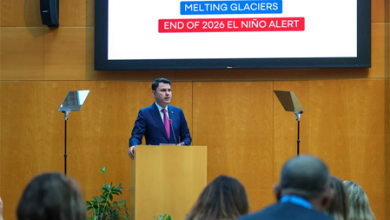
ISLAMABAD, MAR 3 – The Institute of Regional Studies (IRS) convened an Eminent Talk featuring Senator Zarqa Suharwardy Taimur as part of its inaugural Pre-COP31 dialogue titled “Strengthening Climate Governance in Pakistan.”
The session brought together policymakers, researchers, and climate practitioners to assess institutional reforms, legislative priorities, and implementation challenges shaping Pakistan’s climate governance architecture.
The event marks the beginning of policy consultations ahead of COP31, with a focus on ensuring that Pakistan’s climate commitments translate into effective and equitable domestic action.
Global Warming at a Critical Threshold
In his opening remarks, Ambassador Jauhar Saleem, President of IRS, highlighted the alarming pace of global warming.
He noted that global temperatures are now as warm as at any point in the last 125,000 years — a stark indicator of the unprecedented nature of today’s climate crisis.
“If this trajectory continues,” he cautioned, “severe risks to ecosystems, food security, and global stability will become inevitable.”
His remarks framed the dialogue within a broader global emergency, linking international climate science to Pakistan’s national responsibilities and vulnerabilities.
Fragmented Policy Landscape in Pakistan
Delivering the keynote address, Senator Zarqa Suharwardy Taimur reflected on Pakistan’s fragmented and often contradictory policy landscape.
She observed that conflicting decisions and short-term political priorities frequently undermine long-term climate objectives, including carbon market development and adaptation planning.
While Pakistan remains an active participant in international climate negotiations and continues to secure climate finance commitments, structural weaknesses within governance systems hinder effective delivery on the ground.
“Participation in global forums is important,” she emphasised, “but without internal policy coherence, implementation remains uneven and insufficient.”
Climate Finance and Implementation Gaps
Pakistan has received significant climate finance from multilateral institutions and development partners over recent years. However, as noted during the IRS dialogue, mobilisation of funds does not automatically translate into resilience outcomes.
Dr Zarqa highlighted that limited empowerment of local governments remains one of the core bottlenecks in Pakistan’s climate governance system.
Although provinces hold constitutional authority over key sectors such as agriculture, water management, urban development, and disaster response, decision-making and financial flows often remain centralised.
This disconnect between funding channels and implementing authorities weakens accountability and slows progress.
Speakers stressed that unless fiscal decentralisation aligns with climate responsibilities, Pakistan will struggle to convert international commitments into measurable adaptation gains.
District-Level Governance and Climate Justice
A major theme of the Pre-COP31 dialogue was climate justice.
Dr Zarqa argued that meaningful climate justice cannot be achieved without strengthening district-level governance structures.
She drew attention to recent flood disasters in Pakistan, noting that poor land-use planning and unregulated urban expansion along riverbeds disproportionately affect vulnerable populations.
Women, children, and persons with disabilities often suffer the most during climate-induced disasters due to limited mobility, restricted access to resources, and systemic inequality.
Robust district-level planning — backed by adequate resources and legal authority — is essential to reducing these vulnerabilities.
Climate resilience, she stressed, must begin at the local level.
Urban Expansion and Flood Vulnerability
Pakistan’s rapid urbanisation has intensified environmental stress.
Unregulated construction in floodplains and riverbeds has magnified the destructive impact of extreme rainfall events. Climate-induced floods are no longer solely natural disasters; they are increasingly shaped by human settlement patterns and policy decisions.
Dr Zarqa underscored that climate governance must address both mitigation and adaptation, including stricter enforcement of zoning laws and climate-sensitive infrastructure planning.
Without proactive urban governance, Pakistan’s cities will remain exposed to escalating climate risks.
Rethinking Agriculture and Water Use
Pakistan is one of the world’s most water-stressed countries. With declining per capita water availability and increasing variability in rainfall patterns, the country faces mounting challenges in agricultural sustainability.
During the dialogue, Dr Zarqa stressed the urgency of reforming agricultural practices and water-use efficiency.
Traditional irrigation methods, inefficient cropping patterns, and excessive groundwater extraction are no longer viable in a changing climate.
Policy reforms must incentivise climate-smart agriculture, drought-resistant crop varieties, and efficient irrigation technologies.
Water governance, participants agreed, must move from reactive crisis management to long-term strategic planning.
Climate Governance Beyond Electoral Cycles
Mr Talha Tufail Bhatti, Lead of the Climate Governance & Policy Program at IRS, highlighted another systemic challenge: political polarisation and declining institutional trust.
He argued that climate governance must transcend electoral cycles and short-term policy thinking.
“Climate change does not operate on five-year mandates,” he noted, emphasising the need for sustained bipartisan commitment.
A cultural and institutional shift is required — from unintended environmental degradation to intentional planetary stewardship.
This means embedding climate priorities into national development planning rather than treating them as standalone initiatives.
Toward COP31: What Pakistan Must Prioritise
As Pakistan prepares for COP31, experts at the IRS dialogue identified several priority areas:
1. Institutional Coherence
Align federal, provincial, and district-level climate mandates to eliminate policy contradictions.
2. Decentralised Financing
Empower local governments with direct access to climate funds and simplified procedures.
3. Legislative Reform
Strengthen climate-related legislation to ensure enforceability and accountability.
4. Inclusive Climate Justice
Integrate gender-sensitive and disability-inclusive frameworks into climate adaptation policies.
5. Evidence-Based Planning
Leverage scientific data to guide infrastructure, water management, and urban development strategies.
COP31 presents an opportunity for Pakistan not only to advocate for global climate justice but also to demonstrate domestic governance reform.
Conclusion
The Pre-COP31 dialogue hosted by the Institute of Regional Studies served as a timely reminder that Pakistan’s climate challenge is not solely about securing international finance or participating in global negotiations.
It is about governance.
Fragmented policies, limited local empowerment, and institutional bottlenecks continue to constrain the country’s ability to implement effective climate action.
As global temperatures reach historic highs, the urgency of reform grows stronger. Strengthening district-level governance, aligning fiscal authority with climate responsibilities, and embedding resilience into national planning are no longer optional — they are imperative.
If Pakistan can bridge the gap between ambition and implementation, it will be better positioned to protect vulnerable communities, safeguard ecosystems, and contribute meaningfully to global climate efforts.
The road to COP31 begins at home.