

FAO Pakistan Showcases Climate-Resilient Agriculture at Multan Conference on Sustainable Food Systems
FAO Pakistan's GCF-funded Indus Basin project shared climate-resilient agriculture and water management evidence at a Multan conference and World Food Day 2026 panel.
MULTAN, 19 October 2026 – FAO Pakistan’s Green Climate Fund (GCF) project on the Indus Basin took a leading role at an international conference on sustainable food systems in Multan. Experts presented evidence on climate-resilient agriculture in Pakistan, drawing on fieldwork in South Punjab and Sindh. The event was hosted by Bahauddin Zakariya University under the theme of sustainable food systems in a changing climate.
Two days of evidence and exchange
The project, titled “Transforming the Indus Basin with Climate Resilient Agriculture and Water Management,” contributed to a series of high-level engagements over the two-day conference. FAO experts shared experiences from its work in South Punjab and Sindh. Their sessions covered four areas:
- climate-resilient agriculture
- efficient water management
- smallholder agribusiness development
- farmer-led innovation
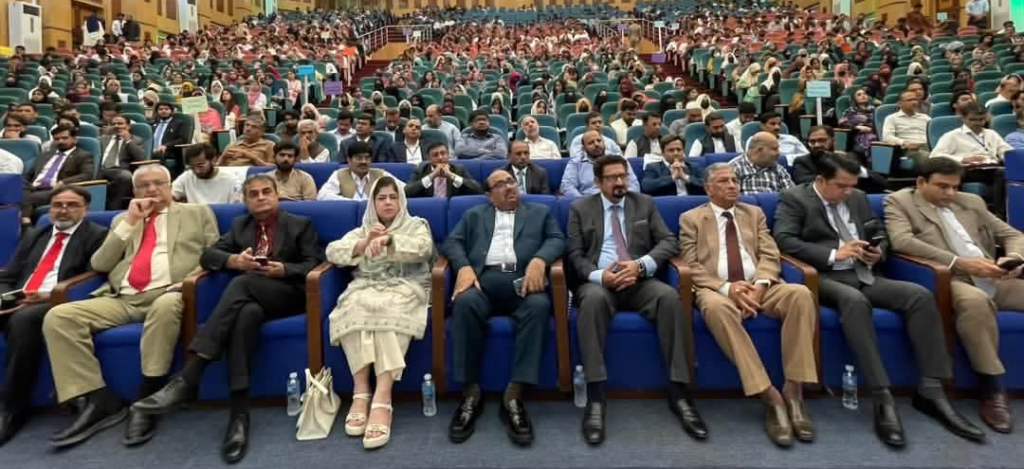
Discussions explored how research, technology, partnerships and local knowledge can work together to strengthen food security and improve rural livelihoods. The emphasis on farmer-led innovation reflects a view that solutions tested in real fields, and adapted by the people who farm them, are more likely to last than those imposed from outside.
World Food Day 2026 panel: “Innovate Today, Nourish Tomorrow”
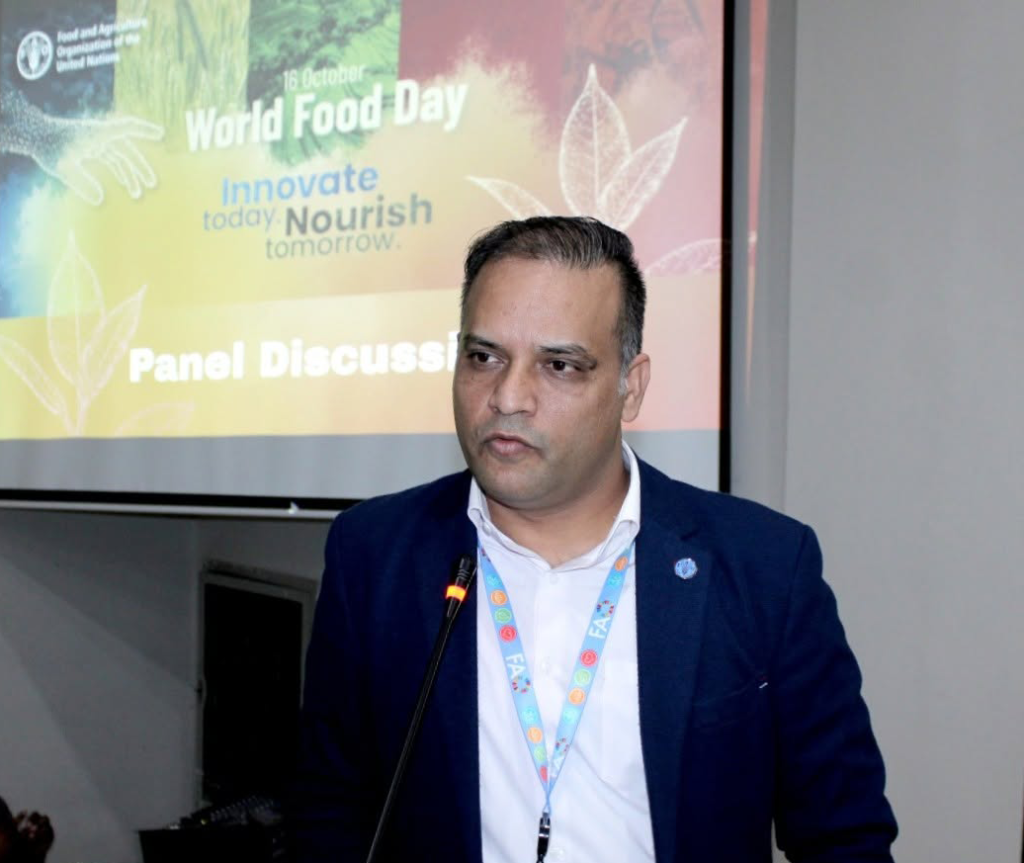
The conference closed with a special World Food Day 2026 panel discussion titled “Innovate Today, Nourish Tomorrow,” moderated by FAO Pakistan. The panel brought together experts from academia, the development sector and civil society. They reflected on how innovation, climate action, youth engagement and women farmers can shape the future of Pakistan’s agrifood systems.
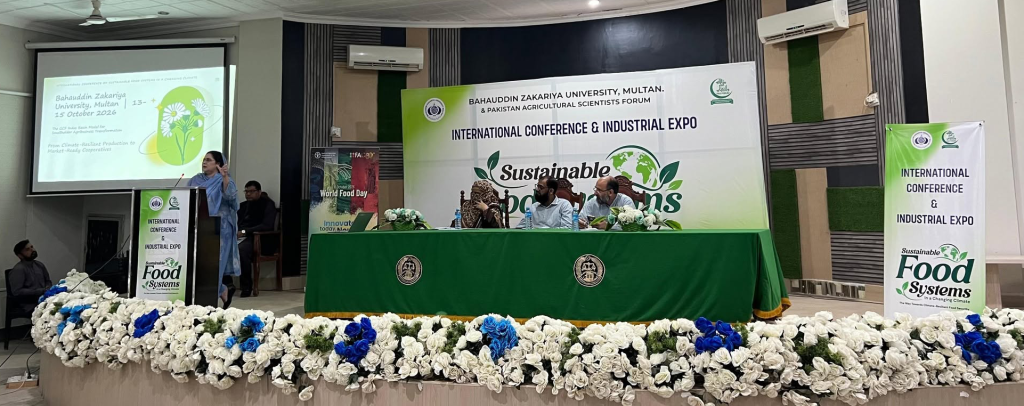
The panel paid particular attention to the contribution of women farmers to sustainable food systems. This was framed within the International Year of Women Farmers 2026, which draws attention to the often under-recognised role women play in producing food, managing land and water, and sustaining rural households.
Background: the Indus Basin project
The Indus Basin is central to Pakistan’s food supply. Agriculture in the basin employs nearly 26 percent of the country’s labour force and produces more than 90 percent of Pakistan’s agricultural output. Pakistan’s vulnerability stems from its arid to semi-arid climate and its heavy dependence on a single river system, along with snow and glacial meltwater, for agricultural water.
The FAO project responds to that exposure. The GCF signed the agreement in 2019, and the project aims to build farmers’ climate resilience through skills, knowledge and technology while developing the government’s capacity to use climate information for adaptation. The GCF provided FAO with a grant of nearly $35 million, and the provincial governments of Punjab and Sindh committed a further $12.7 million in co-financing to be managed by FAO.
The work is organised in four components: improving climate information services, building on-farm resilience through climate-resilient agriculture and on-farm water management, creating an enabling environment for sustained adoption of climate-smart practices, and project management. Adoption at scale is pursued through an established network of Farmers Field Schools.
Why it matters
Pakistan’s agrifood systems face overlapping pressures: heat, erratic rainfall, floods, water scarcity and rising input costs. In that setting, a university conference that connects field-level evidence with researchers, civil society and policymakers is useful for several reasons.
First, it puts practical results in front of the people who train the next generation of agronomists and water managers. Second, it links climate finance to outcomes that communities can see, which matters for the credibility of climate funds. Third, it brings women farmers into the centre of the discussion rather than the margins. Women contribute significant labour across crop production, livestock and post-harvest work, yet they often have less access to land, credit, extension services and technology. Closing that gap is widely seen as one of the most direct ways to raise productivity and resilience.
The focus on youth is equally relevant. Young people are likely to be the ones adopting digital tools, running agribusinesses and carrying innovations from research stations into villages.
Conclusion
The Multan conference showed how a climate-finance project can feed into wider national conversations about food security. Through its Indus Basin work, FAO Pakistan presented evidence on climate-resilient agriculture, efficient water use and smallholder enterprise, while the World Food Day 2026 panel put innovation, youth and women farmers at the centre of the debate.
The message from the two days is that resilient, inclusive and sustainable agrifood systems depend on knowledge sharing, partnership and innovation working together. For Pakistan’s farmers, the test will be whether the evidence shared in Multan translates into wider adoption of practices that protect both harvests and water resources, and into stronger support for the women who grow much of the country’s food.
Sources: FAO Pakistan (conference statement); Green Climate Fund; FAO; Food and Agriculture Organization project documents.