
Pakistan Trains Journalists on Climate Reporting as PID Holds “Strengthening Climate Change Journalism” Workshop
Islamabad - The Press Information Department (PID) capacity-building session brings together scientists, disaster experts, and reporters to sharpen the tools of climate journalism in one of the world’s most climate-vulnerable countries.
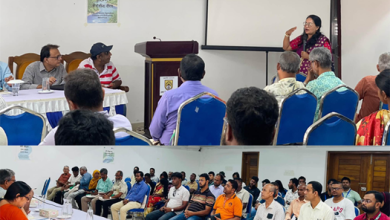
Islamabad, Pakistan — The Press Information Department (PID), under the Ministry of Information and Broadcasting, organized a one-day Capacity Building Workshop titled “Strengthening Climate Change Journalism” at the Information Services Academy (ISA), Islamabad, today.
The workshop was designed to enhance the capacity of climate change beat reporters by equipping them with the latest knowledge, practical tools, and expert insights to improve the quality of climate reporting across Pakistan. Journalists representing leading newspapers, television channels, digital media platforms, and other media organizations from across the country took part in the training.
Expert-Led Sessions Cover Science, Governance, and Finance
The one-day programme featured a series of sessions covering key dimensions of climate change reporting:
- Dr. Adil Naseer, Chief Executive Officer of the All Pakistan Geo Scientists Association (APGSA), spoke on community-based disaster risk mitigation.
- Dr. Shaukat Ali, Senior Scientific Officer at the Global Climate Change Impact Studies Centre (GCISC), addressed recent advances in climate science and how scientific information can be communicated more effectively through the media.
- Mr. Shakeel Ramay, Chief Executive Officer of the Asian Institute of Eco-Civilization Research and Development (AIERD), led a session on climate change and city governance, underlining the need for sustainable urban planning.
- Dr. M. Rafique, Member Climate Finance at the Pakistan Climate Change Authority (PCCA), discussed climate finance mechanisms and their role in supporting climate resilience initiatives.
- Mr. Ghias Akram, Chief Executive Officer of the Media and Security Research Organization (MASRO), closed the day with a hands-on session of climate reporting exercises.
Certificates Distributed at Closing Ceremony
The closing ceremony was attended by Ms. Raisa Adil, Executive Director General/Principal Information Officer, Press Information Department, as Chief Guest. Also in attendance were Ms. Samina Farzin, Executive Director General, Information Services Academy, and Ms. Ayesha Tassaduq, Director General, Press Information Department. The dignitaries distributed certificates to participants in recognition of their successful completion of the training programme.
In her closing remarks, Ms. Raisa Adil underscored the growing importance of climate and environmental journalism in the face of mounting climate-related challenges. She said journalists have a vital role to play during emergencies and disasters by providing timely, accurate, and factual information to the public.
She stated that responsible journalism — grounded in truth and facts and communicated promptly — has the potential to save lives during climate-induced disasters. Addressing climate change, she added, requires collective action, and she stressed the need for media, government institutions, experts, and civil society to work together to raise public awareness and support Pakistan’s efforts toward climate change mitigation and adaptation.
The workshop concluded with a renewed commitment to strengthening climate change reporting in the country.
News Backgrounder: Pakistan Amid the Climate Crisis
The timing of the workshop reflects a hard reality: Pakistan is now widely regarded as one of the countries most exposed to climate change, despite contributing minimally to the emissions driving it. Pakistan contributes less than 1 percent of global emissions, yet remains among the five countries most affected by climate change, and separate assessments have similarly ranked Pakistan among the top 10 most climate-vulnerable nations.
The scale of the risk was laid bare by the catastrophic floods of 2022, when torrential rains and flooding impacted an estimated 33 million people and caused more than $40 billion in economic damages, leaving 1,700 people dead, destroying 2 million homes, and killing over 900,000 livestock. Officials at the time noted that flood waters covered roughly a third of the country. Researchers have since found that Pakistan’s exposure to riverine, flash, and coastal flooding, along with cyclones and drought, places it among the eight countries in the world most vulnerable to long-term climate risk.
The threat has not receded. In 2025, renewed cloudbursts and a heavier-than-usual monsoon triggered landslides and massive flooding that affected more than six million people nationwide. Aid agencies have warned that the disease burden compounds the humanitarian toll, and organizations such as the Red Cross have had to scale up emergency operations in the worst-hit areas as flood-related outbreaks rise.
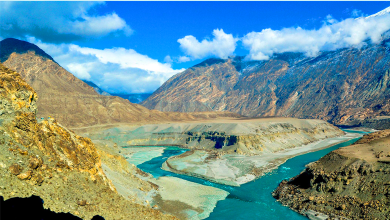
Looking ahead, authorities have flagged 2026 as another high-risk year. A nationwide alert this year identified Hunza and Skardu in Gilgit-Baltistan and Khyber Pakhtunkhwa province as among the areas most vulnerable to a possible climate disaster, while also warning of flooding risk in Islamabad, Rawalpindi, and other urban centres. The alert followed record-breaking heat: temperatures in Gilgit-Baltistan reached 48.5°C this year, breaking a record set in 1971, accelerating glacial melt and causing glacial lakes to swell and burst across the region. Pakistan is home to roughly 13,000 glaciers — more than any country outside the polar regions — and, according to the UN Development Programme, their melting across the Hindu Kush, Himalayan, and Karakoram ranges has already formed more than 3,000 glacial lakes in Gilgit-Baltistan and Khyber Pakhtunkhwa.
Public understanding of the crisis is uneven but growing. A post-2022-floods national survey found that 92.9% of respondents had heard of climate change, with social media and WhatsApp cited as the leading source of information, and roughly 95% identifying increased flooding and shifting rainfall patterns as its most recognizable effects. Longer-term projections suggest the exposure will keep growing: flood-risk modelling estimates that the number of people exposed to flooding in Pakistan could rise from around 2 million in 2010 to 5.7 million by 2030, a trajectory that analysts link to wider risks of instability given the interaction between climate hazards and existing vulnerabilities such as poverty and floodplain development.
It is against this backdrop — recurring floods, glacial melt, extreme heat, and disaster-driven displacement — that Pakistan’s information authorities are pushing to professionalize climate reporting, aiming to ensure that when the next disaster strikes, the flow of public information is accurate, timely, and potentially life-saving.
The Role of Journalists in Climate Action
Workshops like this one point to a broader shift in how climate change is being treated in Pakistan’s public discourse: not merely as an environmental story, but as a recurring emergency that touches disaster management, urban planning, public finance, and public health all at once. That complexity is precisely why specialized training for reporters matters. A flood, a heatwave, or a glacial lake outburst is not just a weather event — it is a story that intersects with science, governance, and economics, and getting it right requires reporters who can interpret scientific data, question policy responses, and translate technical warnings into information ordinary citizens can act on.
As Ms. Raisa Adil noted in her closing remarks, journalism grounded in truth and delivered promptly can save lives during climate-induced disasters. In a country facing recurring floods, record heat, and melting glaciers, the reporter on the climate beat is often the first — and sometimes the only — bridge between early-warning systems and the communities at risk. Accurate, well-sourced reporting can mean earlier evacuations, better-informed policy debate, and sustained public pressure for mitigation and adaptation measures. As Pakistan continues to face disproportionate climate risk despite its minimal contribution to global emissions, the case made at this workshop is that strengthening the newsroom’s climate literacy is not a peripheral media reform — it is itself a form of climate action.
This article is based on official information released by the Press Information Department (PID), Ministry of Information and Broadcasting, and background reporting on Pakistan’s climate vulnerability from Al-Jazeera, the World Resources Institute, the UN Development Programme, and peer-reviewed research.