
Egypt’s Al Murunah Model Shows How Integrated Water Solutions Can Scale Across MENA
With women's earnings up 50%, reduced soil salinity, and nearly 500 villagers managing local water systems, Egypt's Al Murunah pilot offers a scalable blueprint for water security across the Middle East and North Africa
Why the Al Murunah Integrated Development Approach Is Scalable
As one of the driest countries in the world, Egypt lives in the gaps: between water supply and demand, rising costs and declining productivity, national strategies and local realities — gaps that climate change and regional instability are widening.
A Region Under Water Stress
The Middle East and North Africa (MENA) region is widely recognized as one of the most water-scarce areas in the world, with per capita water availability among the lowest globally. Rapid population growth, agricultural demand, and accelerating climate change have combined to strain already-limited freshwater resources. Egypt, which depends on the Nile for the vast majority of its water supply, faces particular vulnerability, compounded by rising soil salinity, aging irrigation infrastructure, and economic pressure on smallholder farmers.
This is the premise behind the International Water Management Institute’s (IWMI) Al Murunah project, which aims to boost water security across MENA through resilient, nature-based water solutions. Rather than treating biophysical, economic, social, and institutional challenges separately, the project traces pressure points across all four systems to find where they intersect, then designs integrated solutions accordingly. A pilot in Egypt’s Izbat Al Hamra village shows how this works in practice, and makes the case for scaling it region-wide.
Addressing Interconnected Challenges on the Ground
In Izbat Al Hamra, farmers like Salem Mahmoud, a board member of the local Agricultural Cooperative Society, could readily list the challenges shaping daily life: uneven land causing poor drainage, water lost through inefficient irrigation, rising costs from diesel pumps, and soil salinity steadily eroding productivity.
Through co-creation with local communities, Al Murunah addressed these gaps across more than 110 hectares of smallholder farmland: laser land leveling improved drainage, solar-powered irrigation cut water use and diesel dependence, targeted soil treatments addressed salinity, and farmer field schools trained growers in climate-smart cultivation of artichoke and sugar beet crops.
According to Stephen Fragaszy, researcher and Al Murunah project lead, soil salinity in the area fell from 4,000 to 1,500 millimhos, a reduction achieved not through any single intervention, but by treating connected problems as one system. The result was greater field uniformity, improved irrigation distribution, and water savings between 10% and 25%.
Economic Gains Follow Physical Improvements
Closing physical gaps created conditions for economic ones to close too. The pilot’s interventions cut rot and wilt in artichoke nurseries by 95% and lifted crop productivity by roughly 15%, expanding the volume of marketable produce. Two women-led artichoke processing facilities saw earnings rise by around 50% for the women involved, and five women at each facility received shared economic assets — goats, a rice-whitening machine, an animal feed press, a tricycle, and a tahini production machine — extending benefits community-wide.
These interventions also demonstrated strong financial returns: the solar irrigation systems deliver annual returns of 12.3%, while the processing facilities generate eight Egyptian pounds for every pound invested, evidence that sustainability and profitability can advance together.
Shifting Social Norms Around Decision-Making
Many natural resource projects address physical and economic gaps while leaving social dynamics untouched. In Izbat Al Hamra, women were historically excluded from financial decision-making, limiting how families could respond to climate-related stress.
Using the Economic and Social Empowerment (EA$E) curriculum, which pairs economic training with structured discussion groups, Al Murunah engaged 150 couples in shared learning around financial management, communication, and joint decision-making, while training 40 local opinion leaders on gender equality and inclusive leadership to reinforce these shifts community-wide.
Asmaa Ahmed Ibrahim, a participant from Troji village, described how the workshops brought families together to jointly discuss priorities, savings, and how to divide household income — a process that, as Namaa Rakha of the National Council for Childhood and Motherhood put it, helps women recognize their own value and act on it.
Strengthening Institutions to Sustain Change
Even strong technical, economic and social interventions can stall without institutional support to sustain them. Al Murunah has assessed institutional readiness, strengthened local agencies, and worked to embed nature-based water solutions into Egyptian agricultural policy and regional water council frameworks. At the community level, IWMI supported creation of a water user association and built the local Agricultural Cooperative’s capacity to coordinate water management. Today, roughly 500 community members are actively involved in managing local water systems, a sign of growing local ownership.
Egypt’s Minister of Water Resources and Irrigation, Hani Sewilam, noted that Al Murunah directly supports the governance pillar of the country’s Irrigation System 2.0 strategy, linking national policy ambition with systems that ministries can adopt and scale.
A Model Built for Replication
IWMI has adapted this integrated approach across Egypt, Jordan, Lebanon and Palestine, tailoring interventions to local context while applying the same systemic method. In Jordan, this meant rehabilitating degraded springs and 650 meters of irrigation canals alongside cooperative-building. In Palestine, it involved spring and wadi channel rehabilitation to cut wastewater contamination and improve water delivery, alongside a community agrobiodiversity garden.
The project’s name reflects its philosophy: “Al Murunah” means flexibility, or resilience, in Arabic — a core design principle, not a concession to complexity.
From Proof to Scale
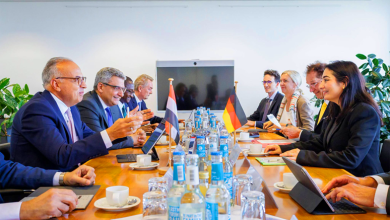
Momentum toward scaling is building. A March 2026 Impact Celebration and Scaling Roundtable, hosted by the British Embassy Cairo alongside a national workshop organized by the Centre for Environment and Development for the Arab Region and Europe (CEDARE), brought together key stakeholders to translate pilot evidence into scaling opportunities, with Sewilam identifying water user associations as an immediate priority for expansion.
Finance remains a critical lever. The project, funded by the UK’s Foreign, Commonwealth & Development Office (FCDO), was cited by UK Special Representative for Climate Rachel Kyte as evidence that nature-based water solutions can succeed across all four systems at once, positioning it to attract blended public, private and multilateral investment, reinforced by frameworks like the UK-Egypt Green Growth Partnership.
With a solid evidence base and growing political will, IWMI is preparing to apply the Al Murunah model in new communities across the region, confident in an approach built on addressing interconnected systems together, rather than any single fix.
Source: International Water Management Institute (IWMI).