
Karachi Air Quality Crisis: Alarming Conference Warning Exposes Deadly Environmental Collapse
Karachi air quality crisis reaches dangerous levels far beyond WHO limits as experts at Karachi University's Climate Matters Conference warn of public health emergency, deforestation and a city turning into a concrete jungle.
The Karachi air quality crisis has reached a threshold that can no longer be ignored — as experts at a major environmental conference at Karachi University (KU) warned that the city’s air quality index has far exceeded WHO safety limits, posing grave and mounting public health risks to one of the world’s most densely populated urban centres.
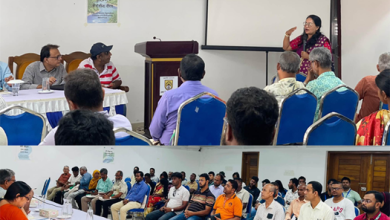
The Climate Matters Conference, organised by KU’s Institute of Environmental Studies (IES) at the Chinese Teachers Memorial Auditorium and themed “Inspired by Nature, for Climate, for Our Future”, brought together scientists, academics, banking sector sustainability leaders and civil society representatives to confront the accelerating environmental collapse of a city that was once called the City of Lights.
What they found — and what they said publicly — should alarm every resident, policymaker and institution in Karachi.
1. Karachi Air Quality Crisis: How Bad Have Things Actually Become?
The Karachi air quality crisis is not a new phenomenon — but the speed of deterioration and the level of severity documented at the KU conference represent a qualitative escalation in the city’s environmental emergency.
IES Director Dr Farrakh Nawaz placed the situation in terms that are difficult to overstate:
“Karachi’s air quality index has reached alarming levels, far exceeding WHO limits, posing grave public health risks.”
This is not the language of academic caution. It is a direct public health warning from a credentialled environmental scientist standing at the city’s leading research institution — and it describes a situation that affects every one of Karachi’s estimated 22 million residents.
What makes the Karachi air quality crisis particularly alarming is the gap between the scale of the problem and the institutional response — or rather, the near-absence of one.
Dr Nawaz lamented that while Pakistan is among the countries most vulnerable to climate change, “societal awareness and seriousness were almost non-existent” — a verdict that applies equally to government, the private sector and the general public.
🌐 External Resource: Check current Karachi air quality data at IQAir – Karachi Real-Time Air Quality Index
2. WHO Limits Exceeded: The Public Health Emergency No One Is Talking About
The World Health Organization sets air quality guidelines based on the concentrations of pollutants — particularly particulate matter (PM2.5 and PM10), nitrogen dioxide, ozone, and sulphur dioxide — that scientific evidence associates with adverse health outcomes.
Karachi’s air quality index has far exceeded those limits — meaning the air that 22 million people breathe daily carries pollutant loads that the world’s leading health authority considers dangerous.
The health consequences of sustained exposure to air pollution at these levels include:
- Respiratory diseases — asthma, chronic obstructive pulmonary disease, bronchitis
- Cardiovascular disease — elevated risk of heart attack and stroke
- Cancer — long-term exposure to PM2.5 is classified as a Group 1 carcinogen
- Neurological impacts — emerging evidence links air pollution to cognitive decline
- Child development effects — impaired lung development, reduced cognitive function in children
In a city of Karachi’s size, these health impacts translate into tens of thousands of premature deaths annually and hundreds of thousands of hospitalizations — a public health catastrophe that remains largely invisible in national health statistics and policy discourse.
Pakistan Climate Budget Cut: Sherry Rehman’s Warning on Environmental Vulnerability | Pakistan’s Urban Climate Resilience Strategy 2026
3. 16,000 Tonnes of Waste Daily: Karachi’s Staggering Solid Waste Crisis
The Karachi air quality crisis does not exist in isolation. It is one dimension of a multi-faceted environmental collapse — and solid waste is among the most visible and damaging contributors.
Dr Nawaz shared a figure that should prompt immediate institutional alarm: Karachi generates approximately 16,000 tonnes of solid waste every single day.
To put this in perspective:
- That is 5.84 million tonnes of solid waste annually
- Equivalent to roughly 730 grams of waste per person per day across a city of 22 million
- A volume that Karachi’s waste management infrastructure is chronically unable to collect, process or safely dispose of
The consequences of this waste management failure include:
- Open burning of waste — a major contributor to air pollution and the Karachi air quality crisis
- Landfill overflow — contaminating soil and groundwater
- Drainage blockage — worsening urban flooding during monsoon rains
- Disease vectors — uncollected waste creates breeding grounds for mosquitoes, rodents and bacteria
- Marine pollution — waste reaching the sea through storm drains and rivers
Explore urban waste management solutions at the UN-Habitat Urban Resilience Hub
4. Untreated Wastewater: 600 Million Gallons Discharged Into the Sea Every Day
If the solid waste figures are alarming, the wastewater data is catastrophic.
Dr Nawaz informed the conference that between 450 and 600 million gallons of untreated wastewater are discharged directly into the sea from Karachi every single day.
This is not an estimate of what leaks through inadequate infrastructure. It is the volume of raw sewage, industrial effluent and domestic wastewater that flows — largely without treatment — into the Arabian Sea from one of the world’s major coastal cities.
The consequences extend far beyond the beaches:
- Marine ecosystem destruction — coral reefs, fish populations and coastal habitats are being systematically poisoned
- Fisheries collapse — threatening the livelihoods of hundreds of thousands of fisherfolk dependent on coastal waters
- Public health hazard — communities along the coast face direct exposure to contaminated water
- Karachi air quality crisis linkage — decomposing organic waste in waterways releases gases including hydrogen sulphide and methane that contribute to local air pollution
Dr Nawaz’s summation was unambiguous: “Without responsible waste management and environmental protection, no positive change can be expected.”
5. Trees Only Survive in Graveyards: Karachi’s Deforestation Catastrophe
One of the most striking observations at the Climate Matters Conference came from KU IES faculty member Dr Amir Alamgir, whose assessment of Karachi’s tree cover was both scientifically precise and poetically devastating.
Pointing to the large-scale cutting of trees across the city to make space for development projects and housing schemes, Dr Alamgir said:
“Today, trees are only protected in graveyards due to minimal human interference.”
This observation captures a grotesque irony at the heart of the Karachi air quality crisis: the only places in the city where trees survive long enough to provide meaningful environmental benefit are cemeteries — where no developer wants the land and no construction project removes the canopy.
Everywhere else — along roads, in parks, on university campuses, in residential neighbourhoods — trees fall to development pressures with minimal regulatory protection and almost no public accountability.
The loss of tree cover directly worsens the Karachi air quality crisis by:
- Removing natural air filtration capacity
- Eliminating carbon sequestration that offsets urban emissions
- Increasing urban heat by removing shade and evapotranspiration cooling
- Worsening stormwater runoff that contributes to flooding
- Degrading biodiversity and the ecosystem services that urban greenery provides
6. Three Percent Greenery: Karachi Becomes a Concrete Jungle
Meezan Bank’s Head of Sustainable Operations, Mahboob Alam Khan, provided the statistic that most starkly quantifies the scale of Karachi’s green cover collapse:
Karachi’s greenery has shrunk to just three percent of the city’s area.
Three percent.
For a city of 22 million people, covering approximately 3,527 square kilometres, three percent green cover means that the vast majority of the urban surface is concrete, asphalt, rooftops and paved areas — with almost no natural cooling, air filtration or biodiversity.
The global benchmark for minimum healthy urban green space recommended by the WHO is nine square metres per person. For a city of Karachi’s size, this would require vastly more than three percent coverage.
The trajectory is also moving in the wrong direction. With rapid urban construction continuing at pace, even this limited vegetation is at risk of further reduction. Khan urged policymakers to introduce laws and strategies to prevent tree cutting and promote plantation — a call that the conference participants noted has been made repeatedly, with little apparent governmental response.
7. Rising Temperatures and Heatwaves: What Losing Green Cover Costs
KU Vice Chancellor Dr Khalid Mahmood Iraqi placed the Karachi air quality crisis within its broader climatic context with a phrase that captures the physical reality of what is happening to the city:
“Our city has turned into a concrete jungle, leading to rising temperatures, intensified heatwaves, and worsening environmental problems.”
The urban heat island effect — the well-documented phenomenon by which densely built urban areas retain and generate more heat than surrounding rural areas — is dramatically worsened by the loss of green cover.
In Karachi, a city already exposed to extreme heat from its coastal-desert geography, the urban heat island effect is intensifying heatwaves that are already among Pakistan’s deadliest annual climate events.
The 2015 Karachi heatwave killed over 1,300 people in a single week. As the city’s green cover shrinks to three percent, similar or worse events become more frequent, more intense, and more lethal.
The connection between the Karachi air quality crisis — driven partly by the absence of tree cover to filter pollutants — and the heatwave intensification driven by the same absence of cooling vegetation is direct and compounding.
8. Water Shortage Ahead: KU Vice Chancellor’s Dire Warning
Dr Iraqi issued a warning that extends the Karachi air quality crisis into a broader and equally alarming future scenario:
Pakistan might face a severe water shortage crisis in the near future if the government and society continue to show negligence towards water conservation and environmental issues.
This warning sits at the intersection of multiple pressures:
- Glacial melt reducing long-term river flows into the Indus system
- Groundwater depletion from over-extraction in agricultural and urban areas
- Population growth dramatically increasing per-capita demand
- Climate variability making rainfall less reliable and predictable
- Infrastructure deficits preventing efficient capture, storage and distribution of available water
For Karachi specifically — a coastal megacity that depends on surface water transported from hundreds of kilometres away — the water security challenge is acute and worsening. A city that already struggles to provide reliable water to its population has almost no buffer against a water shortage scenario.
9. Private Sector Engagement: Meezan Bank’s Sustainability Push
The presence of Meezan Bank representatives — including Head of Sustainable Operations Mahboob Alam Khan and representative Riaz Ahmed — at a climate conference hosted by a public university reflects a broader and encouraging trend: Pakistan’s financial sector beginning to engage with environmental sustainability as a business and social responsibility imperative.
Riaz Ahmed’s remarks at the conference connected the Karachi air quality crisis to personal and collective responsibility:
“Karachi, once known as the city of lights, now faces challenges of air pollution, improper waste dumping and environmental degradation. It’s time for us to think about what we can do to save our city.”
His call for citizens to begin environmental protection from their homes and neighbourhoods reflects the complementary individual dimension of a challenge that is simultaneously structural, institutional and personal.
Explore corporate sustainability frameworks for Pakistan at the UN Global Compact Pakistan network
10. What Must Change: Legislation, Enforcement and Behavioural Transformation
Dr Iraqi identified the fundamental gap that undermines every environmental initiative in Karachi with surgical precision:
“Legislation and government notifications alone are insufficient, and what we need is strong government commitment, strict monitoring, effective enforcement of environmental laws and rules.”
His example was telling: despite widespread awareness of the harmful effects of plastic bags, their use remains common across the city. The same pattern repeats across virtually every environmental challenge Karachi faces — there are rules, there is awareness, and there is almost no enforcement.
The conference identified three interlocking requirements for change:
10.1 Legislative Action
New laws and strengthened existing regulations on tree protection, waste management, industrial emissions and construction environmental standards — with penalties that actually deter non-compliance.
10.2 Institutional Enforcement
Regulatory bodies with the resources, independence and mandate to enforce environmental laws — not just issue notifications that are ignored.
10.3 Behavioural Change
Dr Alamgir’s point about the contradiction between environmental advocacy and unchanged social behaviours cuts to the heart of the challenge. Laws and enforcement create conditions for change; genuine environmental transformation requires a shift in individual and collective behaviour that cannot be legislated alone.
11. Conclusion: The Karachi Air Quality Crisis Is a Human Survival Emergency
The Karachi air quality crisis is not, as the Climate Matters Conference made clear, an isolated environmental problem. It is the visible surface of a multi-layered urban environmental collapse that encompasses air, water, waste, green cover, temperature and public health — compounded by institutional inaction, insufficient legislation and the relentless pressure of unregulated urban development.
A city of 22 million people is breathing air that exceeds WHO safety limits. Three percent of its surface is green. It discharges 600 million gallons of raw sewage into the sea every day. It generates 16,000 tonnes of solid waste daily. Its trees survive only in graveyards.
These are not statistics about a future risk. They describe the present reality of Karachi — today, in 2026.
KU Vice Chancellor Dr Iraqi said it plainly: climate change and its impacts are “not merely an environmental issue but a question of human survival”.
The scientists, academics, bankers and civil society representatives who gathered at Karachi University’s Climate Matters Conference spoke with one voice: the Karachi air quality crisis has crossed from chronic problem into acute emergency.
What is needed now is not another conference. It is action — urgent, sustained, enforced and funded — commensurate with the scale of the crisis that everyone in that auditorium knew existed, and too few outside it seem willing to address.