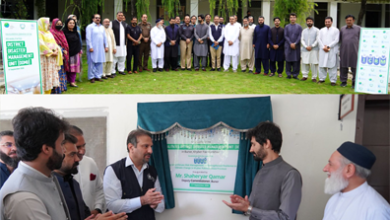

Balochistan Launches Tree Plantation Campaign to Plant One Million Trees
Balochistan government launches tree plantation campaign aiming to plant one million saplings across the province, including 50,000 trees in Quetta to improve environment and fight climate change.
The government of Balochistan has launched a large-scale tree plantation campaign aimed at planting one million saplings across the province in an effort to improve environmental conditions and address the challenges of climate change.
The announcement was made by Imran Gichki during a press briefing at the Quetta Press Club. The campaign is part of the provincial government’s broader strategy to enhance green cover, reduce pollution, and promote environmental sustainability.
Officials emphasized that the success of the initiative will depend largely on public participation and community cooperation.
Overview of the Plantation Campaign
The Balochistan tree plantation campaign aims to plant one million saplings throughout the province to increase forest cover and improve air quality.
During the announcement, Forests Secretary Imran Gichki stated that the campaign reflects the government’s commitment to environmental protection and sustainable development.
He noted that increasing tree cover is crucial in combating air pollution, improving soil quality, and reducing the impacts of climate change.
Authorities also acknowledged the role of media organizations in promoting environmental awareness and encouraging citizens to participate in the plantation drive.
Tree Plantation Plan for Quetta
As part of the initiative, 50,000 saplings will be planted in the provincial capital, Quetta.
Quetta has experienced growing environmental concerns in recent years, including rising air pollution and declining green spaces. Officials believe that expanding urban tree cover will help improve air quality and enhance the overall urban environment.
Urban plantation projects will focus on:
- Public parks
- Roadside green belts
- Educational institutions
- Government buildings
- Community spaces
These efforts aim to transform Quetta into a greener and healthier city.
Role of Public Participation
Forest officials emphasized that community participation will be essential for the success of the campaign.
The forest department plans to work closely with:
- Local communities
- Educational institutions
- Civil society organizations
- Environmental groups
Citizens have been encouraged to plant saplings in their neighborhoods and take responsibility for nurturing the trees.
According to officials, sustainable plantation programs depend not only on planting trees but also on ensuring their survival and growth.
Environmental Challenges in Balochistan
Balochistan faces several environmental challenges, including:
- Limited forest cover
- Increasing desertification
- Rising air pollution
- Water scarcity
- Climate change impacts
Compared with other provinces of Pakistan, Balochistan has relatively low tree density, which makes ecosystems more vulnerable to environmental degradation.
The tree plantation campaign is therefore considered an important step toward improving environmental resilience in the region.
Government Strategy for Climate Mitigation
The Balochistan government views the plantation campaign as part of a broader climate mitigation strategy.
Planting trees can play a crucial role in:
- Absorbing carbon dioxide from the atmosphere
- Reducing greenhouse gas emissions
- Stabilizing soil and preventing erosion
- Supporting biodiversity
Officials noted that expanding green cover also contributes to improved rainfall patterns and ecosystem balance over time.
Role of Forest Department and Local Communities
The provincial Forest Department will oversee the implementation of the plantation campaign and coordinate with local communities to ensure that planting targets are achieved.
According to Secretary Imran Gichki, the department will collaborate closely with residents to distribute saplings and monitor plantation activities.
Local participation will help ensure that planted trees are properly cared for and protected from damage.
Authorities also plan to conduct awareness campaigns to educate citizens about the importance of tree plantation and environmental conservation.
Importance of Expanding Tree Cover
Trees play a vital role in maintaining ecological balance and supporting sustainable development.
Expanding tree cover can provide several environmental benefits:
- Improvement in air quality
- Reduction of urban heat islands
- Protection against soil erosion
- Increased biodiversity
- Improved water retention in soil
These benefits make tree plantation programs an essential component of environmental protection policies worldwide.
Expected Environmental Benefits
The Balochistan tree plantation campaign is expected to generate multiple long-term environmental benefits.
These include:
- Increased green cover across the province
- Improved air quality in urban areas
- Reduced effects of climate change
- Enhanced wildlife habitats
- Greater environmental awareness among citizens
Experts note that large-scale plantation programs can significantly contribute to climate resilience, particularly in regions vulnerable to environmental stress.
Future Environmental Initiatives
Provincial authorities have indicated that the one-million-tree campaign may be expanded in the future if the initiative proves successful.
Additional environmental initiatives could include:
- Urban forestry programs
- Community-based plantation projects
- Reforestation of degraded land
- Environmental education campaigns
Such programs would strengthen the province’s long-term environmental protection efforts.
Conclusion
The launch of the Balochistan tree plantation campaign marks a significant step toward improving the province’s environmental sustainability.
By planting one million saplings, including 50,000 in Quetta, the government aims to enhance green cover, combat air pollution, and mitigate the impacts of climate change.
Officials have emphasized that the success of the campaign will depend heavily on active public participation and community cooperation.
If implemented effectively, the initiative has the potential to transform the environmental landscape of Balochistan and create a healthier future for its residents.