
Zardari vows India’s bid to weaponise Indus waters will not succeed — 7 Shocking Diplomatic Signals for South Asia
Zardari vows India’s bid to weaponise Indus waters will not succeed — Pakistan warns India at Doha summit that unilateral suspension of the Indus Waters Treaty threatens regional stability, climate justice and South Asian security.
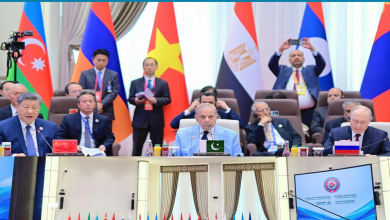
Zardari vows India’s bid to weaponise Indus waters will not succeed — this was the strongest headline message coming out of the Second World Summit for Social Development in Doha, Qatar on Tuesday, as Pakistan’s President Asif Ali Zardari publicly warned that India’s latest attempt to unilaterally suspend water cooperation is an existential threat for 240 million Pakistanis.
He said Pakistan is simultaneously suffering from the brutal impacts of climate-linked mega floods, melting glaciers, river flow disruptions — and an emerging man-made threat from across the border: water weaponisation.
“Water belongs to all humanity. It can never be used as a political weapon. Such tactics cannot and will not succeed.”
He labelled India’s move an outright violation of the 1960 Indus Waters Treaty (signed with the World Bank) — and a threat to regional stability at a time when South Asia needs climate adaptation and resilient development the most.
The Indus Waters Treaty dispute enters a dangerous new phase
At the core of Zardari’s complaint is a series of unilateral Indian decisions.
Timeline of escalation:
| Event | Description |
|---|---|
| April 2025 | India places IWT “in abeyance” after Pahalgam attack |
| June 2025 | PCA rules India cannot suspend treaty |
| August 2025 | PCA rejects Indian hydropower designs on Western rivers |
Pakistan argues the IWT has no exit clause — therefore suspension itself = illegality.
Pakistan takes international legal route — Vienna Convention and PCA rulings
Islamabad has already notified that it may proceed legally under The Vienna Convention on the Law of Treaties (1969).
The Permanent Court of Arbitration has already stated:
India MUST adhere to the specifications of the treaty and “LET FLOW” western river waters.
India rejected jurisdiction.
→ That puts the World Bank, PCA, international law and climate water security all on collision course.
External / DoFollow Sources:
Climate change + water weaponisation = existential double threat
Pakistan is one of the world’s top five climate-vulnerable nations.
Water is life for Pakistan’s agriculture, power generation and food security.
Weaponisation + climate emergency = double disaster.
Example:
- Melting glaciers = unstable river volumes
- Floods + drought cycles = intensifying
- And if India shuts data-sharing — Pakistan loses forecasting capability
That is why Zardari told the summit that this is not just Pakistan’s issue — this threatens global climate justice frameworks.
Pakistan calls for dignity, equality, solidarity — global justice appeal
At Doha, Zardari endorsed the Doha Political Declaration and pushed three principles:
| Principle | Idea |
|---|---|
| Dignity | Social protection + human rights |
| Equality | Poverty elimination + access |
| Solidarity | Climate & financial reforms |
He mentioned BISP as a proof point — 9 million families benefitting.
Palestinian and Kashmir suffering linked at the UN platform
In a meeting with UN Secretary General António Guterres — Zardari raised Kashmir, illegal occupation, and UN resolutions.
Bilawal separately briefed Guterres on India’s “weaponisation of water” — accusing India of halting hydrological data-sharing which increases flood risks downstream.
High-level bilateral diplomacy in Doha — Iraq & Tajikistan
• With Iraq: trade, energy, Hajj routes, Pakistani diaspora support
• With Tajikistan: CASA-1000, direct flights, defence cooperation, Dosti-II drills
These meetings show the issue is not only about water — Pakistan is building a diplomatic support matrix around it.
Conclusion
Zardari vows India’s bid to weaponise Indus waters will not succeed — not because of loud speeches — but because international law, climate ethics, and regional cooperation frameworks are on Pakistan’s side.
Pakistan says the world must act now — before the world’s biggest population corridor becomes a geopolitical river battlefield.