
18th Session of GGGI Council in Seoul – Inspiring Pakistan Reaffirms Global Climate Action Commitment (2025)
18th Session of GGGI Council in Seoul shows Pakistan reaffirming inspiring commitment to climate action, green growth, renewable energy transition and global sustainability.
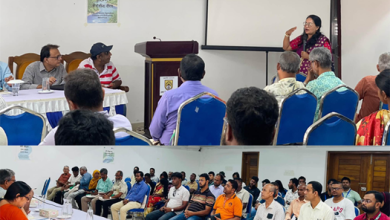
18th Session of GGGI Council in Seoul marks a defining moment in Pakistan’s ongoing climate diplomacy and green growth positioning as Minister of State for Climate Change and Environmental Coordination Shezra Mansab Ali Khan Kharal addressed the 14th Assembly and 18th Council of the Global Green Growth Institute (GGGI), held from October 29–31, 2025, in Seoul, South Korea. The Minister made an inspiring keynote pitch on “Implementing International Carbon Markets: Country Experiences and Strategic Pathways to 2030,” where she reaffirmed that Pakistan is fully committed to advancing global sustainability, promoting renewable energy transition, and accelerating green economic growth.
The Minister fearlessly reminded the delegates that Pakistan contributes less than 1% to global GHG emissions, yet remains among the top 10 most climate-vulnerable countries — a fact heavily documented by the Global Climate Risk Index and available science. Our glaciers are collapsing, monsoon cycles are shifting, and lives are disrupted daily — a crisis Pakistan did not create, but is tragically hosting.
18th Session of GGGI Council in Seoul & National Climate Policy Alignment
During the 18th Session of GGGI Council in Seoul, the Minister explained that Pakistan’s National Climate Change Policy (NCCP) and National Adaptation Plan (NAP) are not merely policy papers — they are functional roadmaps for translating international agreements into domestic implementation. Under NCCP and NAP, Pakistan is strengthening climate adaptive systems in energy, agriculture, and water — all while aggressively pursuing international climate finance streams to scale green technology, enhance renewable energy penetration, and strengthen national climate resilience. The Minister explained that provincial climate implementation units are now in synchronized working groups with the Federal Climate Ministry to accelerate renewables in off-grid villages, mountainous communities, and disaster-vulnerable belts.
18th Session of GGGI Council in Seoul Accelerates Climate Finance Diplomacy
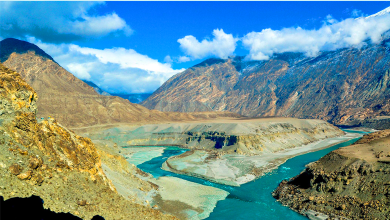
On the sidelines of the 18th Session of GGGI Council in Seoul, Minister Kharal held bilateral and multilateral tracks with Norwegian officials, climate tech donors, and financing institutions to explore enhanced support for adaptation projects in Pakistan, including Gilgit-Baltistan, Upper Swat, Chitral, and drought-hit Balochistan. She highlighted extensive research showing that Pakistan’s vulnerability risk is highest in the Himalayan-Karakoram glacial valleys — where global warming is multiple times faster than the planetary average. These meetings — blending climate finance, capacity building, and knowledge exchange — reinforced that Pakistan wants to transition from climate victim narrative to climate solution leadership.
Climate-Resilient Water + Renewable Energy Systems
At the Global Green Growth Week panel on “Water & Renewable Energy for Climate Resilience,” she noted that Pakistan’s agriculture, manufacturing zones, hydropower generation, irrigation canals, and industrial clusters depend on stable water — yet glacial melt, rising snowline and erratic rainfall cycles are disintegrating predictable water equilibrium. Renewable energy systems must be embedded in national water security prioritization — especially solar, hybrid micro-grids, and small-hydro in Himalayan basins — she said.
Global Climate Diplomacy is Reinforced through the 18th Session of GGGI Council in Seoul
The 18th Session of GGGI Council in Seoul showed that Pakistan is transitioning from reactive disaster response to proactive climate leadership. Pakistan’s diplomatic transformation — from climate isolation to climate engagement — is now more visible than ever. Pakistan now positions itself as a climate-action influencer — from Loss & Damage negotiations, to carbon markets standardization, to regional green innovation leadership across South Asia.
Conclusion
The 18th Session of GGGI Council in Seoul was strategically important for Pakistan — because Pakistan’s narrative shifted from “high climate vulnerability” to “global climate partnership leadership.” Pakistan is not merely a frontline victim — Pakistan now wants to be a frontline leader. Pakistan wants climate finance fairness, technology justice, adaptation sovereignty, equitable emissions pathways, structured carbon markets, and dignity for climate-impacted communities.
This Council session — held in Seoul — proved that Pakistan now understands that climate diplomacy is national economic diplomacy.
Pakistan wants green growth.
Pakistan wants renewable transition.
Pakistan wants climate justice.
And Pakistan is now going after these goals — not pleading, but positioning itself as a climate-smart nation creating climate-smart futures that are economically, socially, ethically, and environmentally justified.
Authoritative External Links
- GGGI Official Content: https://gggi.org/
- UNFCCC — NDC Registry: https://unfccc.int/ndc-registry
- IPCC Reports: https://www.ipcc.ch/reports/
Internal Links (Pakistan institutional)
- Planning Commission of Pakistan — https://www.pc.gov.pk/
- Ministry of Climate Change Pakistan — https://mocc.gov.pk/