
5 Powerful Signals: Pakistan committed to working with EU on trade initiatives through GSP+
Pakistan EU trade GSP+ cooperation gains momentum as Prime Minister Shehbaz Sharif reaffirms commitment to strengthen trade initiatives, sustainability, and governance with the European Union.
Pakistan EU trade GSP+ cooperation took center stage on Thursday as Prime Minister Shehbaz Sharif reiterated Pakistan’s strong commitment to working closely with the European Union on mutually beneficial trade initiatives, particularly under the Generalised Scheme of Preferences Plus (GSP+).
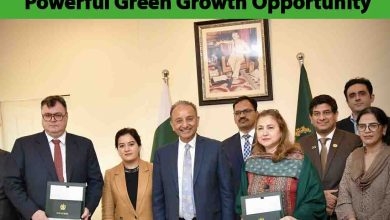
According to a statement released by the Prime Minister’s Office (PMO), the prime minister made these remarks during a meeting with the European Union’s Ambassador to Pakistan, Raimundas Karoblis, who called on him in Islamabad. The meeting underscored the growing strategic importance of trade, development, and governance cooperation between Pakistan and the EU.
PM Shehbaz highlights strategic importance of GSP+
During the meeting, PM Shehbaz emphasised that Pakistan EU trade GSP+ remains a cornerstone of Pakistan’s export strategy and economic stability. He reaffirmed the government’s resolve to deepen engagement with the EU to further expand market access for Pakistani exports.
“The prime minister emphasised upon the critical role of the GSP+ scheme in enhancing trade between Pakistan and the EU,” the PMO handout stated, adding that Pakistan remains committed to fulfilling its obligations under the framework.
This reaffirmation comes at a time when Pakistan is navigating economic recovery and seeking sustainable trade partnerships with global markets.
What GSP+ means for Pakistan’s economy
The Pakistan EU trade GSP+ framework is a special incentive granted by the European Union to developing countries that commit to sustainable development and good governance. Under this scheme, beneficiary countries receive zero-duty access on nearly two-thirds of EU tariff lines.
To qualify and retain GSP+ status, countries must implement 27 international conventions related to:
- Human rights
- Labour rights
- Environmental protection
- Good governance
According to the European Commission, these conventions form the backbone of the EU’s trade-and-values approach.
Pakistan-EU Strategic Dialogue and trade diplomacy
PM Shehbaz also expressed satisfaction over the seventh round of the Pakistan-EU Strategic Dialogue, held in Brussels in November last year. The dialogue covered a wide range of areas including trade, investment, security, migration, and climate change.
The Pakistan EU trade GSP+ mechanism has consistently featured as a priority agenda item in these strategic discussions, reflecting its long-term importance for both sides.
Human rights and governance under GSP+
According to the EU’s GSP Convention Compliance Database, Pakistan has ratified all 27 required international conventions, with the most recent ratifications completed in 2010.
However, EU monitoring continues to focus on 13 priority areas, including:
- Enforced disappearances
- Torture prevention
- Freedom of expression
- Religious freedom and minority rights
Despite these challenges, the EU last month welcomed Pakistan’s progress towards implementing the conventions under the GSP+ framework—an encouraging sign for the future of Pakistan EU trade GSP+ cooperation.
External link suggestion: EU GSP Convention Compliance Database
EU-Pakistan Business Forum and future trade prospects
EU Ambassador Raimundas Karoblis expressed gratitude to PM Shehbaz for the warm reception and conveyed goodwill from EU leadership. He assured continued EU engagement with Pakistan to strengthen trade relations.
A major upcoming milestone is the first-ever EU-Pakistan Business Forum, scheduled to be held in April. The forum is expected to connect European investors with Pakistani exporters, further expanding opportunities under Pakistan EU trade GSP+.
This initiative is being viewed as a powerful confidence-building measure for long-term economic collaboration.
Economic impact of GSP+ on Pakistan
Since Pakistan was granted GSP+ status in 2014, the impact on exports—particularly textiles—has been substantial. According to EU data, Pakistani textile exports to the EU increased by 108 per cent, driven largely by concessional tariffs.
The EU remains Pakistan’s second-largest export destination, making Pakistan EU trade GSP+ a vital pillar of national economic planning.
Internal link suggestion: Article on Pakistan textile exports growth
Challenges and monitoring under GSP+ framework
While GSP+ offers significant trade advantages, it also places Pakistan under continuous scrutiny. The EU regularly assesses compliance through biennial reports and monitoring missions.
Experts note that sustained progress on governance reforms, judicial independence, and civil liberties will be critical for Pakistan to retain GSP+ beyond 2027, when the current extension expires.
Climate change, sustainability, and EU cooperation
Climate change cooperation has also become an integral part of Pakistan EU trade GSP+ relations. PM Shehbaz highlighted Pakistan’s vulnerability to climate disasters and welcomed EU collaboration in climate adaptation and green investment.
The EU has been a major development partner in Pakistan’s renewable energy, climate resilience, and disaster preparedness initiatives.
External link suggestion: EU climate cooperation programs
Conclusion: A critical partnership moving forward
The reaffirmation of Pakistan EU trade GSP+ cooperation by Prime Minister Shehbaz Sharif sends a strong and positive signal to global markets, investors, and development partners.
As Pakistan works to stabilise its economy, expand exports, and strengthen governance, the GSP+ framework remains a powerful and indispensable tool. With continued reforms, transparent engagement, and sustained dialogue, Pakistan’s partnership with the European Union is poised to grow stronger in the years ahead.